
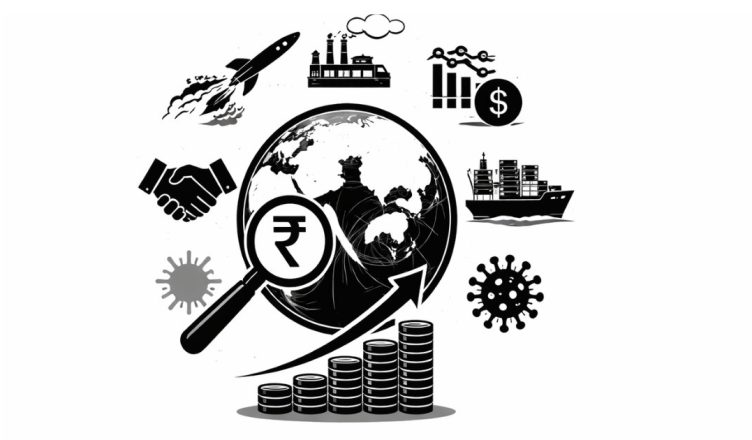
In 2026, several global developments are already drawing attention from economists, businesses, and policymakers in India. Changes in international trade policies, energy markets, supply chains, and technology regulations could influence India’s growth path during the year.
India relies on markets for oil imports, exports of goods and services, foreign investment, and technology partnerships. As a result, global developments often have a direct or indirect impact on the country’s economy.
Understanding these events helps businesses prepare better and allows policymakers to respond quickly when needed.
Below are seven powerful global events and trends that could shape India’s economic outlook in 2026.
1. Global Oil Price Movements and Energy Supply Risks
Oil prices remain one of the most important external factors for India’s economy.
India imports more than 80% of its crude oil needs. This makes the country sensitive to global energy market changes.
Several global factors can affect oil prices in 2026, including:
- Geopolitical tensions in major oil-producing regions
- Production decisions by global oil exporters
- Changes in global demand due to economic growth or slowdown
- Supply disruptions caused by conflicts or sanctions
When oil prices rise sharply, India faces higher import costs and inflation pressure. Fuel prices can influence transportation, manufacturing, and daily living costs.
However, if global prices remain stable or decline, India could benefit from lower import bills and stronger economic growth.
Energy markets will therefore remain a major global factor influencing India’s economy during the year.
2. Slowdown Risks in Major Global Economies
The health of the global economy plays a major role in India’s export performance.
India exports goods and services to several key markets, including:
- The United States
- The European Union
- The Middle East
- Southeast Asian economies
If major economies face slower growth, demand for imported goods may fall. This can affect Indian sectors such as:
- Information technology services
- Textiles and apparel
- Pharmaceuticals
- Engineering goods
Global growth forecasts are closely watched by Indian policymakers because weaker demand overseas can slow export growth.
On the other hand, stronger global growth could support India’s export sector and attract more investments into the country.
3. Rising Global Interest Rates and Capital Flows
Central banks around the world have been adjusting interest rates to manage inflation and economic growth.
Decisions by major central banks, especially in advanced economies, can influence global capital flows.
Higher interest rates in developed markets may lead investors to move funds toward those markets. This can affect emerging economies like India in several ways:
- Pressure on currency exchange rates
- Changes in foreign investment flows
- Fluctuations in stock and bond markets
India has seen strong foreign investment in recent years. However, global financial conditions can change quickly.
Stable and predictable global monetary policy is therefore important for maintaining investor confidence in India’s financial markets.
4. Global Supply Chain Shifts and Manufacturing Realignment
Supply chains have been changing rapidly since the disruptions seen in the early 2020s.
Many companies are now looking to diversify manufacturing locations and reduce dependence on a single country.
This shift has created opportunities for India in sectors such as:
- Electronics manufacturing
- Automotive components
- Pharmaceuticals
- Semiconductors
Government initiatives like Production Linked Incentive (PLI) schemes aim to attract global manufacturers.
However, competition is also strong from other emerging economies in Asia.
Global supply chain changes in 2026 could determine whether India gains a larger share of global manufacturing investment.
5. Technology Regulations and the Global AI Race
Technology has become a major driver of economic growth.
Artificial intelligence, digital infrastructure, and advanced computing are shaping global competition.
Countries are introducing new policies related to:
- Artificial intelligence regulation
- Data protection rules
- Digital trade standards
- Semiconductor production
India is an important player in the global technology ecosystem due to its large IT services sector and skilled workforce.
Global rules on AI, data flows, and digital platforms could affect Indian companies that operate in international markets.
If global regulations support open digital trade, Indian technology firms could benefit from greater opportunities worldwide.
6. Trade Policies and New Economic Alliances
International trade policies continue to evolve.
Several countries are negotiating new trade agreements or revising existing ones. Changes in tariffs, supply standards, and trade rules can influence India’s export competitiveness.
India has been expanding trade partnerships with various regions.
Important developments include:
- New bilateral trade agreements
- Regional economic partnerships
- Changes in global supply standards
These agreements may open new export markets for Indian industries.
However, trade restrictions or protectionist policies in other countries could create challenges for exporters.
Trade negotiations will therefore remain an important global factor affecting India’s economy.
7. Climate Policies and the Global Energy Transition
Climate change and energy transition policies are increasingly shaping global economic decisions.
Many countries are investing heavily in:
- Renewable energy
- Electric vehicles
- Clean technology
- Carbon reduction strategies
International climate policies can influence trade and industrial investment.
For example, some regions are introducing carbon border measures that may affect exports from countries with different emissions standards.
India is expanding its renewable energy capacity and has set ambitious targets for clean power.
Global climate policies could create both opportunities and challenges for Indian industries during the transition to a low-carbon economy.
How India Is Preparing for Global Economic Uncertainty
Despite global uncertainties, India’s economy has shown strong resilience in recent years.
Several structural factors support India’s growth:
- A large domestic consumer market
- Expanding digital infrastructure
- Strong services exports
- Rising manufacturing investments
Government policies are also focusing on:
- Infrastructure development
- Supply chain expansion
- Technology innovation
- Export promotion
These efforts aim to reduce vulnerability to external shocks while strengthening long-term economic growth.
Key Economic Indicators to Watch in 2026
Experts say several indicators will help track how global events are influencing India’s economy.
Important indicators include:
1. Crude oil prices
Fuel imports play a major role in India’s trade balance.
2. Export growth data
Exports reflect demand from global markets.
3. Foreign investment flows
Foreign direct investment and portfolio investment signal global investor confidence.
4. Currency movements
Exchange rate trends can reflect global financial conditions.
5. Global growth forecasts
International economic outlook reports often guide policy decisions.
Monitoring these indicators can provide early signals of potential economic changes.
Conclusion: Global Events Will Continue to Shape India’s Economic Path
India’s economic future is closely linked to global developments.
Events related to energy markets, trade policies, global growth, technology regulation, and supply chains could influence economic performance in 2026.
At the same time, India’s strong domestic demand and ongoing reforms provide a solid foundation for growth.
By adapting to global changes and strengthening economic resilience, India can continue to expand its role in the world economy.
For businesses, investors, and policymakers, staying aware of global developments will remain essential as the international economic landscape continues to evolve.
Edited By: E.Devanshi Varma
Also Read: 5 Exciting Smartphones Launching Soon in India That Tech Fans Are Waiting For
Follow us on google news: Click Here
Last Updated on: Thursday, March 5, 2026 3:15 pm by News Estate Team | Published by: News Estate Team on Thursday, March 5, 2026 3:15 pm | News Categories: Trending
About The Author
