
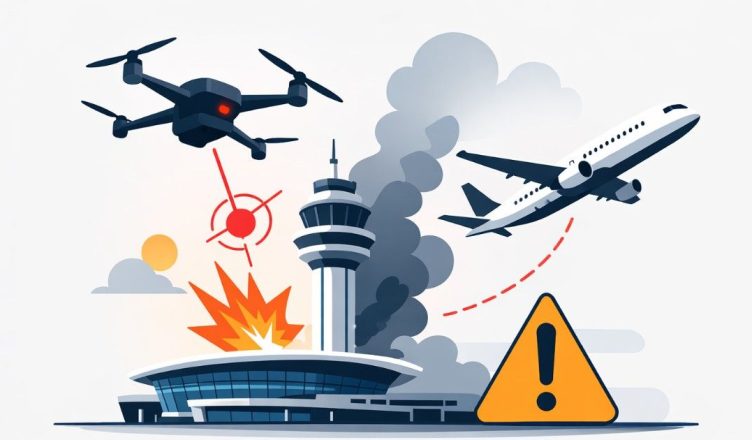
Flight operations at Dubai International Airport were temporarily suspended after a drone-related incident triggered a fire near the airport, prompting authorities to halt operations as a precautionary measure. Officials said the disruption was linked to regional security developments and resulted in delays, cancellations, and diversions of flights.
Authorities reported that the drone strike hit a fuel tank in the vicinity of the airport, causing a fire that produced smoke visible around the airport complex. Emergency response teams, including civil defence units, were deployed to contain the blaze, and the fire was later brought under control. Initial reports indicated that no injuries were reported during the incident.
The disruption briefly halted operations at one of the world’s busiest international aviation hubs, affecting both passenger and cargo flights. Dubai authorities advised travellers to check with airlines for updated flight information and to monitor official announcements regarding airport operations.
Regional Tensions Linked to Drone Attacks
The drone incident occurred amid escalating tensions in West Asia connected to ongoing regional conflict involving multiple countries. According to reports, the drone activity is part of a wider pattern of missile and drone attacks affecting infrastructure and strategic locations across the Gulf region.
The conflict has resulted in a series of attacks targeting military installations, ports, and other infrastructure in several Gulf states. Analysts say the attacks have had wider implications for civilian infrastructure, including aviation and energy facilities, which are essential to regional connectivity and trade.
Dubai, a major global aviation hub and business center, has been among the locations affected by these developments. Security agencies in the United Arab Emirates have increased monitoring and response measures following reports of repeated drone incidents in recent weeks.
Temporary Shutdown and Flight Diversions
Following the drone-related fire near the airport, authorities temporarily suspended flights at Dubai International Airport to ensure passenger and staff safety. Aircraft already en route to the airport were diverted to nearby facilities while departures were put on hold.
Some flights were redirected to other airports, including Al Maktoum International Airport, as part of contingency measures designed to minimize disruption to international travel.
Several airlines, including major regional carriers, adjusted their schedules and cancelled or delayed flights while authorities assessed the situation. In some cases, airlines advised passengers not to travel to the airport until further updates were issued.
These precautionary measures led to a ripple effect across international aviation routes, with delays affecting flights connecting Europe, Asia, and Africa through Dubai.
Airlines Adjust Schedules and Operations
Airlines operating in and out of Dubai responded to the incident by altering schedules and implementing temporary operational changes. According to aviation updates, carriers including Emirates and other international airlines suspended or rerouted flights during the disruption.
Once the immediate security concerns were addressed, some airlines began gradually resuming operations, though services continued to run on reduced schedules. Airport authorities and airline operators worked together to manage passenger backlogs and reorganize flight departures.
Passengers were advised to verify their travel status before heading to the airport due to the evolving situation. Airlines also updated their websites and communication channels to provide real-time information regarding cancellations and rescheduled flights.
Fire Contained and Gradual Resumption of Flights
Emergency services eventually contained the fire caused by the drone strike, allowing authorities to begin restoring normal airport operations. Officials announced that flight operations would resume gradually once safety checks were completed.
Airport management emphasized that passenger safety and operational security remained the top priority. After the incident was stabilized, selected flights were allowed to depart and arrive at the airport, though capacity remained limited during the early stages of recovery.
Authorities also conducted inspections to ensure that airport infrastructure and fuel storage facilities were secure before reopening fully.
Impact on Global Aviation and Travel
The temporary shutdown of Dubai International Airport had wider implications for international aviation due to the airport’s role as a major transit hub connecting continents. Millions of passengers travel through Dubai each year, and disruptions at the airport often affect multiple global routes.
Industry analysts say that aviation disruptions linked to regional conflicts can lead to extended travel times, route changes, and increased operational costs for airlines. Airlines sometimes have to reroute aircraft to avoid conflict zones or restricted airspace, which can increase fuel consumption and scheduling challenges.
Additionally, cargo shipments transported through Dubai may experience delays when airport operations are disrupted. Logistics companies and freight operators typically rely on the airport for rapid transit between global markets.
Broader Security Context in the Gulf Region
The drone attack near Dubai is part of a broader pattern of incidents across the Gulf region since late February, when hostilities intensified and several countries reported missile or drone activity targeting infrastructure.
These developments have raised concerns about the security of critical infrastructure, including airports, ports, and energy facilities. Governments across the region have increased security measures and surveillance systems to protect key transportation and industrial sites.
International organizations and governments have also issued travel advisories for certain areas in the Middle East, urging travellers to stay informed about regional developments and follow airline guidance.
Outlook for Aviation and Regional Stability
While flights have begun to resume at Dubai International Airport, aviation authorities continue to monitor the situation closely. Airport officials have advised passengers to stay updated through airline announcements and official airport communication channels.
Experts say that as long as geopolitical tensions persist in the region, aviation networks may continue to face intermittent disruptions. However, airports and airlines have established contingency plans to manage such incidents and restore operations as quickly as possible.
Dubai authorities reiterated that maintaining safe and secure air travel remains their top priority as operations gradually return to normal.
Also Read: Indian Stock Market Crash Today: BIG Fall in Sensex and Nifty Sparks Investor Concerns
Follow us on Google News: Click Here
Last Updated on: Monday, March 16, 2026 6:02 pm by E. Devanshi Varma | Published by: E. Devanshi Varma on Monday, March 16, 2026 6:02 pm | News Categories: Trending
About The Author
