
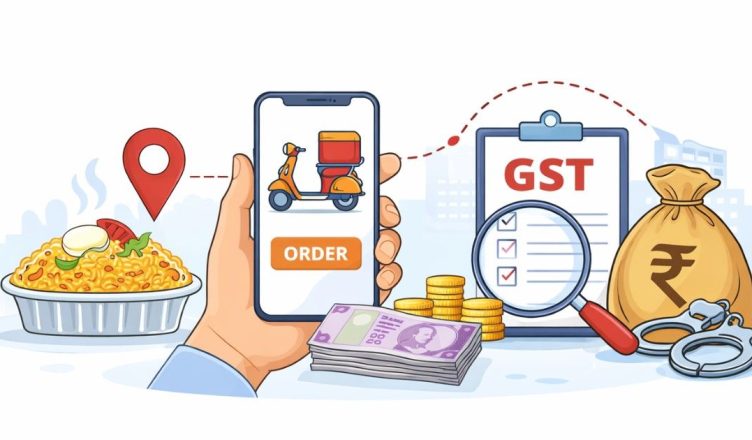
Hyderabad Biryani Tax Scandal has triggered widespread attention after investigative agencies uncovered a multi-crore tax evasion racket by analysing high-volume food delivery data. Officials said the probe began with a review of digital transaction records, which revealed major discrepancies between reported turnover and actual sales recorded on online platforms. The findings have led to enforcement action against several outlets as authorities examine the scale of the alleged GST violations.
According to senior officials familiar with the investigation, authorities compared declared turnover figures with backend transaction data obtained through lawful channels. The review reportedly showed significant gaps in tax filings by several food businesses operating across the city. The scale of the mismatch prompted a coordinated enforcement action.
Data Analytics Triggered the Investigation
Officials stated that the investigation relied heavily on digital transaction trails. With food delivery apps maintaining detailed records of orders, payments, and vendor settlements, agencies were able to estimate actual business volumes with precision. These figures were then cross-verified with Goods and Services Tax (GST) returns and income declarations.
Sources within the tax department indicated that unusually high daily biryani sales across multiple outlets raised initial red flags. In some cases, reported revenues were allegedly a fraction of the order values recorded through online platforms. Authorities believe the alleged evasion may have continued for several financial years.
While officials have not disclosed the exact quantum involved, preliminary assessments suggest the tax liability runs into several crores of rupees. Notices have reportedly been issued to businesses under scrutiny, and further audits are underway.
Focus on Digital Compliance
The case has drawn national attention because of the method used to detect irregularities. Tax authorities across India have increasingly turned to data analytics to identify compliance gaps. In this instance, consumer purchase data from a widely consumed dish biryani became the starting point of a large-scale enforcement action.
Experts in indirect taxation say digital marketplaces create verifiable trails that can be cross-matched with tax returns. Any mismatch between platform-reported turnover and declared income may trigger scrutiny. Officials clarified that the investigation is focused on specific entities and does not imply wrongdoing across the broader food industry.
Industry associations have urged businesses to ensure full compliance with GST and income tax norms. They also stressed the importance of maintaining transparent digital records as online food delivery continues to grow in urban markets.
Legal Process and Next Steps
Authorities have confirmed that searches and document seizures were conducted in accordance with legal procedures. Statements are being recorded, and financial records are under review. Businesses found to have underreported revenue may face recovery proceedings, penalties, and possible prosecution depending on the findings.
Officials emphasised that the investigation remains ongoing. Final liability will be determined after due process, including opportunities for the concerned parties to respond to notices and clarify discrepancies.
Wider Implications for the Food Sector
Hyderabad is widely known for its thriving culinary industry, particularly its biryani trade, which generates substantial daily sales through both dine-in and delivery channels. The case has sparked discussions about tax compliance in high-volume, cash-light sectors where digital transactions dominate.
Policy analysts note that the increasing use of technology in enforcement is reshaping tax administration. By integrating data from multiple sources, authorities can detect patterns that were previously difficult to identify.
For consumers, the development serves as a reminder of how digital payment ecosystems create transparent transaction histories. For businesses, it underscores the importance of aligning reported income with actual turnover captured through technology platforms.
Officials have reiterated that enforcement drives are intended to ensure fair competition and strengthen compliance across sectors. As the probe progresses, more details are expected to emerge regarding the scale of the alleged evasion and the number of entities involved.
The Hyderabad ‘biryani’ tax case stands as one of the most prominent examples of data-driven tax investigation in the food services sector, highlighting the growing role of analytics in revenue enforcement.
Also read: Modi Lula Critical Minerals AI Alliance: India, Brazil Strengthen EV and Semiconductor Supply Chains
Add News Estate as a preferred source on Google – Click Here
Last Updated on: Saturday, February 21, 2026 12:02 pm by News Estate Team | Published by: News Estate Team on Saturday, February 21, 2026 11:54 am | News Categories: Business
About The Author
