
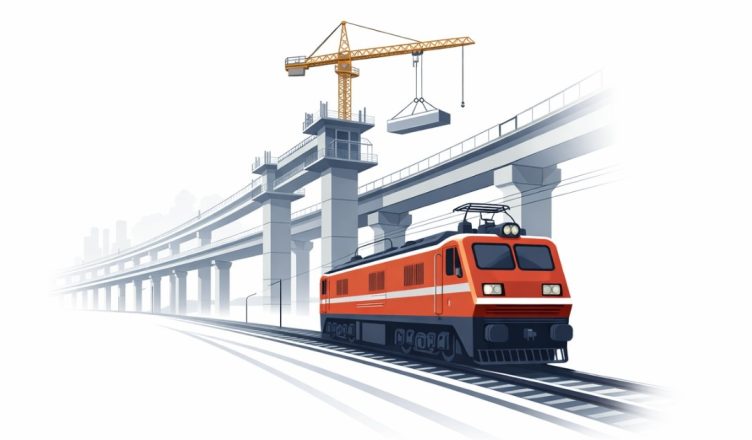
Indian Railways is India’s transport backbone is set to receive a major upgrade. The government has approved infrastructure projects worth over ₹1,000 crore, aimed at expanding capacity, modernising stations, and improving safety systems across key routes.
The latest investment comes at a time when passenger demand is rising steadily and freight movement remains essential for economic growth. Millions of commuters, long-distance travellers, and businesses rely daily on Indian Railways, making infrastructure expansion critical.
The new projects are designed to improve efficiency, reduce congestion, and prepare the rail network for future demand.
Why the ₹1,000+ Crore Projects Matter
Rail transport plays a central role in connecting cities, towns, and rural areas. Every day, crores of passengers depend on Indian Railways for affordable and reliable travel.
Industries also rely heavily on Indian Railways to move coal, food grains, cement, steel, and other key goods. As economic activity increases, pressure on major rail corridors has also grown.
The latest investment aims to strengthen core infrastructure so that Indian Railways can manage higher passenger volumes and freight demand without compromising safety or punctuality.
Track Doubling and Line Expansion
A significant portion of the ₹1,000+ crore allocation will be used for track doubling and route expansion.
Track doubling allows trains to move in both directions at the same time. This reduces waiting time and improves overall scheduling efficiency.
Benefits include:
- Reduced congestion
- Faster train movement
- Improved punctuality
- Higher freight capacity
By expanding track infrastructure, Indian Railways will be able to run more trains on busy routes while maintaining smooth operations.
Capacity enhancement remains a long-term priority for Indian Railways as travel demand continues to grow.
Station Modernisation and Passenger Amenities
Station redevelopment forms another key part of the infrastructure plan.
Under the new projects, several stations managed by Indian Railways are expected to receive upgrades. Improvements may include:
- Better platform surfaces
- Modern waiting areas
- Improved lighting and ventilation
- Digital display boards
- Enhanced accessibility features
Modernised stations not only improve passenger comfort but also strengthen safety and crowd management.
Upgraded railway hubs often boost local economic activity. Shops, food outlets, and nearby businesses benefit when Indian Railways enhances station facilities.
Electrification and Energy Efficiency
Electrification continues to be a major focus area.
Electric trains are more energy-efficient than diesel engines. Expanding electrified routes will help Indian Railways reduce fuel costs and lower emissions.
Advantages of electrification include:
- Faster acceleration
- Reduced maintenance costs
- Lower pollution levels
- Improved operational efficiency
Over the past decade, Indian Railways has steadily increased electrified track length. The new ₹1,000+ crore projects will support this ongoing transformation.
Energy efficiency also strengthens financial sustainability for Indian Railways in the long run.
Safety and Signalling Upgrades
Safety improvements remain a top priority.
Modern signalling systems are expected to be installed or upgraded as part of the new infrastructure push. Advanced signalling technology helps Indian Railways monitor train movement more accurately and reduce the risk of accidents.
Improved signalling offers:
- Better coordination between stations
- Enhanced train control
- Increased track utilisation
- Reduced human error
With growing traffic on key routes, strengthening safety infrastructure ensures that expansion does not compromise operational standards.
Impact on Daily Commuters
Passengers are expected to see long-term benefits once projects are completed.
Possible improvements include:
- Better on-time performance
- Less congestion at junctions
- Cleaner station environments
- Improved passenger facilities
For daily commuters, reliability is crucial. Infrastructure upgrades will help Indian Railways deliver more consistent services across high-demand corridors.
Long-distance travellers may also experience smoother journeys as bottlenecks are gradually removed.
Freight Operations and Economic Growth
Freight transport remains a major revenue source.
By expanding track capacity, Indian Railways can operate additional goods trains without affecting passenger schedules.
Improved freight efficiency helps:
- Lower logistics costs
- Reduce highway congestion
- Improve supply chain reliability
- Support industrial growth
A stronger freight network enhances competitiveness for businesses and strengthens overall economic performance.
Employment and Regional Development
Infrastructure investment generates employment during construction and execution phases.
Engineers, contractors, and skilled workers benefit directly from expansion projects. Improved connectivity through Indian Railways also attracts investment to nearby towns and industrial areas.
Better rail access often leads to:
- Growth in tourism
- Increased trade activity
- Expansion of small businesses
Infrastructure spending creates a multiplier effect, supporting both direct and indirect economic development.
Implementation Timeline and Execution
Large-scale projects follow a structured process:
- Detailed surveys and feasibility studies
- Budget approvals and allocation
- Tendering and contractor selection
- Construction and safety testing
While visible improvements may take time, gradual changes are expected as projects move through different phases.
Efficient monitoring will be essential to ensure that Indian Railways completes projects within planned timelines.
Technology Integration and Digital Systems
Modern rail infrastructure increasingly relies on digital solutions.
Upgrades may include:
- Real-time train tracking
- Automated signalling systems
- Centralised traffic control
- Improved passenger information displays
Technology helps Indian Railways enhance operational transparency and efficiency.
Digital tools also provide passengers with timely updates about schedules, platform numbers, and service changes.
Environmental Benefits
Rail transport is generally more fuel-efficient than road transport.
By expanding electrified routes and improving efficiency, Indian Railways reduces diesel consumption and lowers carbon emissions.
Shifting freight from highways to rail reduces traffic congestion and supports sustainable transport goals.
Environment-friendly infrastructure strengthens the long-term resilience of Indian Railways.
Challenges in Infrastructure Expansion
Despite strong investment, large infrastructure projects can face challenges such as:
- Land acquisition delays
- Regulatory approvals
- Weather-related disruptions
- Budget coordination issues
Careful planning and execution will be necessary to ensure smooth progress.
Maintaining safety standards during expansion remains a priority.
Long-Term Vision for Rail Development
The ₹1,000+ crore infrastructure push reflects the broader modernisation vision of Indian Railways.
Future priorities include:
- Higher-speed corridors
- Continued electrification
- Advanced safety systems
- Improved passenger amenities
- Greater freight capacity
As the economy grows, demand for reliable rail transport will continue to increase. Strengthening core infrastructure ensures that Indian Railways remains prepared for future challenges.
Conclusion
The approval of projects worth over ₹1,000 crore marks another significant step in strengthening the national rail network.
Through track expansion, station upgrades, electrification, and improved safety systems, Indian Railways aims to enhance efficiency and passenger experience.
While full benefits will emerge over time, the long-term impact could include better connectivity, smoother freight movement, improved reliability, and stronger regional development.
For millions of passengers and businesses across the country, the latest infrastructure investment reinforces the vital role of Indian Railways in India’s growth journey.
Also Read: Supreme Court Hearing Today: 4 Key Cases That Could Impact Policy Decisions Across India
Follow us on google news: Click Here
Last Updated on: Friday, February 13, 2026 2:49 pm by News Estate Team | Published by: News Estate Team on Friday, February 13, 2026 2:49 pm | News Categories: Business
About The Author
