
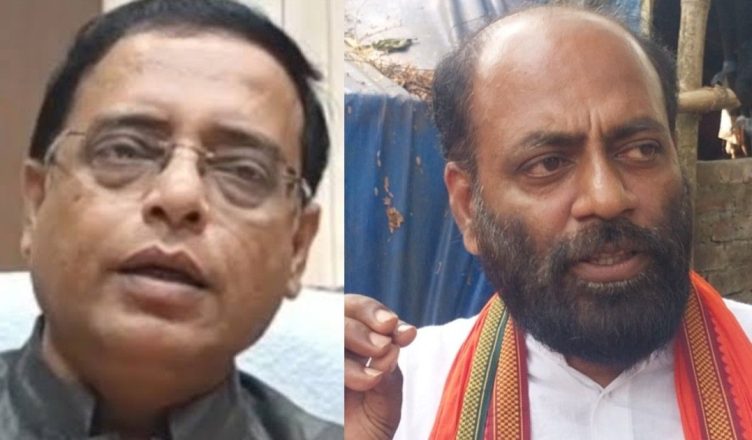
Jangipara Assembly constituency in West Bengal’s Hooghly district has emerged as one of the most closely observed battlegrounds in the 2026 state elections. Falling under the Serampore Lok Sabha seat, the constituency is witnessing a competitive four-way contest involving the Trinamool Congress (TMC), Bharatiya Janata Party (BJP), Congress, and CPI(M).
The seat, once dominated by the Left Front, has remained under TMC control since 2011. Incumbent MLA Snehasis Chakraborty, who has held the seat for nearly 15 years, is seeking to retain his position amid growing political competition and local dissatisfaction over key civic issues.
A Shift from Left Stronghold to TMC Bastion
Jangipara’s political trajectory reflects broader shifts in West Bengal’s electoral landscape. For decades, the constituency was a reliable Left stronghold, but the political tide turned in 2011 when the TMC came to power in the state.
Since then, the ruling party has consolidated its position here, with Snehasis Chakraborty emerging as a prominent figure. His long tenure has helped build a strong organisational network, giving the TMC a structural advantage in mobilising voters.
However, anti-incumbency sentiments, particularly at the grassroots level, are now shaping the narrative of the 2026 election.
BJP Bets on Simplicity and Local Connect
The BJP has fielded Prasenjit Bag, whose candidacy has become one of the most discussed aspects of the contest. Coming from a modest background, Bag reportedly continues to live in a mud house, a detail the party has highlighted to emphasise his grassroots connection.
A Class XII graduate and former RSS volunteer, Bag is not new to the constituency. Having contested here previously, he is familiar with local dynamics and voter concerns. Party workers describe him as having a strong organisational grip in the region.
The BJP’s campaign strategy appears to focus on projecting Bag as a relatable figure who understands the struggles of ordinary residents. This positioning is aimed particularly at rural voters, where personal image and accessibility often play a decisive role.
TMC Relies on Experience and Governance Record
In contrast, the TMC is relying on the experience and administrative record of Snehasis Chakraborty. A postgraduate and former state transport minister, Chakraborty represents continuity and governance experience.
The ruling party is highlighting welfare schemes and development initiatives implemented during his tenure. These include social assistance programmes and infrastructure efforts that have been central to TMC’s broader political messaging across the state.
However, local feedback suggests that governance claims may not fully align with ground realities. Concerns over transport and connectivity—areas directly linked to Chakraborty’s ministerial role—have become a point of criticism among residents.
Congress and CPI(M) Add Complexity
The contest is further complicated by the presence of Congress and CPI(M), both of whom are attempting to regain relevance in the constituency.
The Congress has nominated Subhasish Dutta, a legal professional, positioning him as an educated and credible alternative. Meanwhile, the CPI(M) has fielded Sudipto Sarkar, who is supported by the Indian Secular Front (ISF).
This alignment introduces a significant variable into the electoral equation, particularly in terms of vote distribution. The possibility of minority votes splitting between multiple candidates could influence the final outcome in a closely contested seat.
Demographics and Electoral Significance
Jangipara’s demographic composition plays a crucial role in shaping electoral outcomes. The constituency has a significant Muslim population, along with Other Backward Classes (OBC) and Scheduled Caste communities.
This diversity makes the seat politically sensitive, with parties tailoring their campaigns to address the concerns of multiple social groups.
The local economy is largely driven by agriculture, small-scale businesses, and daily wage labour. As a result, issues such as employment, infrastructure, and access to essential services carry substantial weight in voter decision-making.
Influence of Furfura Sharif
One of the key factors in Jangipara’s electoral dynamics is Furfura Sharif, a prominent Sufi religious centre located within the constituency.
The site holds considerable influence among Muslim voters, and the stance of its religious leadership is often seen as a decisive factor in elections. Political observers note that when parties like the ISF are active, the role of such institutions becomes even more significant.
In a multi-cornered contest, even a marginal shift in voting patterns influenced by religious or community leadership could impact the final result.
Connectivity Emerges as a Major Issue
Among the various local concerns, connectivity has emerged as the most pressing issue for residents.
Despite Chakraborty’s tenure as transport minister, many locals allege that road and transport infrastructure has not improved significantly. Reports of discontinued bus routes have added to the problem, making daily commuting more difficult.
For students, workers, and small traders, limited transport options have affected access to education, employment, and markets. This has become a key talking point for opposition parties, particularly the BJP, which is using it to question the incumbent’s performance.
Healthcare Infrastructure Under Scrutiny
Healthcare is another area of concern raised by voters. Residents have pointed to inadequate facilities at Jangipara hospital, including shortages of doctors and basic infrastructure.
As a result, many patients are forced to travel to larger towns for treatment, increasing both time and financial burden. In rural and semi-urban areas, such gaps in healthcare access often become decisive electoral issues.
Political parties have acknowledged these concerns in their campaigns, though concrete solutions remain a subject of debate.
Unemployment and Migration
Unemployment, especially among the youth, is a recurring issue in Jangipara. Limited local opportunities have pushed many young residents to seek work outside the region.
This trend has broader social and economic implications, affecting family structures and local economic activity. For voters, job creation and skill development have become critical expectations from political representatives.
Both the ruling party and opposition candidates have addressed employment in their campaign messaging, but voters appear to be seeking tangible outcomes rather than assurances.
Rural Concerns Shape the Narrative
Given Jangipara’s largely rural and semi-urban character, everyday issues such as roads, public transport, healthcare, and employment dominate political discourse.
Unlike urban constituencies where large-scale development projects may take centre stage, voters here are focused on basic infrastructure and quality of life improvements.
This makes the election less about ideological positioning and more about practical governance and accessibility.
A Contest of Contrasting Images
The 2026 Jangipara election has evolved into a contest defined by contrasting political narratives.
On one side is Snehasis Chakraborty, representing experience, administrative continuity, and established leadership. On the other is Prasenjit Bag, whose campaign emphasises simplicity, relatability, and grassroots connection.
Meanwhile, Congress and CPI(M) candidates add further dimensions to the contest, potentially influencing vote shares in unpredictable ways.
What Lies Ahead
As polling approaches, the outcome in Jangipara will likely hinge on how voters balance these competing factors. Will they prioritise experience and continuity, or will they opt for change driven by local dissatisfaction?
Equally important will be the role of demographic dynamics, community influence, and vote division among multiple candidates.
In many ways, Jangipara reflects the broader political currents in West Bengal—where traditional loyalties, emerging narratives, and local issues intersect to shape electoral outcomes. The final verdict will reveal not just a winner, but also the direction of voter sentiment in a constituency that encapsulates both continuity and change.
Inputs and images : Hindusthan Samachar
Edited By E. Devanshi varma
Also Read: Assam Observes ‘Chatra Divas’ with 3 Key Messages from CM Sarma Honouring Bodofa Upendranath Brahma
Follow us on Google News: Click Here
Last Updated on: Tuesday, March 31, 2026 1:42 pm by E. Devanshi Varma | Published by: E. Devanshi Varma on Tuesday, March 31, 2026 1:42 pm | News Categories: Politics
About The Author
