
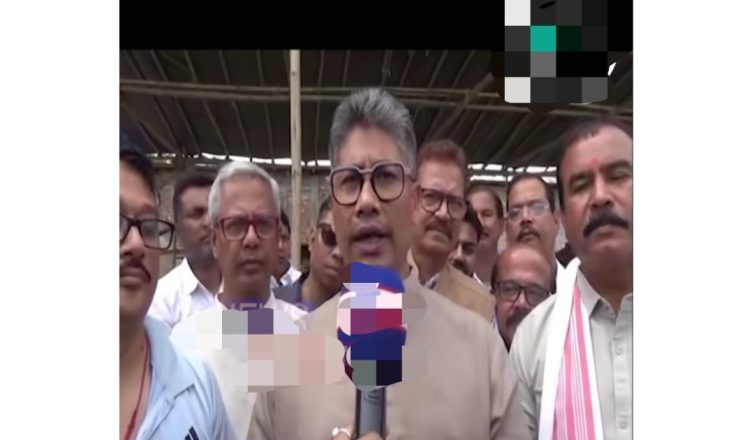
In a fresh escalation of political rhetoric in Assam, state minister Pijush Hazarika on Friday launched a strong criticism of Badruddin Ajmal, alleging that the opposition leader has spent nearly two decades trying to politically undermine Chief Minister Himanta Biswa Sarma.
Speaking in Guwahati, Hazarika claimed that despite repeated attempts over the years, Ajmal has failed to weaken Sarma’s political standing and will continue to fail in the future. His remarks come amid ongoing political tensions in the state, where alliances and rivalries remain fluid ahead of upcoming electoral cycles.
Hazarika’s statement centered on three key claims:
- Ajmal has consistently attempted to politically target Sarma over the past 20 years
- These efforts, according to Hazarika, have failed to produce any meaningful impact
- The Assam public, he said, will continue to reject such political strategies
The minister also made controversial remarks alleging that “Bangladeshi elements” in Assam could not harm the Chief Minister, a statement likely to trigger further political debate given the sensitivity of migration-related issues in the state.
Additionally, Hazarika accused Ajmal of shifting political alliances over time, including aligning with the Indian National Congress, to oppose Sarma.
Official Statement Reframed
While no formal written statement was issued, Hazarika’s remarks to the media conveyed a clear political message. He suggested that Ajmal’s strategies have been repetitive and ineffective, arguing that the electorate in Assam has repeatedly rejected such attempts.
Hazarika also emphasized confidence in public support for the current leadership, stating that voters would continue to respond decisively to what he described as “politically motivated opposition tactics.”
Context: A Longstanding Political Rivalry
The remarks highlight a broader and longstanding political rivalry in Assam involving multiple parties and leaders.
Badruddin Ajmal, who heads the All India United Democratic Front (AIUDF), has been a prominent figure in Assam politics, particularly among minority communities. His party has often positioned itself as an alternative to both the Bharatiya Janata Party (BJP) and the Congress.
On the other hand, Himanta Biswa Sarma, a key leader of the Bharatiya Janata Party (BJP), has played a central role in reshaping Assam’s political landscape over the past decade. Before joining the BJP, Sarma was associated with the Congress, making the political dynamics even more complex.
The reference to a “20-year” rivalry appears to reflect broader political tensions that predate current alignments, including periods when leaders were part of different political formations.
Alliances and Political Strategy
Hazarika’s criticism also touched on Ajmal’s history of political alliances. The AIUDF has, at different times, collaborated or coordinated with opposition parties, including the Congress, particularly during elections to counter the BJP’s dominance.
Such alliances have been a common feature in Assam politics, where fragmented vote bases often lead to strategic partnerships. However, these coalitions have also faced challenges in maintaining cohesion and delivering electoral success.
By highlighting these shifting alliances, Hazarika sought to portray Ajmal’s approach as inconsistent and politically opportunistic. However, opposition leaders have historically defended such strategies as necessary to provide a united challenge to ruling parties.
Migration and Identity Politics
One of the more sensitive aspects of Hazarika’s remarks was his reference to “Bangladeshi elements,” a term often used in Assam’s political discourse in relation to illegal immigration.
The issue of migration has long been central to Assam’s politics, influencing voter sentiment and policy decisions. It has been a key factor in movements such as the Assam Agitation and continues to shape electoral narratives.
Successive governments, including the current administration under Sarma, have taken a firm stance on identifying and addressing illegal immigration. However, such rhetoric also raises concerns about communal tensions and the need for careful, evidence-based policymaking.
Public Impact: What It Means for Voters
For the general public, statements like these reflect the intensity of political competition in the state but also raise broader questions:
- Policy vs rhetoric: Political debates often focus on personal attacks rather than policy issues such as employment, infrastructure, and development
- Community relations: References to migration and identity can influence social cohesion and public discourse
- Electoral strategy: Voters may see increased polarization as parties attempt to consolidate their respective vote banks
While political leaders emphasize their positions, the ultimate impact depends on how voters interpret and respond to such narratives.
Broader Political Climate in Assam
Assam’s political environment has become increasingly competitive in recent years. The BJP has strengthened its position in the state, while opposition parties continue to explore alliances to challenge its dominance.
The AIUDF remains a significant player in certain regions, particularly in constituencies with a high minority population. Meanwhile, the Congress is attempting to rebuild its base after electoral setbacks.
Statements like Hazarika’s are indicative of the ongoing positioning by political leaders as they prepare for future electoral contests. They also reflect efforts to shape public perception and reinforce party narratives.
The Role of Leadership
Leadership remains a central theme in Assam’s politics. Himanta Biswa Sarma is often portrayed by his party as a strong and decisive leader, while opposition figures like Badruddin Ajmal position themselves as representatives of specific community interests.
Hazarika’s remarks reinforce this narrative by framing Sarma as resilient against political challenges, while casting Ajmal’s efforts as ineffective.
Such framing is common in political communication, where leaders seek to project strength and stability while questioning the credibility of their opponents.
Media and Political Messaging
The exchange also highlights the role of media in amplifying political messages. Statements made at press interactions often gain wider attention, shaping public discourse beyond their immediate context.
For readers and viewers, distinguishing between political rhetoric and substantive policy discussion is crucial. While such statements provide insight into party positions, they may not always reflect actionable governance priorities.
The latest remarks by Pijush Hazarika underscore the استمرار of sharp political exchanges in Assam as parties prepare for future challenges.
While Hazarika expressed confidence that the public will continue to reject Ajmal’s approach, the evolving political landscape suggests that competition is likely to remain intense.
Going forward, the focus will likely shift to how parties translate their narratives into electoral strategies and policy initiatives. For voters, the key question remains whether political discourse will move beyond rivalry and rhetoric to address pressing issues affecting the state.
Inputs and images : Hindusthan Samachar
Edited By E. Devanshi varma
Follow us on Google News: Click Here
Last Updated on: Friday, March 27, 2026 2:15 pm by E. Devanshi Varma | Published by: E. Devanshi Varma on Friday, March 27, 2026 2:15 pm | News Categories: India
About The Author
