
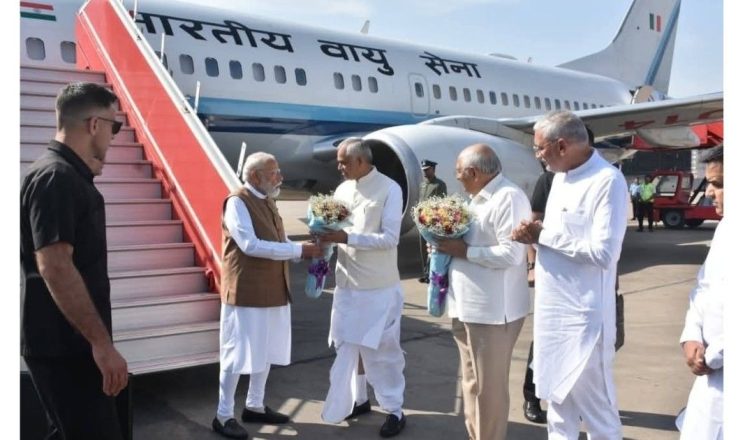
Prime Minister Narendra Modi on March 31 inaugurated the Emperor Samprati Museum in Koba, located in Gujarat’s Gandhinagar district, coinciding with the celebration of Mahavir Jayanti. The visit marked his second trip to the state within a month and brought together political leaders, religious figures, and members of the Jain community for an event centred on cultural heritage and spiritual significance.
The inauguration ceremony was held at the Mahavir Jain Adhyana Kendra, where the newly constructed museum is situated. The timing of the event on Mahavir Jayanti, one of the most important festivals in Jainism, added to its symbolic importance.
Key Announcements and Highlights
The central highlight of the visit was the formal inauguration of the Emperor Samprati Museum, a cultural institution dedicated to preserving and showcasing the legacy of Emperor Samprati, a Mauryan ruler historically associated with the promotion of Jainism.
The museum features a range of exhibits, including:
- Archaeological artefacts linked to ancient Jain traditions
- Sculptures and inscriptions from different historical periods
- Educational displays explaining Jain philosophy and its evolution
- Visual and curated narratives about Emperor Samprati’s reign and contributions
The project aims to serve both as a repository of historical knowledge and as an educational space for visitors interested in India’s religious and cultural history.
Prime Minister’s Visit and Reception
The Prime Minister arrived in Ahmedabad earlier in the day, where he was received at Sardar Vallabhbhai Patel International Airport by Gujarat Governor Acharya Devvrat and Chief Minister Bhupendrabhai Patel. Following a brief reception, he proceeded to Koba for the inauguration ceremony.
At the venue, Modi was welcomed by state officials and prominent Jain religious leaders. The event included traditional ceremonies and interactions with members of the Jain community, reflecting the cultural and spiritual context of the occasion.
The presence of senior monks and religious leaders underscored the significance of the museum within the Jain community, particularly given its focus on a historical figure closely associated with the faith.
Official Statement
During the inauguration, Prime Minister Modi emphasised the importance of preserving India’s diverse cultural and spiritual traditions. He highlighted that institutions like the Emperor Samprati Museum play a vital role in connecting present and future generations with the country’s historical roots.
He noted that Emperor Samprati’s contributions to Jainism and his efforts to promote non-violence and ethical governance remain relevant in contemporary times. The Prime Minister also pointed to the role of such initiatives in strengthening cultural tourism and enhancing awareness of lesser-known historical figures.
Additionally, he acknowledged the efforts of the Mahavir Jain Adhyana Kendra in developing the museum and promoting research and education related to Jain philosophy.
Dignitaries in Attendance
The inauguration event saw the participation of several senior political and community leaders. Among those present were:
- Gujarat Governor Acharya Devvrat
- Chief Minister Bhupendrabhai Patel
- State Home Minister and Deputy Chief Minister Harsh Sanghvi
- Sudhir Mehta, President of the Mahavir Jain Adhyana Kendra
The gathering also included Jain scholars, religious leaders, and community representatives from across the country, reflecting the wider national interest in the project.
One of the notable moments during the event was when the Prime Minister received blessings from Acharya Padmasagar Suri, a respected Jain spiritual leader. This interaction symbolised the intersection of governance and spirituality, particularly in the context of cultural preservation.
Context and Background
The Emperor Samprati Museum is named after Samprati, a Mauryan emperor believed to have ruled during the 2nd century BCE. Though not as widely recognised as his grandfather Ashoka, Samprati is regarded in Jain historical accounts as a significant patron of the religion.
According to traditional narratives, Samprati played a key role in spreading Jain teachings across different regions of India. He is also credited with supporting the construction of temples and promoting non-violence, a central tenet of Jain philosophy.
In recent years, there has been a growing focus on documenting and preserving regional and religious histories that have not received widespread attention in mainstream narratives. The establishment of museums like this one aligns with broader efforts to highlight India’s cultural diversity.
Gujarat, in particular, has strong historical links to Jainism, with several important pilgrimage sites and a significant Jain population. The development of the museum is part of a wider push to position the state as a hub for cultural and religious tourism.
Public Impact and Relevance
The inauguration of the Emperor Samprati Museum is expected to have multiple implications, both at the local and national levels.
1. Cultural Preservation:
The museum provides a structured platform to preserve artefacts and historical narratives related to Jainism. By documenting these elements, it contributes to safeguarding intangible and tangible heritage.
2. Educational Value:
Students, researchers, and scholars can benefit from access to curated exhibits and historical materials. The museum may also encourage academic research into lesser-known aspects of Indian history.
3. Tourism Development:
The site is likely to attract visitors interested in religious tourism, archaeology, and history. This could contribute to local economic activity, particularly in Gandhinagar and surrounding areas.
4. Community Engagement:
For the Jain community, the museum represents recognition of their historical contributions and cultural identity. It may also serve as a centre for community events and educational programmes.
5. Broader Awareness:
By focusing on Emperor Samprati, the museum brings attention to a historical figure who is not widely covered in mainstream history education. This can help diversify public understanding of India’s past.
Significance of Mahavir Jayanti Timing
The decision to inaugurate the museum on Mahavir Jayanti carries symbolic importance. The festival commemorates the birth of Lord Mahavira, the 24th Tirthankara of Jainism, and is marked by prayers, processions, and community gatherings.
Launching a museum dedicated to a Jain emperor on this day reinforces the connection between historical legacy and religious observance. It also aligns with the broader objective of promoting awareness about Jain teachings, particularly principles such as non-violence, truth, and compassion.
Linking Heritage with Development
The inauguration reflects an ongoing effort to integrate cultural heritage with development initiatives. By investing in infrastructure that supports tourism and education, authorities aim to create sustainable avenues for growth while preserving historical identity.
Such projects are increasingly being seen as tools to balance economic development with cultural conservation. In this context, the Emperor Samprati Museum represents both a heritage initiative and a potential driver of local engagement.
Future Outlook
The success of the museum will depend on several factors, including visitor engagement, quality of curation, and ongoing efforts to expand its offerings. Experts suggest that incorporating digital tools, interactive exhibits, and multilingual content could enhance its accessibility and appeal.
There is also potential for the site to become part of a broader network of cultural and religious destinations in Gujarat. This could help create integrated tourism circuits that attract both domestic and international visitors.
In the coming years, the focus is likely to be on maintaining the museum’s relevance through regular updates, educational programmes, and collaborations with academic institutions.
The inauguration of the Emperor Samprati Museum in Koba marks a step toward recognising and preserving a lesser-known chapter of India’s historical and religious heritage. By situating the project within the context of Mahavir Jayanti and broader cultural initiatives, the event highlights the role of such institutions in bridging the past with the present while contributing to education, tourism, and community identity.
Inputs and images : Hindusthan Samachar
Edited By E. Devanshi varma
Also Read: Assam Marks Mahavir Jayanti with 5 Key Messages on Peace, Says Himanta Biswa Sarma
Follow us on Google News: Click Here
Last Updated on: Tuesday, March 31, 2026 2:00 pm by E. Devanshi Varma | Published by: E. Devanshi Varma on Tuesday, March 31, 2026 2:00 pm | News Categories: Politics
About The Author
