

The Union Budget 2026-27, presented by Finance Minister Nirmala Sitharaman on February 1, 2026, continues its strong push toward Viksit Bharat with a focus on manufacturing self-reliance, strategic sectors, inclusive growth, and fiscal discipline. The Budget sets total expenditure at approximately ₹53.5 lakh crore, with capital outlay enhanced to ₹12.2 lakh crore (a nearly 9% increase), and the fiscal deficit targeted at 4.3% of GDP, reflecting ongoing consolidation amid global uncertainties.
Industry leaders across footwear, electronics/semiconductors, agriculture (edible oils), and manufacturing have welcomed the targeted measures as enablers for competitiveness, innovation, and reduced import dependence.
Footwear Sector: Customs Relief Boosts Export Competitiveness
The Budget introduces customs duty simplifications, including duty-free imports of specified inputs for shoe uppers, extended export timelines for leather, textile, and footwear products, and expanded IGCR (Import of Goods at Concessional Rate) schemes. These steps aim to lower costs, ease compliance, and position India as a global manufacturing and export hub for footwear.
Gunjan Shah, MD & CEO of Bata India, highlighted the sector’s gains:
“For the footwear sector, the proposed customs duty simplifications, duty-free imports of specified inputs for shoe uppers, and extended export timelines for leather, textile and footwear products are meaningful enablers. These measures will improve cost efficiency, ease compliance and strengthen India’s position as a competitive manufacturing and export hub for footwear. Equally important is the Budget’s emphasis on building future-ready capabilities. As India invests in a young and digitally skilled workforce, there is strong alignment with our focus on design, technology and skill development. The underlying emphasis on inclusive growth also resonates with us, as we continue to expand through local entrepreneurship, deeper reach across emerging markets, and a long-standing commitment to trust and quality.”
Electronics and Semiconductors: Shift to Capability Building
Building on prior momentum, the Budget launches India Semiconductor Mission (ISM) 2.0, emphasizing equipment production, advanced materials, full-stack indigenous IP, resilient supply chains, and industry-led R&D/training. The Electronics Components Manufacturing Scheme (ECMS) outlay has been enhanced to ₹40,000 crore, while initiatives like Shakti support long-term ecosystem development.
Nikita Kumawat, Co-Founder and Executive Director of Brandworks Technologies, described the shift:
“Union Budget 2026 marks a significant change in India’s electronics and semiconductor journey, shifting the focus from capacity creation to long-term capability development. The introduction of the Indian Semiconductor Mission 2.0 and the launch of the Shakti initiative, coupled with an enhanced financial outlay of Rs 40,000 crore, further strengthen the ecosystem and reflect the government’s commitment to building a future-ready ecosystem across equipment, materials, full-stack IP, and resilient supply chains. The focus on domestic component manufacturing, R&D, and workforce upskilling is a critical step towards strengthening India’s position in the global electronics value chain. These measures will reduce import dependence and create the foundation for innovation-led, sustainable growth. India’s next phase of progress will be driven by companies that integrate design, engineering, and advanced manufacturing at scale, for which Budget 2026 lays the groundwork. This transition reinforces India’s ambition to emerge as a global hub for electronics and semiconductor innovation.”
Agriculture and Edible Oils: Productivity Focus for Resilience
The Budget prioritizes high-value crops, climate-resilient agriculture, improved agri-credit, and AI integration via initiatives like Bharat-VISTAAR for better crop planning, yield prediction, and risk management. These aim to enhance domestic oilseed productivity and reduce reliance on imported edible oils.
Sparsh Sachar, Director and Business Head (FMCG) at Nutrica, noted the potential impact:
“Union Budget 2026 takes a meaningful step towards addressing India’s long-standing dependence on imported edible oils by shifting the focus to domestic oilseed productivity and resilience. The emphasis on high-value crops, climate-resilient agriculture and improved agri-credit can help farmers invest more confidently in better inputs and practices for oilseed cultivation. The integration of AI through initiatives like Bharat-VISTAAR also has the potential to improve crop planning, yield predictability and risk management for oilseed farmers. Over time, these measures can support a more stable domestic oil ecosystem, benefiting farmers, agri-businesses and consumers by reducing volatility and import vulnerability.”
Manufacturing and MSMEs: Championing Self-Reliance
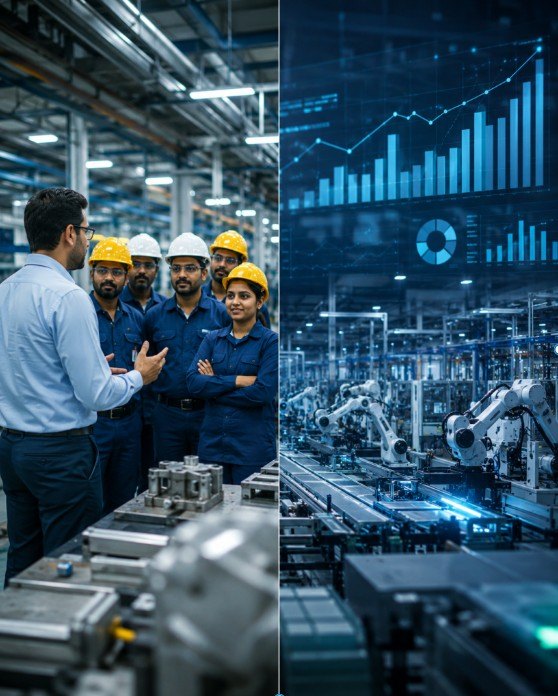
The Budget scales manufacturing in strategic sectors, introduces a ₹10,000 crore SME Growth Fund (to create Champion MSMEs), additional support for the Self-Reliant India Fund, skill development, market access, and schemes for construction/infrastructure equipment. These align with Aatmanirbharta goals, rejuvenating legacy industries and fostering resilient ecosystems.
Umang Bansal, Chairman of Polo Elevators, praised the forward-looking approach:
“The Union Budget 2026 is a forward-looking and very encouraging step for India’s manufacturing sector. With Aatmanirbharta at its core, the focus on scaling up seven strategic sectors, rejuvenating legacy industries, and creating Champion MSMEs shows that the government is committed to building a resilient and self-reliant industrial ecosystem. The ₹10,000 crore SME Growth Fund, along with measures to enhance skill development and access to new markets, will empower manufacturers to formalize processes, upgrade technology, and compete confidently on the global stage. At Polo Elevators, this aligns perfectly with our mission to deliver high-performance lifts and critical construction equipment that support the country’s infrastructure and urban growth. We also welcome the expansion of the Electronics Components Manufacturing Scheme to ₹40,000 crore and the introduction of the Construction and Infrastructure Equipment scheme. Strengthening domestic manufacturing of technologically advanced equipment, from elevators and firefighting systems to tunnel-boring machines for metros and high-altitude roads, will help companies like ours invest in innovation, enhance supply-chain resilience, and create high-quality jobs. Taken together with the focus on city economic regions and long-term infrastructure development, the Budget provides a strong foundation for Indian manufacturing to grow sustainably, drive exports, and contribute meaningfully to the country’s USD 7 trillion economy vision.”
The Budget’s emphasis on Yuva Shakti, strategic investments, and inclusive reforms positions India for sustained high-growth, self-reliance, and global competitiveness in a challenging external environment. Industry reactions underscore optimism that these targeted interventions will translate into tangible gains across key sectors.