


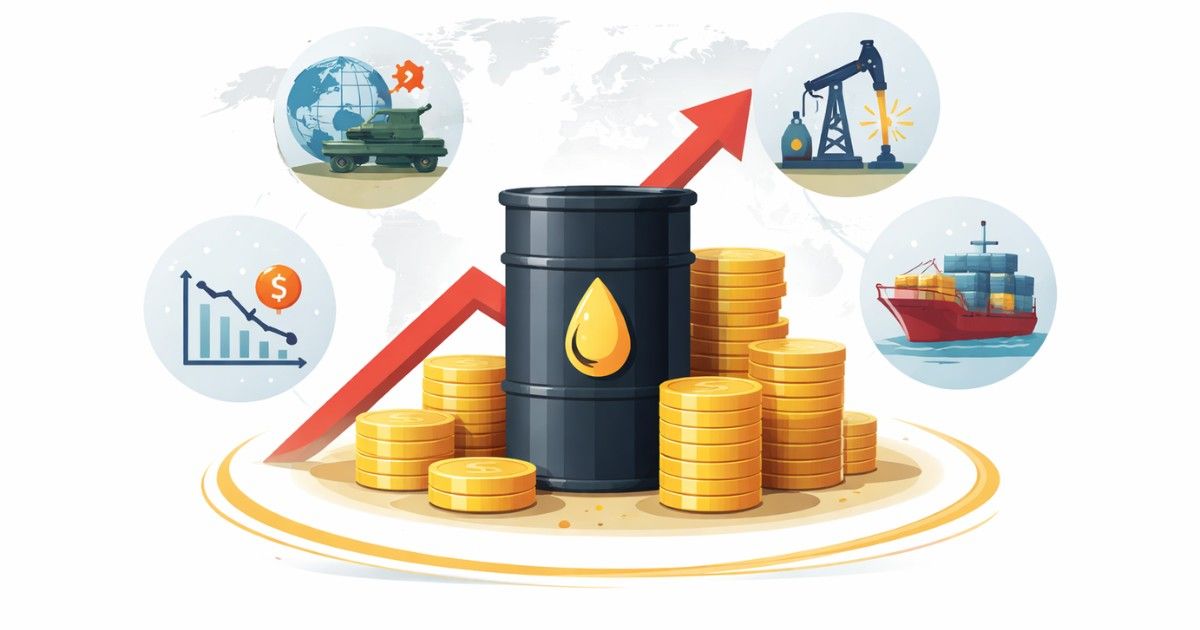
Global oil prices have surged nearly 5% in a single trading session, raising fresh concerns about fuel costs and inflation in India. The sudden spike has caught the attention of policymakers, investors, and consumers alike.
Brent crude and WTI crude both recorded strong gains in international markets. The move comes at a time when many economies were hoping for stable energy prices.
For India, which imports more than 85% of its crude oil requirements, this development is critical. A sustained rise in oil prices can directly impact petrol and diesel rates, transport costs, airline fares, and overall inflation.
Here is a detailed breakdown of what caused the surge and why it matters.
Prices Rise 5%: What Triggered the Sudden Spike?
International benchmark Brent crude moved close to the $80 per barrel level, while US benchmark WTI also climbed sharply during the latest trading session.
A 5% jump in a single session is considered significant in the market. Such sharp movements usually happen when there is a major shift in supply or demand expectations.
Energy traders and analysts point to a combination of geopolitical risks, supply management, improving demand outlook, and falling inventories as the main triggers.
4 Reasons Behind the Sudden Surge in Oil Prices
1. Rising Geopolitical Tensions in Oil-Producing Regions
Geopolitical uncertainty remains one of the strongest drivers of price volatility.
Tensions in key oil-producing regions have increased concerns about possible supply disruptions. Even the risk of conflict in areas that control vital shipping routes can push prices higher.
When traders sense instability, they price in a risk premium. This often leads to a rapid spike in crude oil benchmarks.
Markets react not only to actual disruptions but also to the possibility of future supply challenges.
2. Production Cuts by OPEC and Allied Nations
Another major factor behind the rally is continued supply discipline by OPEC and its allies, commonly known as OPEC+.
The producing group has maintained production limits in recent months to stabilize prices and prevent oversupply.
When output remains restricted while demand shows strength, prices tend to rise.
Even modest reductions in daily production can significantly impact global supply, as oil markets operate on tight balances.
3. Stronger Demand Signals from Major Economies
Improving economic indicators in large oil-consuming nations such as the United States and China have supported the rally.
Recent data suggests steady industrial activity and stable fuel consumption. Travel demand and freight movement have also shown resilience.
When the world’s largest economies signal stable or growing fuel usage, traders anticipate stronger demand ahead.
Higher demand expectations, combined with limited supply, naturally push prices upward.
4. Decline in US Crude Oil Inventories
Weekly data from the United States showed a decline in crude oil stockpiles.
Lower inventories suggest that supply is tightening or that demand is stronger than previously expected.
When stock levels fall, the market perceives reduced availability of spare supply. This often supports higher prices.
Inventory data is closely watched because it offers insight into short-term supply-demand balance.
Why This Oil Price Surge Matters for India
India is among the world’s largest oil importers. Changes in global crude prices directly affect the country’s economy.
1. Possible Impact on Petrol and Diesel Prices
Fuel prices in India are linked to international crude rates, along with refining costs and taxes.
If global oil prices remain elevated, oil marketing companies could face pressure on margins. This may eventually influence petrol and diesel prices, depending on government decisions.
Even if retail prices stay unchanged in the short term, sustained high crude prices can create cost pressures.
2. Inflation Concerns May Rise
Crude oil affects transportation, manufacturing, and logistics.
When oil becomes more expensive, the cost of moving goods increases. This can push up prices of essential items, including food and consumer goods.
India has been working to keep inflation under control. A prolonged oil rally may complicate those efforts.
3. Pressure on India’s Import Bill and Rupee
Higher crude prices increase the country’s total import bill.
A rising import bill can widen the trade deficit. This may put pressure on the Indian rupee against the US dollar.
A weaker rupee makes imports more expensive, adding another layer of cost pressure.
This creates a cycle where higher oil prices and currency movements influence each other.
Market Reaction Across Asset Classes
The oil price rally has affected other markets as well.
- Energy stocks have shown gains.
- Airline and logistics companies face higher fuel costs.
- Equity markets have traded cautiously amid inflation concerns.
Commodity markets are also reacting to the possibility of renewed price pressures globally.
Could Oil Prices Rise Further?
Oil markets remain sensitive to political developments and economic data.
If geopolitical tensions escalate or production cuts continue for longer than expected, prices could remain elevated.
On the other hand, any sign of easing tensions or increased output could cool the rally.
Short-term volatility is likely to continue as traders assess new data.
What Should Indian Consumers Watch Now?
For Indian households and businesses, the key factors to monitor include:
- International crude oil price trends
- Decisions by OPEC+ regarding output
- US inventory data
- Rupee movement against the US dollar
- Government stance on fuel pricing
A single 5% increase does not immediately guarantee higher petrol and diesel prices. However, a sustained trend could have wider economic effects.
The Bigger Economic Picture
The latest surge highlights how closely global energy markets are linked to politics and economic activity.
Oil remains a key driver of inflation and economic stability worldwide.
For India, long-term strategies such as diversifying energy sources, boosting domestic production, and expanding renewable energy capacity remain important.
In the short term, the focus will remain on global supply conditions and demand signals.
Key Highlights
- Global oil prices rose nearly 5% in one session.
- Brent crude approached the $80 per barrel mark.
- Geopolitical tensions, OPEC production cuts, strong demand outlook, and falling US inventories triggered the spike.
- India may face fuel price, inflation, and currency pressures if the trend continues.
The situation remains fluid. Markets are watching developments closely, as energy prices continue to influence economies worldwide.
Also Read: 5 Powerful Gains as 5G Expansion Reaches 20 More Cities, Boosting Faster Internet for Millions
Follow us on google news: Click Here