

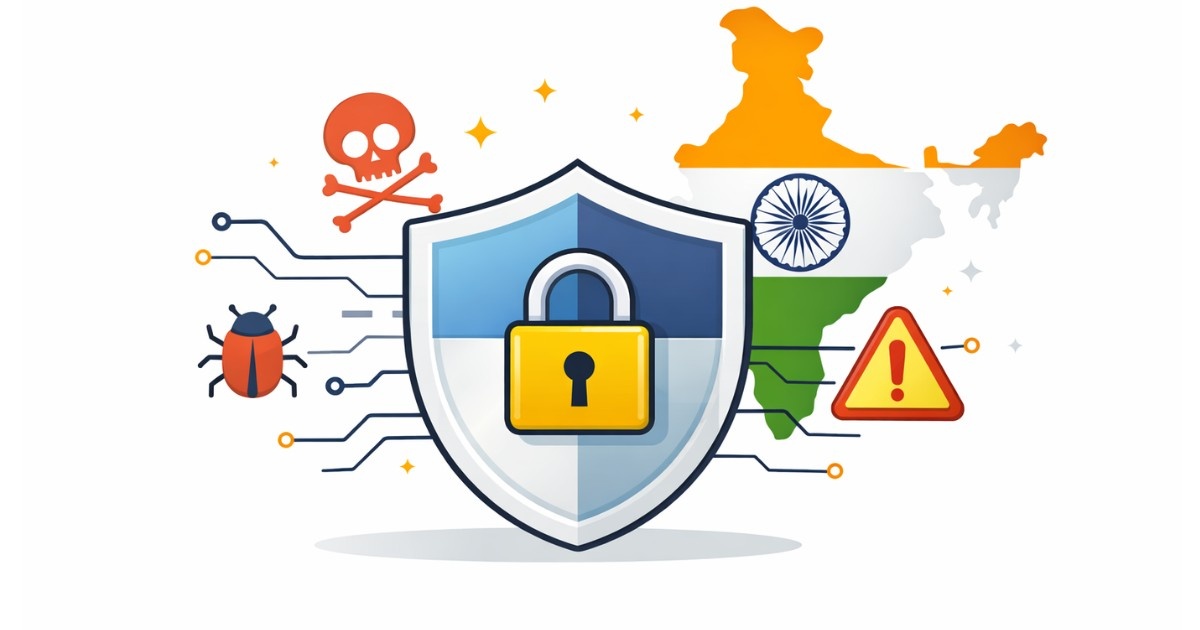
Cybersecurity is no longer just an IT issue. In 2026, it has become a core business risk for Indian companies of all sizes.
From large banks and IT firms to small startups and retail chains, digital systems now run daily operations. Cloud platforms, online payments, remote work tools, and artificial intelligence are deeply integrated into business models. At the same time, cyber threats are becoming more advanced and more frequent.
Recent years have seen rising ransomware attacks, data breaches, phishing scams, and financial fraud targeting Indian organisations. With digital payments, e-commerce, and government services expanding fast, the risk surface is wider than ever.
For Indian businesses, the question is no longer if a cyberattack will happen — but when.
Here are the top cybersecurity trends in 2026 that Indian companies must understand to stay secure and competitive.
1. AI-Powered Cyber Attacks Are Rising Fast
Artificial Intelligence is transforming both defense and offense in cybersecurity.
In 2026, cybercriminals are using AI tools to:
- Create realistic phishing emails
- Generate fake voice calls and deepfake videos
- Automate malware attacks
- Scan systems for weaknesses within seconds
AI-based attacks are faster and harder to detect. They can adapt in real time and target specific employees or departments.
For Indian businesses, this means traditional security systems are not enough.
What Companies Must Do
- Invest in AI-based security solutions
- Train employees to identify advanced phishing attempts
- Monitor unusual system behavior in real time
Human awareness combined with smart tools is now essential.
2. Ransomware Attacks Are Targeting Critical Sectors
Ransomware remains one of the biggest threats in 2026.
Attackers lock company systems or steal sensitive data and demand payment to restore access. In some cases, they threaten to leak confidential data if the ransom is not paid.
Indian sectors at higher risk include:
- Healthcare
- Banking and financial services
- Manufacturing
- Education
- Government contractors
Many attacks now follow a “double extortion” model — data is both encrypted and copied.
Why This Matters
Business downtime can cost crores in losses. Data leaks can damage reputation and lead to legal trouble.
What Companies Must Do
- Keep secure offline backups
- Update software regularly
- Limit employee access to critical systems
- Conduct regular security audits
Prevention is far cheaper than recovery.
3. Zero Trust Security Is Becoming the New Standard
In the past, companies trusted users inside their network. That model no longer works.
In 2026, more Indian businesses are moving to a Zero Trust security model.
What Is Zero Trust?
It means:
- No user is trusted automatically
- Every login is verified
- Access is given only when needed
- Continuous monitoring is applied
With remote work and hybrid offices continuing across India, employees access systems from multiple locations and devices.
Zero Trust reduces the risk of insider threats and stolen credentials.
Why It Is Important in 2026
Cyberattacks often start with compromised login details. Strong identity verification is now critical.
4. Cloud Security Risks Are Increasing
Indian businesses are rapidly shifting to cloud platforms for data storage, software, and infrastructure.
However, cloud misconfigurations remain one of the most common causes of data exposure.
In 2026, companies are facing risks such as:
- Poor access controls
- Weak API security
- Insecure third-party integrations
- Unmonitored cloud storage
Many breaches happen due to simple configuration mistakes.
Key Focus Areas
- Regular cloud security assessments
- Strong encryption for sensitive data
- Multi-factor authentication (MFA)
- Vendor risk management
As more businesses adopt digital-first models, cloud security becomes non-negotiable.
5. Data Privacy Regulations Are Getting Stricter
India’s data protection framework is evolving. Businesses must stay compliant with new privacy requirements.
In 2026, companies are under pressure to:
- Protect personal data
- Report data breaches quickly
- Maintain proper data storage practices
- Ensure consent-based data usage
Non-compliance can result in financial penalties and loss of customer trust.
Why Compliance Is Now a Business Priority
Customers are more aware of how their data is used. Trust plays a major role in brand value.
Businesses that handle customer data responsibly gain a competitive advantage.
6. Supply Chain Cyber Risks Are Expanding
Cybercriminals are increasingly targeting vendors and partners instead of attacking companies directly.
If a supplier’s system is compromised, attackers can enter the main company network through trusted connections.
In 2026, supply chain security is a major concern, especially for:
- IT service providers
- Manufacturing firms
- E-commerce companies
- Financial institutions
What Businesses Must Monitor
- Third-party software updates
- Vendor access permissions
- Shared cloud environments
- External IT service providers
Companies must assess not only their own security but also the security of their partners.
7. Cybersecurity Skills Gap Remains a Major Challenge
India has a large tech workforce, but demand for cybersecurity experts is rising faster than supply.
In 2026, businesses face challenges such as:
- Shortage of trained security professionals
- Rising hiring costs
- Increasing complexity of cyber threats
Small and mid-sized companies are especially vulnerable due to limited budgets.
How Companies Are Responding
- Outsourcing security operations
- Investing in employee training
- Using managed security services
- Automating threat detection
Cybersecurity is now a board-level discussion, not just an IT department issue.
Cyber Insurance Is Gaining Attention
With rising cyber risks, more Indian companies are exploring cyber insurance policies.
However, insurers now require:
- Strong security controls
- Risk assessments
- Incident response plans
Without proper cybersecurity practices, insurance claims may be rejected.
Cyber insurance supports recovery, but it cannot replace strong prevention systems.
Employee Awareness Is Still the First Line of Defense
Despite advanced technology, human error remains a major cause of breaches.
Common risks include:
- Clicking malicious links
- Weak passwords
- Sharing sensitive information
- Using unsecured public Wi-Fi
Regular training programs in 2026 are focusing on:
- Phishing simulations
- Password best practices
- Safe remote working guidelines
Cybersecurity culture inside an organisation is as important as technology.
Why 2026 Is a Turning Point for Indian Businesses
India’s digital economy is expanding rapidly. UPI payments, e-commerce growth, fintech innovation, and startup ecosystems continue to grow.
With this growth comes responsibility.
Cybersecurity is no longer optional. It affects:
- Financial stability
- Brand reputation
- Legal compliance
- Customer trust
- Business continuity
Companies that invest early in strong cybersecurity systems will be better prepared for the future.
Those who ignore the risks may face serious financial and operational damage.
Key Takeaways for Indian Businesses
In 2026, cybersecurity is about strategy, not just software.
Indian companies must:
- Adopt AI-driven security tools
- Move toward Zero Trust frameworks
- Strengthen cloud protection
- Monitor supply chain risks
- Train employees regularly
- Stay updated on data protection rules
Cyber threats will continue to evolve. But with the right planning and awareness, businesses can reduce risk significantly.
The Bottom Line
Cybersecurity trends in 2026 show a clear message: digital growth must be matched with digital protection.
Indian businesses are operating in a highly connected environment. Attackers are smarter, faster, and more organised.
The companies that treat cybersecurity as a long-term investment — not a short-term expense — will build stronger brands and safer systems.
As India moves deeper into a digital-first economy, cybersecurity will remain one of the most important business priorities of the decade.
Also Read: Best New Movies and Streaming Picks India — What to Watch in February 2026
Follow us on google news: Click Here