

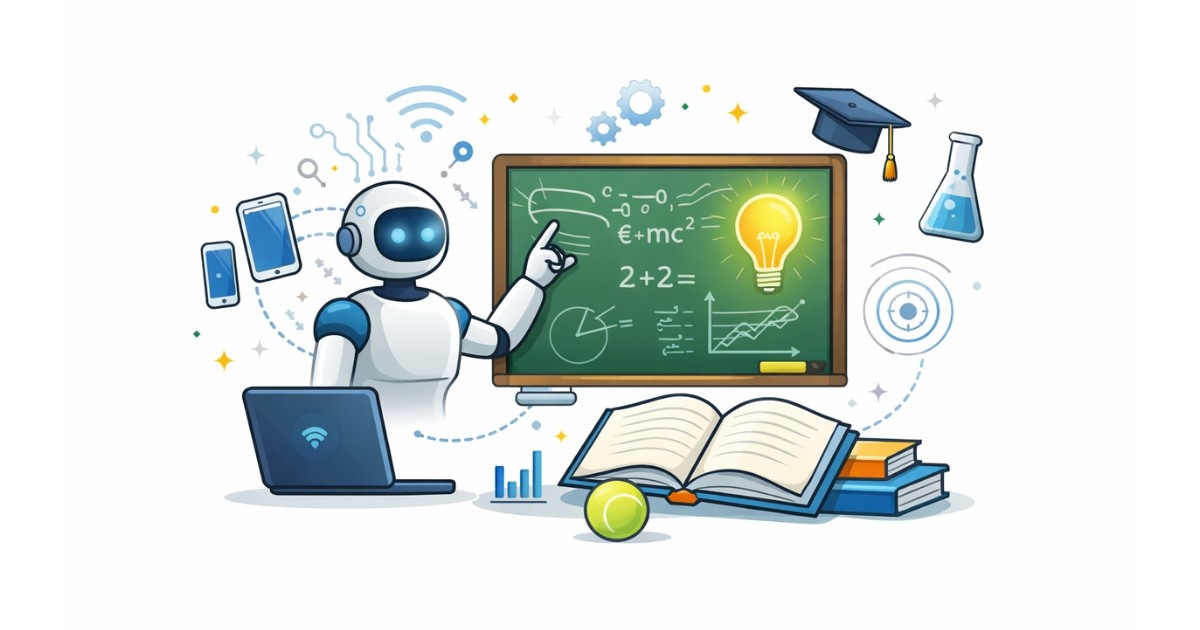
India’s school education system is going through a major digital shift. From smart boards and AI-based learning apps to coding classes and virtual labs, technology is now becoming part of daily classroom life.
This change is not just about gadgets. It is about how students learn, how teachers teach, and how schools prepare children for future jobs.
With the push for digital learning under the National Education Policy (NEP) and rising interest in artificial intelligence (AI), schools across cities and small towns are adopting new tools. Parents are also searching online for updates on AI in education, smart classrooms, and digital learning in India.
Here is a detailed look at how India’s schools are integrating AI and technology in classrooms, and what it means for students in 2026.
1. AI-Based Learning Platforms in Daily Teaching
Many private and government schools are now using AI-powered learning platforms.
These systems:
- Track student performance
- Suggest personalised lessons
- Identify weak subjects
- Provide instant feedback
Instead of one method for all students, AI tools adjust lessons based on a child’s pace. A student who struggles in maths gets extra practice. A fast learner gets advanced questions.
This method improves understanding and reduces pressure.
Schools in metro cities like Delhi, Mumbai, and Bengaluru are leading this shift. But smaller towns are also catching up with affordable digital platforms.
2. Smart Classrooms Replacing Traditional Boards
Blackboards are slowly being replaced by digital smart boards.
Smart classrooms include:
- Interactive touch screens
- Audio-visual content
- 3D learning videos
- Real-time quizzes
Teachers can show science experiments, historical events, and geography maps in visual form. This makes learning more engaging.
Students understand concepts better when they see them, not just read them.
According to school administrators, smart classroom adoption has increased sharply in the past few years, especially after the pandemic pushed digital learning.
3. Coding and AI as New Subjects in Schools
Coding is no longer limited to colleges.
Many Indian schools have introduced:
- Basic coding from Classes 6–8
- Artificial Intelligence modules in secondary classes
- Robotics and automation clubs
Students learn programming languages, logical thinking, and problem-solving skills early.
This move prepares students for careers in:
- Artificial Intelligence
- Data Science
- Robotics
- Software Development
The goal is to build future-ready skills.
4. Government Initiatives Supporting Digital Education
The government has also launched several initiatives to support digital learning.
Key focus areas include:
- Online teacher training
- Digital learning platforms
- Virtual labs
- E-content in regional languages
Government schools in rural areas are receiving tablets, digital boards, and improved internet access.
The aim is to reduce the digital divide between urban and rural schools.
While challenges remain in connectivity and infrastructure, the direction is clear: technology will play a central role in education.
5. AI Tools Helping Teachers Save Time
AI is not replacing teachers. It is helping them.
Teachers now use AI tools for:
- Automatic grading
- Creating question papers
- Tracking attendance
- Analysing class performance
This reduces paperwork.
Teachers can spend more time interacting with students instead of managing files and reports.
Many schools report that teachers feel more confident using technology after proper training sessions.
6. Virtual Labs and Simulation-Based Learning
Science and technical subjects are seeing big changes.
Virtual labs allow students to:
- Perform experiments online
- Run simulations safely
- Repeat tests multiple times
This is helpful for schools that do not have advanced lab equipment.
Students can learn physics, chemistry, and biology concepts without risk or high cost.
Simulation tools also help in subjects like economics and geography.
This improves practical understanding, even in resource-limited schools.
7. Digital Assessments and Online Exams
Assessment methods are also changing.
Many schools now conduct:
- Online tests
- AI-based performance analysis
- Instant result generation
Digital assessments reduce manual errors.
Students get faster feedback.
Parents can track progress through school apps and dashboards.
This transparency improves communication between schools and families.
Major Benefits of AI and Technology in Schools
The integration of AI and technology offers several benefits:
✔ Personalised learning
Each child learns at their own speed.
✔ Better engagement
Interactive content keeps students interested.
✔ Skill development
Students learn coding, digital literacy, and analytical thinking.
✔ Data-driven improvement
Schools use performance data to improve teaching methods.
Challenges Schools Still Face
Despite rapid growth, challenges remain.
1. Digital Divide
Not all schools have equal access to:
- High-speed internet
- Updated devices
- Technical support
Rural areas still face connectivity issues.
2. Teacher Training
Technology works only when teachers are comfortable using it.
Regular training is needed.
3. Data Privacy Concerns
With AI tools collecting student data, privacy and security are important.
Schools must ensure safe systems and proper data protection.
How Parents Are Responding
Parents are showing strong interest in tech-enabled schools.
Search trends show growing queries for:
- “AI in schools India”
- “Best smart schools near me”
- “Coding classes for school students”
However, many parents also ask important questions:
- Is screen time increasing too much?
- Are students becoming dependent on technology?
Experts say balance is key.
Technology should support learning, not replace books or human interaction.
What Experts Say About the Future
Education experts believe AI will continue to expand in classrooms over the next five years.
Expected developments include:
- AI tutors for home learning
- Advanced career guidance tools
- Real-time language translation in classrooms
- Improved accessibility tools for special needs students
India’s young population makes this transformation even more important.
With millions of students entering schools every year, digital tools can help scale quality education.
Why This Shift Matters for India’s Economy
India aims to become a global technology hub.
Preparing students with digital skills from school level is crucial.
Future jobs will require:
- Data skills
- Critical thinking
- Digital literacy
- AI awareness
Schools that adopt technology early give students an advantage in competitive exams and careers.
This transformation is not just about education. It is about national growth.
The Road Ahead for 2026 and Beyond
The integration of AI and technology in Indian schools is still evolving.
Urban private schools are moving faster. Government schools are gradually upgrading infrastructure.
The focus for 2026 includes:
- Expanding digital access
- Improving teacher training
- Ensuring safe AI usage
- Making learning inclusive
The goal is clear: use technology to improve learning outcomes, not to create inequality.
Conclusion: A New Chapter for Indian Classrooms
India’s schools are entering a new digital phase.
AI tools, smart classrooms, coding lessons, and virtual labs are no longer future ideas. They are becoming part of everyday education.
While challenges remain, the direction is strong and steady.
If implemented carefully, technology can help create more confident, skilled, and future-ready students.
For parents, students, and teachers, the message is simple: education in India is changing fast — and technology is at the heart of this transformation.
Also Read: ITF Bengaluru Open 2026: Live Updates, Big Wins and Top Performers This Week
Follow us on google news: Click Here