

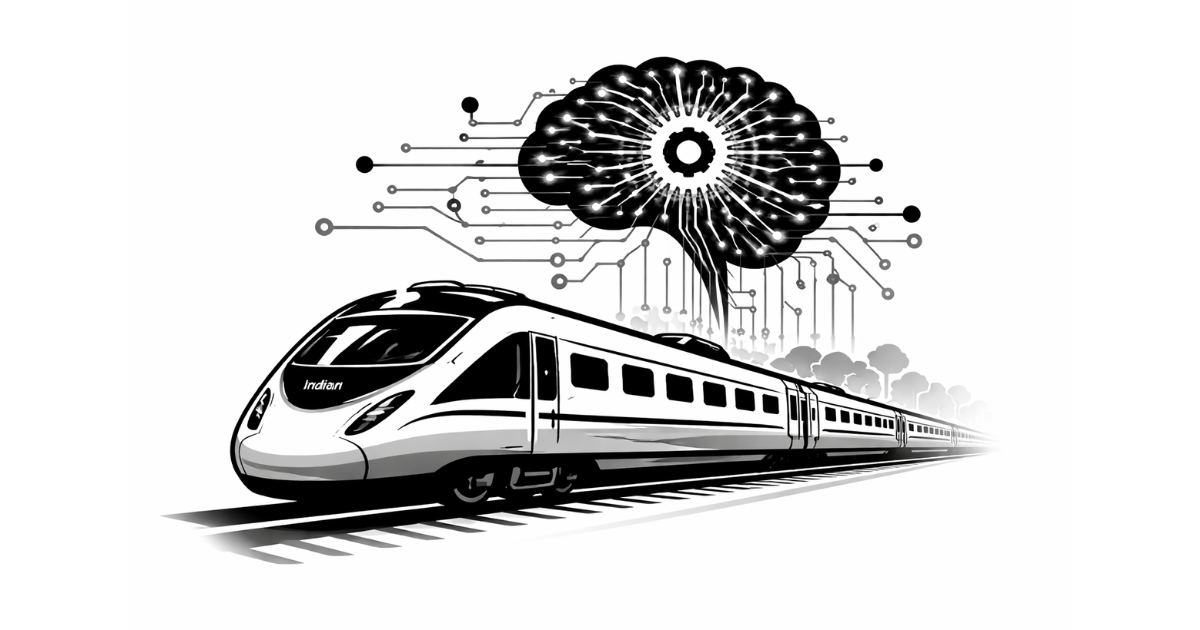
Indian Railways is entering a new digital phase. The national transporter is now using Artificial Intelligence (AI) to improve passenger services, safety, and operations. This shift is not just about technology. It affects millions of daily travellers across India.
With over 23 million passengers travelling every day, Indian Railways is one of the world’s largest rail networks. Managing such a massive system is a complex task. Delays, overcrowding, ticketing issues, and safety concerns are constant challenges.
Now, the Railways is turning to AI-based systems to solve these problems. The focus is on faster services, better crowd control, real-time information, and smarter decision-making.
This digital push is part of the government’s broader railway modernisation plan. It also aligns with India’s larger digital transformation drive.
Here is a detailed look at how AI is being integrated into passenger services and what it means for travellers.
AI-Powered Chatbots for Faster Passenger Support
One of the most visible changes is the use of AI chatbots.
Indian Railways has introduced AI-enabled virtual assistants on railway portals and enquiry platforms. These chatbots help passengers with:
- PNR status updates
- Train schedules
- Seat availability
- Fare information
- Refund rules
Passengers no longer need to wait in long queues or call helplines for basic information. The AI system provides instant responses.
The goal is simple: reduce waiting time and improve user experience.
For millions of passengers who depend on mobile-based services, this move brings faster and more reliable support.
Smart Ticketing and Predictive Analytics
AI is also being used to improve ticket booking systems.
Railway authorities are using predictive analytics to study booking patterns. This helps in:
- Identifying high-demand routes
- Adjusting coach composition
- Adding special trains during peak seasons
- Managing waitlist pressure
By studying past travel data, AI systems can predict rush periods during festivals, holidays, and exam seasons.
This allows Indian Railways to plan better and reduce last-minute congestion.
For passengers, this means improved seat availability and better planning options.
AI for Crowd Management at Major Stations
Crowd management is a serious issue at major railway stations such as:
- New Delhi
- Mumbai CSMT
- Howrah
- Chennai Central
AI-based video analytics systems are now being tested to monitor passenger flow.
These systems can:
- Detect overcrowded platforms
- Identify unusual crowd movement
- Alert authorities in real time
This helps prevent stampedes and improves safety during peak travel hours.
Smart surveillance systems also assist in managing entry and exit gates more efficiently.
For daily commuters, this reduces chaos and improves station safety.
Facial Recognition for Security and Passenger Verification
Indian Railways has begun limited trials of facial recognition systems at select stations.
These systems use AI to match faces with ticket data and security watchlists. The aim is to:
- Improve security checks
- Identify suspicious activity
- Prevent ticket fraud
Authorities have clarified that such systems are being deployed in a phased manner and with regulatory oversight.
Passenger privacy remains an important concern. Officials have stated that data protection guidelines are being followed as per government norms.
Security enhancement remains the core focus of this initiative.
AI-Driven Train Delay Prediction
Train delays are a common issue in Indian Railways.
Now, AI models are being used to predict potential delays before they happen.
By analysing:
- Weather data
- Track conditions
- Train movement patterns
- Historical delay records
The system can estimate possible disruptions.
This allows railway control rooms to take preventive steps.
Passengers may receive earlier updates about delay possibilities, helping them plan better.
Real-time data sharing is expected to improve punctuality tracking in the coming months.
Smart Maintenance Through AI Monitoring
Passenger comfort also depends on infrastructure health.
AI tools are being used to monitor:
- Track conditions
- Wheel defects
- Signal systems
- Engine performance
Sensors collect data continuously. AI systems then analyse this data to detect early warning signs of faults.
This is called predictive maintenance.
Instead of waiting for a breakdown, repairs can be done in advance.
This reduces cancellations and improves reliability.
For passengers, this means safer journeys and fewer sudden disruptions.
AI Integration in Catering and Cleanliness Services
Indian Railways is also using data analysis to improve onboard services.
AI systems track:
- Food order patterns
- Passenger feedback
- Cleanliness complaints
- Service delays
This data helps identify service gaps.
Catering units can adjust supply based on demand patterns.
Cleaning teams can be deployed more effectively in high-traffic coaches and stations.
The aim is to raise overall service quality.
Passenger satisfaction ratings are being closely monitored.
Digital Control Rooms and Centralised Monitoring
Railway operations are becoming more data-driven.
Modern control centres now use AI dashboards to monitor:
- Train movement
- Passenger density
- Emergency alerts
- Weather impact
These dashboards provide a real-time overview of operations across zones.
Instead of manual coordination, AI-assisted systems suggest faster responses.
This improves coordination between divisions and reduces response time during emergencies.
How This Fits Into India’s Broader Digital Push
The AI integration in Indian Railways aligns with the government’s digital infrastructure goals.
Rail modernisation has been a major focus area in recent Union Budgets. Investment in railway technology has steadily increased in recent years.
Digital systems are now being treated as core infrastructure, not optional upgrades.
With India moving toward smart cities and digital governance, transport networks are a key part of that transformation.
Railways, being the backbone of public transport, are central to this change.
What Passengers Can Expect in 2026 and Beyond
The AI rollout is gradual.
Passengers may see:
- Faster customer support
- More accurate delay information
- Better crowd control at stations
- Smarter ticket management
- Improved safety checks
However, full-scale transformation will take time.
Infrastructure upgrades, staff training, and system integration are ongoing processes.
The Railways has indicated that digital tools will expand in phases across more stations and routes.
Challenges and Concerns
While AI brings many benefits, there are also challenges.
- Data Privacy: Passenger data protection must remain a priority.
- Technical Glitches: New systems require testing and monitoring.
- Digital Divide: Not all passengers are comfortable using app-based services.
- Cybersecurity Risks: Strong security measures are needed to prevent breaches.
Railway authorities have stated that cybersecurity frameworks are being strengthened alongside AI adoption.
The balance between technology and accessibility remains important.
Expert View: Why AI in Railways Is a Long-Term Shift
Transport experts believe AI integration is not a short-term experiment.
It is part of a structural change in how large public systems operate.
For a network as vast as Indian Railways, manual monitoring alone is not enough.
AI allows real-time data processing at a scale that humans cannot manage alone.
This makes operations more efficient and responsive.
Over time, these systems are expected to reduce operational costs and improve passenger satisfaction.
Impact on Daily Commuters and Long-Distance Travellers
For daily commuters, improvements in crowd management and delay prediction will have the biggest impact.
For long-distance travellers, better booking systems and smarter service management will matter more.
Tourists and occasional travellers will benefit from improved digital assistance tools.
Overall, the focus is on making railway travel more predictable and less stressful.
Conclusion: A Digital Future for India’s Largest Transport Network
Indian Railways’ move to integrate AI into passenger services marks a major digital step.
The focus is on safety, efficiency, and better customer experience.
With millions depending on trains every day, even small improvements can have a large impact.
While challenges remain, the direction is clear. Data-driven systems are becoming central to railway operations.
As AI adoption expands, passengers can expect smoother journeys, better information, and smarter services.
In 2026, the transformation has begun. The coming years will determine how deeply AI reshapes India’s railway experience.
Also Read: BAFTA 2026 Tribute: Dharmendra Honoured in Emotional Moment at British Academy Film Awards
Follow us on google news: Click Here