

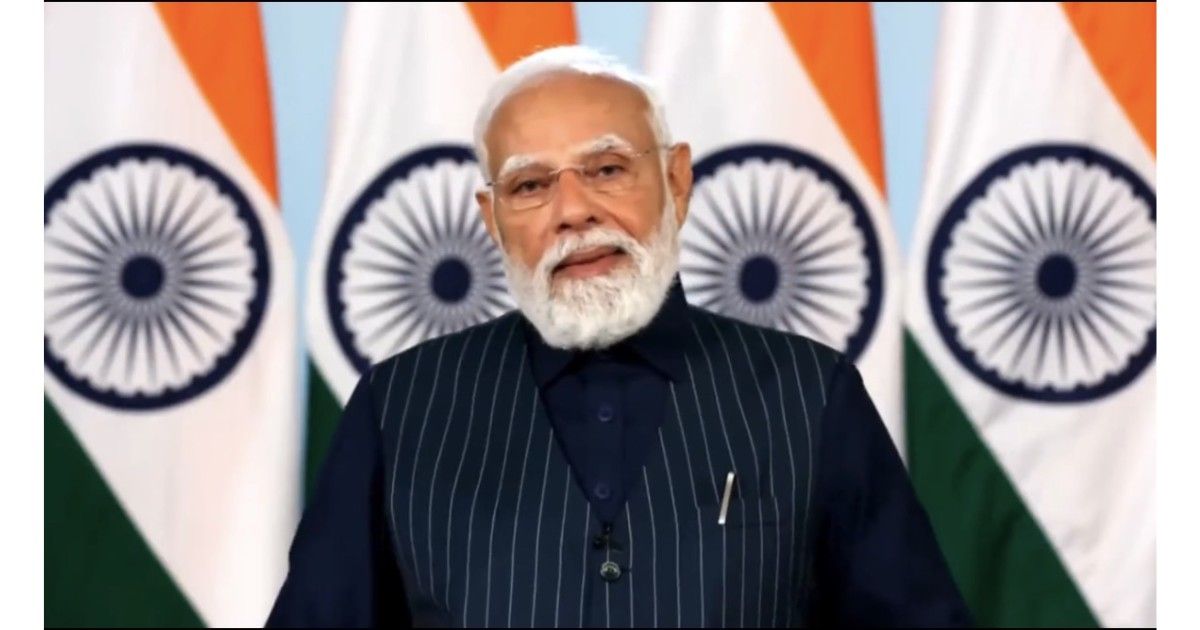
New Delhi, May 6: Prime Minister Narendra Modi on Tuesday reiterated the importance of selfless service and compassion in everyday life, sharing a Sanskrit subhashita (moral verse) on social media platform X. The message emphasized that actions performed without selfish intent not only bring inner fulfillment but also contribute to the well-being of society at large.
The Prime Minister’s post, though brief, aligns with his recurring emphasis on values-driven living and social responsibility. By invoking a traditional Sanskrit verse, he highlighted timeless ethical principles that continue to hold relevance in modern society.
Key Announcements / Highlights
- Prime Minister shared a Sanskrit subhashita promoting ethical conduct.
- Emphasis on selfless action without expectation of reward.
- Highlighted three core values: non-harm, compassion, and generosity.
- Linked personal fulfillment with societal well-being.
- Reinforced the importance of moral responsibility in daily life.
The Message Shared by the Prime Minister
In his post, the Prime Minister wrote that actions undertaken without any ulterior motive represent true humanity. He added that such deeds not only provide a sense of inner joy but also play a crucial role in building a more compassionate and inclusive society.
The Sanskrit verse shared reads:
“अद्रोहः सर्वभूतेषु कर्मणा मनसा गिरा।
अनुग्रहश्च दानं च शीलमेतत्प्रशस्यते॥”
The verse conveys a set of ethical ideals deeply rooted in Indian philosophical traditions. It suggests that one should refrain from harboring ill will toward any living being—whether through thoughts, words, or actions. It further emphasizes the importance of kindness, compassion, and generosity as defining traits of commendable character.
Understanding the Subhashita
Subhashitas are short Sanskrit sayings that encapsulate moral teachings and life lessons. They are widely found in classical Indian literature and are often used to convey ethical guidance in a concise and memorable way.
The verse shared by the Prime Minister outlines three fundamental principles:
- Non-harm (Adrohah): Avoiding hostility toward others in thought, speech, and action.
- Compassion (Anugraha): Showing kindness and empathy toward all beings.
- Charity (Daanam): Practicing generosity and helping those in need.
Together, these principles form a moral framework that promotes harmony, social cohesion, and personal integrity.
Official Statement (Rewritten)
While not an official policy announcement, the Prime Minister’s message serves as a reflection of his broader vision of ethical governance and citizen responsibility. He indicated that selfless acts, when carried out without expectation of personal gain, contribute significantly to both individual satisfaction and collective progress.
The emphasis on compassion and generosity, he suggested, is essential for fostering a society where mutual respect and cooperation prevail.
Context / Background
Prime Minister Modi has frequently used social media platforms to share messages rooted in Indian culture, philosophy, and spirituality. His posts often draw from ancient texts, including the Vedas, Upanishads, and other classical works, to communicate values that resonate across generations.
Such messages are typically shared on occasions of national importance, festivals, or as part of broader efforts to encourage civic responsibility and ethical behavior. In recent years, the Prime Minister has also linked these values to governance initiatives, emphasizing transparency, accountability, and public service.
The concept of selfless service, or “seva,” has been a recurring theme in his speeches and public engagements. It is often associated with volunteerism, community service, and citizen participation in nation-building efforts.
Public Impact
While the message does not introduce a new policy or scheme, it carries significance in shaping public discourse around ethics and social responsibility. By highlighting values such as compassion and generosity, the Prime Minister reinforces the importance of individual behavior in addressing broader societal challenges.
In a diverse and populous country like India, where social and economic disparities persist, the idea of selfless service can play a role in encouraging community support systems and grassroots initiatives. Acts of kindness and charity, whether at an individual or institutional level, can contribute to social stability and inclusivity.
The emphasis on non-harm also aligns with principles of peaceful coexistence and mutual respect, which are essential in maintaining social harmony. In the context of increasing digital interactions, the message may also serve as a reminder of responsible communication and conduct online.
Broader Relevance
The values outlined in the Sanskrit verse are not limited to any specific cultural or religious context. Concepts such as compassion, generosity, and ethical conduct are universally recognized as essential components of a well-functioning society.
In contemporary times, where rapid economic and technological changes often bring new challenges, such messages can serve as guiding principles for individuals and communities alike. They encourage a balance between personal ambition and social responsibility.
Experts in ethics and philosophy note that revisiting traditional wisdom can provide valuable insights into modern issues, including social inequality, environmental sustainability, and mental well-being. The idea that selfless actions lead to inner satisfaction also resonates with psychological research linking altruism to improved mental health.
Digital Communication and Leadership
The Prime Minister’s use of social media to share philosophical messages reflects a broader trend in political communication. Leaders increasingly use digital platforms not only for policy announcements but also to engage with citizens on cultural and ethical topics.
Such messages can help build a connection with the public by addressing shared values and concerns. However, their impact largely depends on how they are interpreted and acted upon by individuals and communities.
In this instance, the focus on selfless service and compassion aligns with ongoing discussions about the role of citizens in contributing to national development beyond formal structures.
Looking Ahead
While the message itself is symbolic, it underscores a consistent theme in the Prime Minister’s communication—encouraging citizens to adopt values that support collective progress. Whether through volunteer work, charitable contributions, or everyday acts of kindness, the emphasis remains on individual responsibility as a cornerstone of societal well-being.
As India continues to navigate complex social and economic challenges, such reminders of ethical conduct may influence public attitudes and behaviors in subtle but meaningful ways. The integration of traditional wisdom with contemporary governance narratives reflects an effort to bridge cultural heritage with modern aspirations.
Inputs and images : Hindusthan Samachar
Edited By E. Devanshi varma
Also Read: Assam Assembly Polls See 7 Major Highlights as Turnout Peaks, Counting Set for May 4
Follow us on Google News: Click Here