
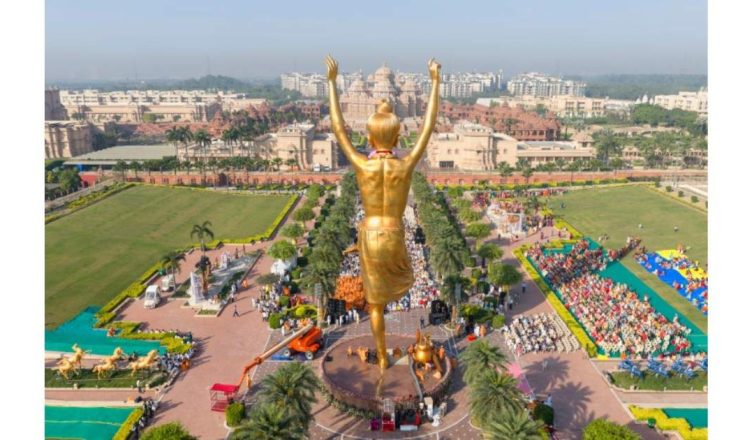
New Delhi witnessed a significant spiritual event this week as a 108-foot statue of Neelkanth Varni, the youthful ascetic form of Bhagwan Swaminarayan, was consecrated at the Swaminarayan Akshardham temple complex. The installation ceremony, held over March 25 and 26, drew thousands of devotees, religious leaders, and visitors from across India and abroad.
The event marks an important addition to one of the capital’s most visited spiritual and cultural landmarks. The ceremony was conducted in accordance with traditional Hindu rituals, reflecting both religious devotion and cultural continuity.
Key Announcements and Highlights
The consecration ceremony, known as Murti Pratishtha Mahotsav, was led by Mahant Swami Maharaj, the spiritual head of the Bochasanwasi Akshar Purushottam Swaminarayan Sanstha (BAPS).
Key highlights of the event include:
- Participation of nearly 300 sadhus in Vedic rituals and ceremonies
- Attendance by thousands of devotees over two days
- Conduct of a peace yagna on March 25
- Main consecration rituals performed on March 26
- Extensive volunteer-led arrangements for crowd management and logistics
The ceremonies began early in the morning each day, with priests and sadhus performing sacred rites, accompanied by devotional singing and prayers. Devotees actively participated in the rituals, creating a spiritually charged atmosphere throughout the temple complex.
The Statue and Its Symbolism
The newly installed statue depicts Neelkanth Varni in a meditative posture, standing on one leg. This form is deeply symbolic in Hindu spiritual traditions, representing austerity, discipline, and unwavering focus.
Neelkanth Varni is believed to have undertaken an extensive spiritual journey across the Indian subcontinent as a young ascetic, renouncing worldly comforts in pursuit of higher knowledge. The statue’s design reflects this phase of renunciation and spiritual exploration.
According to organisers, the structure is among the tallest statues representing this form, adding a distinctive architectural feature to the Akshardham complex. The scale of the statue is intended not only to inspire devotion but also to visually communicate the magnitude of spiritual commitment associated with Neelkanth Varni’s life.
Official Statement
Speaking during the ceremony, Mahant Swami Maharaj described the installation as a symbol of peace, devotion, and moral values. He emphasised that such spiritual landmarks serve as reminders of the importance of discipline, humility, and service in everyday life.
He noted that the teachings associated with Neelkanth Varni continue to remain relevant, particularly in a modern context where individuals often seek balance and purpose. The statue, he said, is expected to inspire visitors to reflect on these values and incorporate them into their lives.
Context and Background
Neelkanth Varni holds a significant place within the Swaminarayan tradition. He represents the early life of Bhagwan Swaminarayan, during which he is believed to have travelled extensively across India, engaging with scholars and spiritual seekers.
The Bochasanwasi Akshar Purushottam Swaminarayan Sanstha (BAPS), which manages the Akshardham temple, is a global Hindu socio-spiritual organisation known for its cultural, educational, and humanitarian initiatives.
The Akshardham temple complex in New Delhi, inaugurated in 2005, is widely recognised for its intricate architecture, exhibitions, and spiritual significance. It attracts millions of visitors annually and serves as a major centre for cultural tourism.
Over the years, the complex has hosted numerous religious events, festivals, and educational programmes aimed at promoting Indian heritage and values. The addition of the Neelkanth Varni statue further enhances its cultural and spiritual offerings.
Public Impact and Why It Matters
The installation of the 108-foot statue is expected to have both religious and cultural significance. For devotees, it provides a new focal point for worship and meditation. The statue’s symbolism resonates with individuals seeking spiritual guidance and inner peace.
From a tourism perspective, the development is likely to increase footfall at the Akshardham complex. Delhi, already a hub for historical and cultural attractions, stands to benefit from the addition of another prominent landmark.
The event also highlights the continued relevance of traditional religious practices in contemporary India. Large-scale participation in the ceremony indicates sustained public interest in spiritual and cultural events.
Moreover, the involvement of volunteers and coordinated efforts by temple authorities demonstrate the organisational capacity required to manage large gatherings. Such events contribute to community engagement and foster a sense of collective participation.
Broader Cultural Significance
The consecration ceremony reflects the enduring importance of ritual traditions in Hinduism. Murti Pratishtha, the process of consecrating a deity’s idol, is considered a sacred act that transforms a sculpture into a living representation of the divine.
By adhering to these rituals, the organisers ensure continuity of age-old practices while making them accessible to contemporary audiences. The event also serves as an educational opportunity for younger generations to understand the cultural and spiritual heritage associated with such traditions.
Religious scholars associated with the Swaminarayan tradition describe Neelkanth Varni as an embodiment of renunciation, discipline, and the pursuit of knowledge. These attributes are often highlighted as guiding principles for personal and societal development.
Crowd Management and Organisation
Given the scale of the event, extensive arrangements were made to ensure smooth conduct of the مراسم. Volunteers and temple staff worked together to manage crowds, coordinate entry and exit points, and facilitate participation in various programmes.
Special attention was given to maintaining order during peak hours, particularly during the main consecration ceremony. Devotional programmes were scheduled in a structured manner to accommodate large numbers of attendees.
The successful execution of the event underscores the importance of planning and coordination in managing large religious gatherings.
With the completion of the consecration ceremony, the Neelkanth Varni statue is now open for public viewing as part of regular visits to the Akshardham temple complex. Devotees can include the statue in their darshan маршруत, further enriching their spiritual experience.
Looking ahead, the installation is expected to become a central attraction within the complex, drawing both pilgrims and tourists. It also reinforces Akshardham’s position as a key destination for spiritual tourism in India.
As visitors continue to engage with the site, the statue is likely to serve not only as a religious symbol but also as a cultural landmark representing India’s rich spiritual heritage.
Inputs and images : Hindusthan Samachar
Edited By E. Devanshi varma
Also Read: Panihati Bypoll Emerges as 1 Key Political Flashpoint as BJP Fields RG Kar Victim’s Mother
Follow us on Google News: Click Here
Last Updated on: Thursday, March 26, 2026 2:36 pm by E. Devanshi Varma | Published by: E. Devanshi Varma on Thursday, March 26, 2026 2:36 pm | News Categories: India
About The Author
