
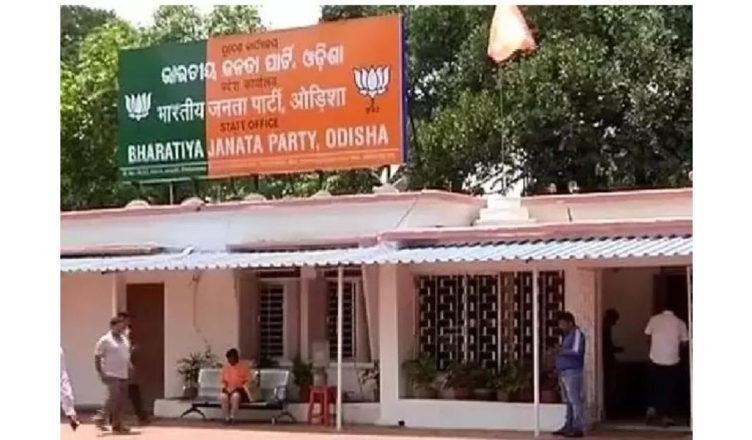
Bhubaneswar, April 10: The Bharatiya Janata Party (BJP) in Odisha on Friday unveiled its new State Executive Committee, appointing 72 members as part of a broader organisational reshuffle aimed at strengthening the party’s structure in the state. The announcement was made by Odisha BJP president Manmohan Samal.
Alongside the core executive body, the party has also designated 38 leaders as Special Invitees and 23 as Permanent Invitees, reflecting an expanded leadership framework that incorporates both experienced figures and newer entrants.
Key highlights of the new executive committee
The newly constituted committee brings together a wide spectrum of the party’s leadership in Odisha. Among those included are Chief Minister Mohan Charan Majhi, several Union Ministers, state Cabinet members, Members of Parliament (MPs), and former ministers.
This broad-based representation suggests an effort by the BJP to integrate governance leadership with organisational roles. Party insiders indicate that such a structure is designed to ensure better coordination between policy-making and grassroots mobilisation.
The inclusion of leaders from multiple tiers—ranging from central ministers to district-level office-bearers—also reflects the party’s attempt to maintain a cohesive chain of command across Odisha.
Inclusion of new entrants and expanded roles
A notable feature of the announcement is the accommodation of leaders who recently joined the BJP after leaving the Biju Janata Dal (BJD). These leaders have been inducted as Special Invitees, a role that allows participation in key discussions without being part of the core decision-making body.
Political observers see this as a strategic move to integrate defectors while maintaining organisational balance. It also indicates the BJP’s ongoing efforts to expand its base in Odisha by attracting leaders from rival parties.
In addition, the party has designated a wide range of office-bearers as Permanent Invitees. This group includes all BJP MPs, MLAs, district in-charges, district presidents, state spokespersons, and coordinators of various party cells. Their inclusion ensures that key stakeholders remain connected to the executive decision-making process.
What the State Executive Committee does
The State Executive Committee is one of the most important decision-making bodies within a political party at the state level. It typically formulates strategy, oversees organisational activities, and coordinates election preparedness.
By expanding the size and scope of the committee, the BJP appears to be focusing on strengthening internal communication and improving responsiveness to political developments.
Experts note that such committees play a critical role in translating national-level strategies into state-specific action plans, particularly in a politically competitive state like Odisha.
Official statement and intent
While announcing the committee, party president Manmohan Samal emphasised the need for a robust organisational structure to meet future challenges. Though the official statement did not elaborate on specific strategies, the composition of the committee itself signals an emphasis on inclusivity and coordination.
The presence of senior leaders alongside grassroots representatives suggests a deliberate attempt to bridge organisational gaps and ensure smoother implementation of party programmes.
Political context and background
The formation of the new State Executive Committee comes at a time when the BJP is seeking to consolidate its position in Odisha’s political landscape. Historically dominated by the Biju Janata Dal, the state has witnessed increasing competition in recent years.
The BJP has been steadily expanding its footprint in Odisha, both electorally and organisationally. The inclusion of leaders from different political backgrounds, including recent entrants from rival parties, reflects this broader strategy.
Organisational restructuring is a common practice among political parties, particularly in the run-up to elections or during periods of political transition. Such moves are often aimed at energising the cadre, improving coordination, and addressing internal challenges.
Why this matters for Odisha politics
The announcement of a 72-member State Executive Committee is significant for several reasons. First, it underscores the BJP’s focus on strengthening its organisational machinery in Odisha. A well-structured party organisation is often seen as a key factor in electoral success.
Second, the inclusion of leaders from diverse backgrounds indicates an effort to broaden the party’s appeal. By accommodating both experienced leaders and new entrants, the BJP is attempting to strike a balance between continuity and expansion.
Third, the expanded list of Special and Permanent Invitees ensures wider participation in decision-making processes. This could help the party address regional issues more effectively and respond to local concerns.
Impact on party workers and voters
For party workers, the new executive committee provides clearer lines of communication and leadership. The inclusion of district-level leaders and coordinators as Permanent Invitees is likely to enhance grassroots engagement.
For voters, the restructuring may translate into more coordinated political campaigns and policy outreach. A stronger organisational framework can improve the party’s ability to communicate its agenda and respond to public issues.
At the same time, the inclusion of leaders who have recently switched parties may draw mixed reactions. While it could strengthen the BJP’s base, it may also raise questions about ideological consistency and internal dynamics.
Looking ahead
The newly formed State Executive Committee is expected to play a crucial role in shaping the BJP’s strategy in Odisha in the coming months. With a mix of senior leadership and grassroots representation, the committee is positioned to address both organisational and electoral challenges.
As political activity in the state intensifies, the effectiveness of this expanded leadership structure will be closely watched by both supporters and opponents. The BJP’s ability to translate organisational strength into electoral gains will likely depend on how well this committee functions in practice.
Inputs and images : Hindusthan Samachar
Edited By E. Devanshi varma
Also Read: PM Modi Highlights 3 Key Lessons on Calmness and Resilience in Times of Crisis
Follow us on Google News: Click Here
Last Updated on: Friday, April 10, 2026 2:20 pm by E. Devanshi Varma | Published by: E. Devanshi Varma on Friday, April 10, 2026 2:20 pm | News Categories: Politics
About The Author
