
The debate over artificial intelligence and jobs has returned to the center of public discussion. This time, it was triggered by comments from Dario Amodei, the CEO of Anthropic.
His candid remarks about how fast AI systems are improving quickly went viral across social media platforms in India and abroad. Technology workers, students, startup founders, and policy experts joined the conversation.
The key question remains simple but serious:
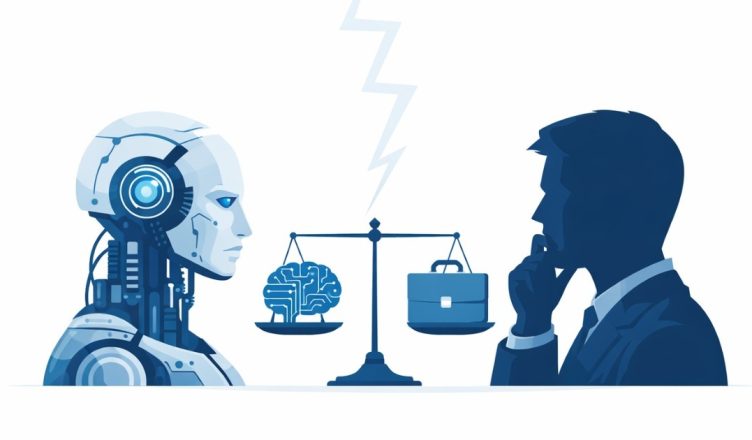
Can AI save jobs by creating new opportunities, or will it replace millions of workers?
For India — one of the world’s largest technology talent hubs — this debate carries real weight. The country has over 5 million IT professionals, and the sector contributes significantly to exports and GDP. Any major shift in hiring patterns or job roles can affect families, businesses, and economic growth.
What the Anthropic CEO Said About AI and Jobs
In recent public discussions, Dario Amodei spoke openly about the rapid progress in AI systems. He explained that advanced AI models are becoming capable of handling more complex tasks.
These tasks include:
- Writing software code
- Drafting documents
- Analyzing large data sets
- Providing research summaries
- Automating repetitive office work
His remarks did not predict a fixed number of job losses. However, he acknowledged that AI could change the way many knowledge jobs function.
The message that caught attention was this:
AI progress is moving faster than many people expected.
That single idea fueled intense debate online.
Why His Comments Went Viral in India
India has a strong presence in:
- IT services
- Software development
- Business process outsourcing (BPO)
- Startup technology companies
Many of these sectors rely on tasks that AI tools are now learning to perform.
Social media discussions on platforms like LinkedIn and X quickly reflected concerns among:
- Junior software developers
- Customer support professionals
- Content writers
- Data analysts
- Fresh engineering graduates
The timing also matters. Indian tech companies have already seen hiring slowdowns in recent years due to global economic uncertainty. When AI enters that discussion, anxiety grows.
AI Replacing Jobs: What Experts Are Saying
Many technology experts believe AI will automate certain tasks, not entire professions.
For example:
- AI can write basic code, but complex architecture still needs experienced engineers.
- AI can draft reports, but final decisions require human judgment.
- AI can answer routine customer queries, but sensitive cases need human handling.
This pattern has appeared in previous technology shifts.
When computers became common in offices in the 1990s, many feared job losses. Instead, new roles emerged — such as IT support, cybersecurity, digital marketing, and cloud computing.
The real concern is speed.
AI adoption is happening much faster than earlier tech revolutions.
That rapid shift makes reskilling urgent.
How AI Could Save Jobs Instead of Replacing Them
While fear dominates social media conversations, there is another side to the story.
AI can:
- Increase productivity
- Help small businesses scale faster
- Reduce repetitive work
- Allow professionals to focus on creative and strategic tasks
For example:
- Developers can build products faster using AI coding tools.
- Doctors can use AI for faster diagnostics.
- Teachers can create personalized learning material.
- Lawyers can review large documents quickly.
In these cases, AI acts as a co-worker rather than a replacement.
The term often used is “AI augmentation” — meaning AI supports human work.
If companies use AI responsibly, it may create new job categories such as:
- AI trainers
- Prompt engineers
- AI compliance experts
- Ethical AI auditors
- AI operations managers
India’s large STEM workforce could benefit from this shift — if skill upgrades happen quickly.
The Real Risk: Entry-Level Job Disruption
One area where concern is strong is entry-level hiring.
Many junior roles involve:
- Basic coding
- Data cleaning
- Routine documentation
- Testing software
- Customer ticket handling
AI systems can now perform many of these tasks with increasing accuracy.
If companies rely heavily on AI for basic work, they may hire fewer fresh graduates.
That creates a long-term problem:
If entry-level hiring drops, how will future senior talent develop?
Industry leaders say companies must avoid cutting off the learning pipeline.
Impact on India’s IT Services Industry
India’s IT services industry serves global clients in:
- Banking
- Healthcare
- Retail
- Telecom
- Manufacturing
Many contracts involve cost efficiency and automation.
If AI tools reduce manual effort, companies may:
- Offer faster services
- Reduce billing hours
- Change pricing models
- Shift workforce toward high-value consulting
This does not automatically mean layoffs. But it does mean job roles will evolve.
Employees may need skills in:
- AI integration
- Data management
- Cybersecurity
- Cloud systems
- Machine learning fundamentals
Government and Policy Angle
India has shown strong interest in AI development. The government has announced initiatives to promote AI research and startups.
If AI becomes a major economic driver, policy focus may include:
- Reskilling programs
- AI literacy training
- Startup incentives
- University curriculum updates
Experts argue that early policy action can reduce job shocks.
Countries that prepare early usually adapt better to automation waves.
Students and Fresh Graduates: What Should They Do?
For students in engineering, management, and computer science, the AI debate creates confusion.
Career experts suggest focusing on:
- Problem-solving skills
- Critical thinking
- AI tool literacy
- Communication skills
- Domain knowledge
Rather than competing against AI, students are advised to learn how to use AI tools effectively.
For example:
- Use AI coding assistants to improve speed.
- Learn prompt design basics.
- Understand how AI models work at a basic level.
Being AI-aware may become a basic requirement in job interviews.
Global Tech Industry Trends in 2026
Across the world, major tech firms are investing heavily in AI research and infrastructure.
Companies are:
- Building large AI models
- Integrating AI into search engines
- Adding AI features to office tools
- Automating workflows
However, most firms are also hiring AI engineers and data experts.
This shows a mixed trend:
- Some roles shrink.
- New roles expand.
The total job impact depends on how companies balance automation with expansion.
Public Fear vs Industry Reality
Social media often amplifies extreme views.
Some posts claim AI will eliminate most jobs.
Others say AI will create unlimited opportunities.
The reality likely lies in between.
History shows that technology shifts usually:
- Replace certain tasks
- Create new industries
- Demand new skills
- Reward adaptability
The key difference this time is scale and speed.
AI models improve quickly. Updates happen in months, not years.
That fast pace increases uncertainty.
What Businesses Should Do Now
Companies in India can prepare by:
- Investing in employee training
- Offering AI workshops
- Creating internal AI policies
- Encouraging responsible use
Instead of replacing workers immediately, many firms are testing AI in limited roles.
This phased approach reduces disruption.
Long-term success will depend on how businesses combine human intelligence and artificial intelligence.
The Core Question Remains
The viral discussion sparked by Anthropic’s CEO has highlighted one reality:
AI is not a future issue. It is a present one.
The debate is no longer about whether AI will affect jobs.
It is about:
- How fast change will happen
- Who prepares early
- Who adapts
- Who delays action
For India’s young workforce, preparation may determine career stability.
Conclusion: A Defining Moment for Tech Careers
The comments from Dario Amodei have reignited a global conversation.
They did not confirm mass layoffs.
They did not promise unlimited job growth.
Instead, they pointed to rapid progress.
India stands at a key moment.
With one of the world’s youngest populations and a strong tech ecosystem, the country has an opportunity to lead in AI innovation.
But leadership requires preparation.
Workers must upgrade skills.
Companies must invest in training.
Institutions must update courses.
The question “Can AI save jobs or replace them?” does not have a simple yes or no answer.
The outcome will depend on how individuals, businesses, and governments respond in 2026 and beyond.
For now, one fact is clear:
The AI jobs debate is shaping the future of tech careers — and the conversation has only just begun.
Also Read: 7 Big Highlights at DIFF 2026: Delhi’s Bold New Film Festival Takes Off
Follow us o google news: Click Here
Last Updated on: Wednesday, February 25, 2026 2:57 pm by News Estate Team | Published by: News Estate Team on Wednesday, February 25, 2026 2:57 pm | News Categories: News
About The Author
