
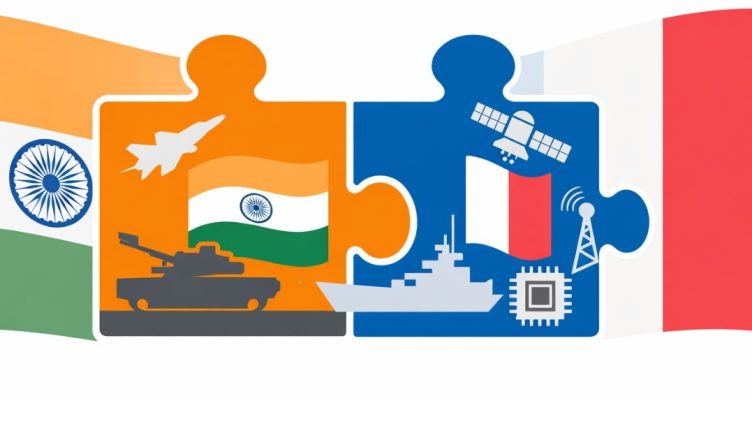
India and France are strengthening their defence and technology partnership at a time when global power equations are changing rapidly. From rising security concerns in the Indo-Pacific to fast growth in artificial intelligence and advanced manufacturing, both nations are moving to protect their long-term interests.
For India, this partnership supports defence modernisation, technology independence, and strategic balance. For France, India remains a key Indo-Pacific partner and one of the world’s fastest-growing major economies.
The renewed focus on cooperation comes as countries reassess supply chains, defence preparedness, and digital security. In this shifting global landscape, the India–France partnership is gaining greater importance in 2026.
A Strong Strategic Relationship Built Over Decades
India and France established a Strategic Partnership in 1998. Since then, the relationship has steadily expanded across defence, space, civil nuclear energy, and technology.
Over the years, France has become one of India’s most reliable defence partners. Unlike some other global powers, France has consistently supported India’s strategic autonomy and independent foreign policy approach.
The partnership is not limited to arms deals. It includes joint research, industrial cooperation, and co-development of advanced systems.
Defence Cooperation: A Key Pillar of the Partnership
Rafale Fighter Jets and Advanced Air Power
One of the most visible examples of cooperation is the induction of Rafale fighter aircraft into the Indian Air Force. Manufactured by Dassault Aviation, the Rafale deal marked a major upgrade in India’s air combat capabilities.
The aircraft improved India’s operational readiness and strengthened air defence along sensitive borders.
Beyond aircraft purchases, India and France are working on deeper defence industrial ties. This includes potential co-production and technology transfer discussions.
Naval Cooperation in the Indo-Pacific
Maritime security remains central to the partnership.
Both countries share concerns about freedom of navigation and regional stability in the Indo-Pacific region. The Indian Ocean is critical for global trade, and both nations have strong naval presence there.
Joint naval exercises between the Indian Navy and the French Navy have increased in frequency. These exercises improve coordination, communication, and readiness.
France also has overseas territories in the Indian Ocean, making it a resident power in the region. This gives the partnership a practical security dimension.
Defence Manufacturing and ‘Make in India’ Push
India’s defence policy now focuses heavily on domestic production. The goal is to reduce imports and build local capability.
France has shown interest in supporting this shift. French defence firms are exploring joint ventures and partnerships with Indian companies under the ‘Make in India’ initiative.
Key areas of focus include:
- Aircraft engines
- Submarine systems
- Missile technologies
- Electronics and radar systems
Such cooperation supports India’s long-term aim of becoming a defence manufacturing hub.
Technology Cooperation: From AI to Space
Defence is only one part of the growing partnership. Technology cooperation is expanding rapidly.
Artificial Intelligence and Digital Innovation
Both India and France are investing heavily in artificial intelligence, cybersecurity, and digital infrastructure.
Technology is now linked directly to national security. Secure communication systems, data protection, and AI-based defence tools are high priority areas.
Cooperation in emerging technologies can help India accelerate innovation while reducing reliance on limited suppliers.
France, in turn, benefits from India’s large talent base and growing digital ecosystem.
Space Collaboration
Space remains another strong pillar of cooperation.
The Indian Space Research Organisation (ISRO) and the French space agency CNES have worked together on satellite missions and climate research.
Joint missions in earth observation and maritime surveillance have strategic value. Satellite data supports disaster management, climate monitoring, and defence planning.
As space becomes more competitive globally, collaboration in this sector gains importance.
Civil Nuclear Energy and Clean Technology
Civil nuclear cooperation is another long-standing area of engagement.
France supports India’s civilian nuclear energy ambitions. Clean energy is critical for India as it balances economic growth with climate commitments.
In addition to nuclear energy, both countries are exploring partnerships in:
- Renewable energy
- Green hydrogen
- Climate finance
- Sustainable urban development
These sectors align with global climate goals and India’s long-term energy security strategy.
Economic and Trade Ties Expanding
Trade between India and France has grown steadily over the years. France is among India’s key trading partners within the European Union.
French companies operate in sectors such as:
- Aerospace
- Defence
- Infrastructure
- Retail
- Energy
At the same time, Indian companies have expanded investments in France, particularly in IT services and pharmaceuticals.
Stronger defence and technology ties often lead to broader economic cooperation. Industrial partnerships create jobs, boost exports, and increase technology transfer.
Geopolitical Context: Why 2026 Is Important
The global strategic environment in 2026 is marked by:
- Ongoing tensions in parts of Europe
- Rising competition in the Indo-Pacific
- Supply chain diversification efforts
- Growing importance of trusted technology partners
In this environment, India is working to build multiple strong partnerships without aligning exclusively with any single bloc.
France supports this approach. It promotes strategic autonomy for Europe while also encouraging independent partnerships in Asia.
Both countries share a common interest in maintaining a multipolar world order.
Indo-Pacific Vision and Maritime Security
The Indo-Pacific remains central to India–France cooperation.
France was one of the first European nations to outline a clear Indo-Pacific strategy. India, too, has consistently highlighted the region’s importance for global stability.
Joint maritime patrols, intelligence sharing, and naval logistics cooperation help both nations protect sea lanes.
The Indian Ocean carries a large share of global oil and goods shipments. Any disruption could impact global markets.
Closer coordination reduces risk and improves response capabilities during emergencies.
Technology Supply Chains and Strategic Trust
Recent global disruptions have forced countries to rethink supply chain dependencies.
Semiconductors, defence electronics, and advanced materials are now seen as strategic assets.
India and France are exploring ways to build more reliable and trusted supply chains. This includes encouraging research partnerships, industrial cooperation, and skilled workforce exchange.
Trust plays a major role in defence and tech cooperation. Sensitive systems require long-term political confidence between partners.
Over decades, India and France have built that trust.
Leadership-Level Engagement Driving Momentum
High-level political engagement has helped maintain momentum in the relationship.
Regular meetings between leaders, defence ministers, and foreign ministers ensure continuity.
Strategic dialogues allow both sides to address emerging challenges quickly.
Such sustained engagement signals that the partnership is not temporary. It is built for the long term.
Challenges and Areas to Watch
While the partnership is strong, several areas require careful management:
- Cost and timelines in defence projects
- Technology transfer terms
- Global political pressures
- Trade negotiations between India and the European Union
Balancing national interests while deepening cooperation will remain a key task.
However, both sides have shown willingness to resolve issues through dialogue.
What This Means for India
For Indian readers, the expanding India–France partnership has direct impact.
It strengthens national security.
It supports domestic defence manufacturing.
It opens doors for technology collaboration.
It boosts India’s global standing as a responsible and capable power.
In a world where alliances are shifting, India’s ability to maintain strong partnerships with multiple countries is a strategic advantage.
Conclusion: A Partnership Shaped by Strategy and Stability
As global strategic shifts continue in 2026, the India–France relationship stands out for its consistency and depth.
From fighter jets and naval cooperation to artificial intelligence and space research, the partnership now covers a wide spectrum of critical sectors.
It is not only about defence purchases. It is about shared vision, strategic trust, and long-term cooperation.
In an uncertain world, stable and reliable partnerships matter more than ever. The growing India–France defence and technology cooperation reflects that reality.
Follow us on google news: Click here
Last Updated on: Wednesday, February 18, 2026 3:05 pm by News Estate Team | Published by: News Estate Team on Wednesday, February 18, 2026 3:05 pm | News Categories: News
About The Author
