
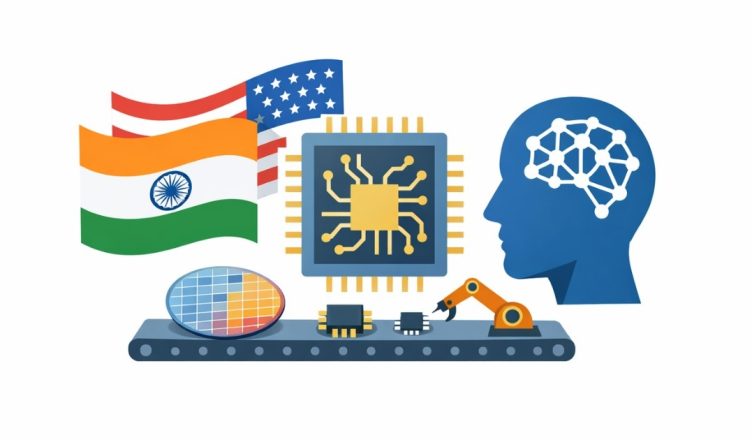
India has joined the United States-led Pax Silica coalition, a new strategic group focused on securing semiconductor and artificial intelligence (AI) supply chains.
The move comes at a time when global tech supply chains remain under pressure due to geopolitical tensions, export controls, and rising demand for advanced chips.
Semiconductors power everything from smartphones and electric vehicles to defence systems and AI data centres. Countries are now racing to secure chip design, fabrication, and raw material access.
For India, joining Pax Silica is not just a diplomatic step. It is a major signal that New Delhi wants to become a key player in the global semiconductor and AI ecosystem.
This article explains what Pax Silica is, why India joined, and what it means for Indian industry, startups, global trade, and consumers.
What Is the Pax Silica Coalition?
The Pax Silica coalition is a US-backed strategic partnership focused on:
- Securing semiconductor supply chains
- Reducing dependence on high-risk regions
- Supporting trusted technology manufacturing
- Strengthening AI hardware ecosystems
The name “Silica” refers to silicon, the base material used to manufacture semiconductor chips.
The coalition aims to build a trusted network of countries that can collaborate on chip manufacturing, design, rare materials sourcing, and AI hardware development.
The initiative aligns with broader US efforts to diversify semiconductor production and reduce over-reliance on concentrated manufacturing hubs.
Why India’s Entry Is Significant
India’s participation signals three key developments:
1. Recognition of India’s Tech Manufacturing Potential
India has been pushing semiconductor manufacturing under its production-linked incentive (PLI) schemes. The government has announced financial support for chip fabrication, design, and packaging facilities.
By joining Pax Silica, India positions itself as a long-term manufacturing and design partner.
2. Stronger India–US Strategic Tech Ties
The US and India have already expanded cooperation in defence, AI, and critical technologies. This coalition deepens trust in high-value sectors like semiconductors.
3. Boost to India’s AI Ambitions
AI systems need advanced chips. Without stable semiconductor supply, AI growth slows down.
Joining Pax Silica strengthens India’s access to AI-critical hardware ecosystems.
Why Semiconductor Supply Chains Are a Global Concern
Over the past few years, the world faced severe chip shortages. Car production slowed. Smartphone deliveries were delayed. Electronics prices rose.
The pandemic exposed weaknesses in global supply chains. At the same time, geopolitical tensions increased uncertainty around chip exports and advanced manufacturing equipment.
Today, countries are focusing on:
- Diversifying manufacturing
- Securing raw materials
- Developing domestic fabrication plants
- Building strategic reserves
Semiconductors are no longer just commercial goods. They are considered strategic assets.
What This Means for India’s Semiconductor Industry
1. Increased Investment Opportunities
India is already trying to attract global chip makers. Being part of Pax Silica may:
- Improve investor confidence
- Reduce perceived geopolitical risks
- Encourage joint ventures
Global companies prefer stable policy environments and trusted supply partners. This move supports that image.
2. Strengthening Chip Design Ecosystem
India already has a strong semiconductor design workforce. Many global chip firms operate design centres in Bengaluru, Hyderabad, and Noida.
With coalition support, India could expand:
- Advanced chip design
- AI accelerator development
- Semiconductor R&D collaboration
3. Faster Technology Transfers
Trusted alliances often make technology sharing easier.
India’s inclusion may improve access to advanced tools, training programs, and manufacturing expertise.
Impact on India’s AI and Data Centre Expansion
AI growth depends heavily on high-performance chips such as GPUs and AI accelerators.
India is planning large AI infrastructure investments, including:
- National AI computing capacity
- Public-private AI research platforms
- Data centre expansion
If supply chains are secure, India can reduce delays in deploying AI infrastructure.
This is important for sectors like:
- Healthcare AI
- Agriculture analytics
- Financial technology
- Smart cities
Reliable chip access strengthens AI innovation across industries.
How It Could Change Global Chip Trade
The Pax Silica coalition may reshape global semiconductor trade flows.
Shift from Concentrated Manufacturing
If member countries coordinate production and sourcing, manufacturing may become more geographically distributed.
Trusted Supply Networks
Companies may prioritise sourcing from coalition countries due to regulatory stability and shared standards.
Reduced Supply Shock Risk
Diversification lowers the chance of major disruptions affecting global electronics markets.
Opportunities for Indian Startups
Indian deep-tech startups working in:
- Chip design
- AI hardware
- Embedded systems
- Semiconductor packaging
may benefit from stronger global partnerships.
Access to global supply chains can help startups:
- Raise funding
- Access global customers
- Collaborate on cross-border R&D
The move may also support India’s ambition to become a global semiconductor design hub.
Challenges India Still Faces
While joining Pax Silica is positive, challenges remain.
1. Manufacturing Infrastructure
Building semiconductor fabrication plants requires:
- Stable power supply
- Ultra-clean water
- Advanced equipment
- Skilled workforce
India is still developing this ecosystem.
2. Long Investment Cycles
Chip fabs take years to build and become profitable.
Policy stability is critical to sustain investor confidence.
3. Global Competition
Countries such as the United States, Japan, South Korea, and several European nations are also offering incentives to attract chip manufacturing.
India must ensure competitive policy frameworks.
Strategic Importance Beyond Economics
Semiconductors play a vital role in:
- Defence systems
- Satellite technology
- Cybersecurity
- Critical infrastructure
Secure supply chains strengthen national security.
By joining Pax Silica, India signals its intention to be part of the trusted global tech architecture.
What It Means for Indian Consumers
In the short term, consumers may not see immediate price changes.
However, in the long term:
- Electronics supply may become more stable
- Delivery delays could reduce
- AI-powered services may expand faster
Stable supply chains often lead to better market predictability.
Broader Geopolitical Context
Global technology competition is intensifying.
Countries are forming coalitions to:
- Protect sensitive technologies
- Strengthen industrial bases
- Reduce supply vulnerabilities
India’s participation shows that it is aligning itself with trusted partners while also pursuing its own domestic manufacturing goals.
This reflects India’s growing role in global technology governance.
What Industry Experts Are Watching Next
Key developments to monitor include:
- Formal agreements under Pax Silica
- Investment announcements in India
- New semiconductor plant approvals
- AI hardware manufacturing partnerships
- Export policy coordination
The next 12–24 months will be critical in determining how practical the coalition becomes.
India’s Long-Term Semiconductor Vision
India has already outlined goals to:
- Increase domestic semiconductor manufacturing
- Strengthen chip design capabilities
- Build a strong packaging and testing ecosystem
- Promote AI hardware innovation
Joining Pax Silica complements these ambitions.
If implemented well, it could accelerate India’s path toward becoming a major semiconductor and AI technology player.
Conclusion: A Strategic Step With Long-Term Implications
India’s entry into the US-led Pax Silica coalition is a strategic move that goes beyond trade.
It strengthens India’s position in global semiconductor supply chains and supports its growing AI ambitions.
While major benefits will take time to materialise, the decision reflects India’s long-term focus on critical technologies.
In a world where chips power economies and AI drives future growth, secure supply chains are no longer optional. They are essential.
For India, this coalition may become a key building block in its journey toward technology leadership.
Also Read: Bollywood’s 5 Stunning Moments Driving Global Popularity
Follow us on google news: Click Here
Last Updated on: Tuesday, February 24, 2026 8:08 pm by News Estate Team | Published by: News Estate Team on Tuesday, February 24, 2026 8:08 pm | News Categories: News
About The Author
