
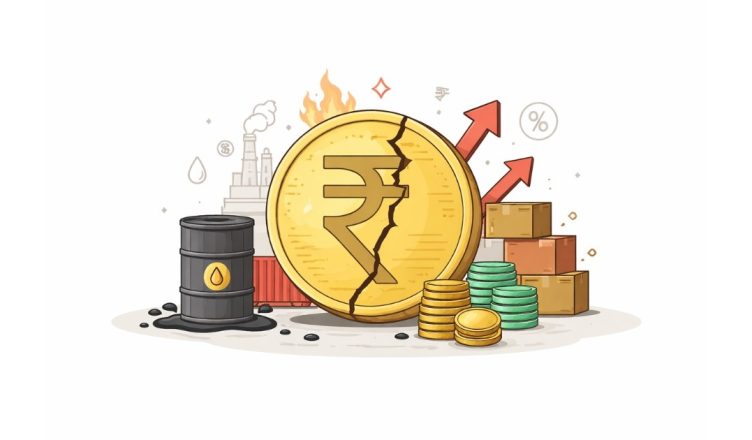
The Indian economy is experiencing growing pressure as ongoing global conflicts continue to affect trade flows, commodity prices, and financial markets. While domestic fundamentals remain relatively stable, external shocks linked to geopolitical tensions have introduced new challenges for policymakers and businesses.
Officials and economists note that the impact is largely indirect, transmitted through higher energy costs, disrupted supply chains, and increased uncertainty in global markets. Institutions such as the Reserve Bank of India and the Ministry of Finance are closely monitoring developments to assess their implications for economic growth and inflation.
Global Conflict and Economic Transmission Channels
International conflicts, particularly those involving major economies or critical trade routes, tend to have wide-ranging economic consequences. These include disruptions to shipping routes, fluctuations in commodity prices, and shifts in investor sentiment.
According to analyses by the International Monetary Fund, geopolitical tensions can lead to fragmentation in global trade systems and increased volatility in financial markets. Such developments often result in higher costs for importing nations and uncertainty for exporters.
For India, which relies on imports for key resources such as crude oil and certain industrial inputs, these disruptions can translate into elevated input costs and logistical challenges.
Energy Prices and Inflationary Pressures
One of the most immediate impacts of global conflict is seen in energy markets. Crude oil prices tend to rise during periods of geopolitical instability, particularly when supply routes or major producing regions are affected.
India, being one of the largest importers of crude oil, is particularly sensitive to such price movements. Higher oil prices increase the cost of transportation, manufacturing, and electricity generation, contributing to broader inflationary pressures.
The Reserve Bank of India has repeatedly highlighted the role of energy prices in shaping inflation trends. In its policy communications, the central bank has indicated that sustained increases in fuel costs could complicate efforts to maintain price stability.
Economists suggest that while short-term spikes can be managed through fiscal measures, prolonged increases may require structural adjustments in energy consumption and sourcing.
Impact on Trade and Supply Chains
Global conflicts often disrupt established trade routes, affecting the movement of goods and increasing shipping costs. Key maritime corridors may experience delays or restrictions, leading to longer delivery times and higher logistics expenses.
For Indian exporters, this can result in reduced competitiveness in international markets. Import-dependent industries may also face shortages of raw materials or components, affecting production schedules.
Reports from the World Trade Organization indicate that geopolitical tensions have contributed to a slowdown in global trade growth. This has implications for economies like India that are integrated into global supply chains.
Businesses across sectors, including manufacturing, pharmaceuticals, and electronics, have reported challenges related to sourcing inputs and managing inventory levels.
Currency Movements and Capital Flows
Another channel through which global conflict affects the Indian economy is through financial markets. Periods of uncertainty often lead investors to shift funds toward safer assets, such as government bonds in developed markets.
This shift can result in capital outflows from emerging markets, including India, putting pressure on the domestic currency. A weaker currency can increase the cost of imports, further contributing to inflation.
Market participants also monitor the actions of central banks such as the Federal Reserve, whose policy decisions influence global liquidity conditions. Changes in interest rates in major economies can affect capital flows and exchange rates.
The Indian rupee has experienced fluctuations in recent months, reflecting both global and domestic factors. While the currency remains relatively stable compared to some peers, volatility remains a concern for policymakers.
Government and Policy Response
The Indian government has taken several steps to mitigate the impact of global economic pressures. These include measures to stabilize fuel prices, support key industries, and maintain fiscal discipline.
The Ministry of Finance has emphasized the importance of targeted interventions to address specific challenges without compromising long-term economic stability. Policy tools such as tax adjustments, subsidies, and strategic reserves are being used selectively.
In addition, the government continues to focus on structural reforms aimed at enhancing resilience. These include initiatives to boost domestic manufacturing, diversify supply chains, and increase energy security.
Officials have also engaged in diplomatic efforts to maintain stable trade relations and secure access to critical resources.
Role of Monetary Policy
Monetary policy remains a key instrument in managing the economic impact of global developments. The Reserve Bank of India has maintained a cautious approach, balancing the need to control inflation with the objective of supporting economic growth.
Interest rate decisions are influenced by a range of factors, including inflation trends, economic activity, and external risks. The central bank has indicated that it will continue to monitor global developments closely when formulating policy.
Liquidity management and exchange rate interventions are also part of the central bank’s toolkit. These measures aim to ensure financial stability and prevent excessive volatility in markets.
Sectoral Impacts Across the Economy
Different sectors of the Indian economy are affected in varying degrees by global conflict. Energy-intensive industries, such as transportation and manufacturing, are particularly vulnerable to rising fuel costs.
The agricultural sector may also face indirect impacts through higher input costs, including fertilizers and fuel. Export-oriented sectors, such as textiles and information technology, could experience fluctuations in demand from international markets.
On the other hand, some sectors may benefit from shifts in global trade patterns. For example, companies that are able to substitute imports or tap into new export markets may find opportunities amid the disruptions.
Industry associations have called for continued policy support to navigate the challenges and maintain competitiveness.
Expert Assessments and Outlook
Economists and policy analysts have provided varied assessments of the situation. While acknowledging the challenges posed by global conflict, many emphasize the resilience of the Indian economy.
According to recent commentary from the International Monetary Fund, India remains one of the faster-growing major economies, supported by domestic demand and structural reforms. However, the organization has also highlighted risks related to external shocks and inflation.
Experts suggest that the duration and intensity of global conflicts will play a critical role in determining their economic impact. Short-term disruptions may have limited effects, while prolonged instability could lead to more significant challenges.
Long-Term Structural Considerations
The current situation has renewed focus on the need for long-term strategies to reduce vulnerability to external shocks. Energy diversification, including increased use of renewable sources, is seen as a key priority.
Efforts to strengthen domestic manufacturing capabilities and reduce reliance on imports are also gaining importance. Programs aimed at improving infrastructure and logistics are expected to enhance supply chain resilience.
In addition, policymakers are exploring ways to deepen financial markets and attract stable investment flows. These measures are intended to support sustainable economic growth in an uncertain global environment.
Conclusion
The pressures on the Indian economy stemming from global conflict reflect a complex interplay of external and domestic factors. Rising energy costs, disrupted trade flows, currency volatility, and shifting investor sentiment have all contributed to the current challenges.
While the situation remains dynamic, policymakers and institutions such as the Reserve Bank of India and the Ministry of Finance continue to monitor developments and implement measures to mitigate risks.
The overall outlook will depend on the trajectory of global conflicts and the effectiveness of policy responses. For now, the focus remains on maintaining stability while adapting to an evolving international economic landscape.
Edited By E. Devanshi varma
Also Read: Major Factors Behind Stock Market Crash: ₹12 Lakh Crore Erased in Broad Sell-Off
Follow us on Google News: Click Here
Last Updated on: Monday, March 23, 2026 4:10 pm by E. Devanshi Varma | Published by: E. Devanshi Varma on Monday, March 23, 2026 4:10 pm | News Categories: India
About The Author
