
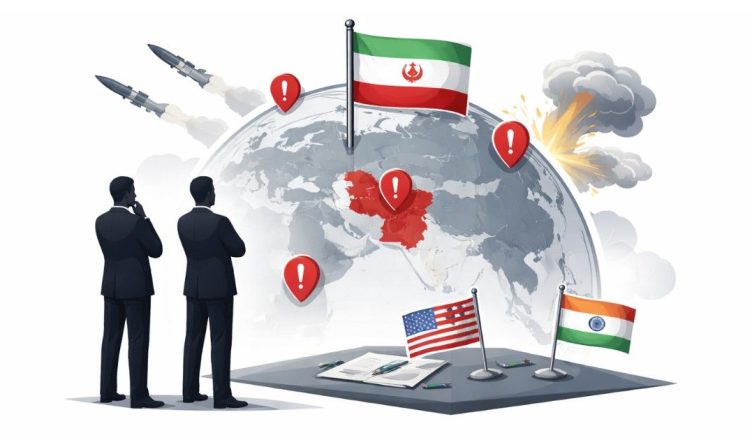
Fresh diplomatic claims from Iranian officials have once again pushed the Middle East into the global spotlight. Statements linked to nuclear negotiations, regional alliances, and relations with Western powers have triggered strong reactions across Washington, Europe, and parts of Asia.
These developments are not limited to the Middle East. They have direct and indirect effects on India’s energy security, trade routes, defence strategy, and global diplomacy positioning.
India maintains important relations with both Iran and the United States. It also works closely with Israel and Gulf nations. Any sharp change in Iran’s diplomatic posture can create ripple effects across multiple partnerships.
With global oil prices sensitive to Middle East tensions and international negotiations under strain, Indian policymakers are closely watching developments.
What Triggered the Latest Diplomatic Wave?
Recent remarks from Iranian representatives have focused on three major areas:
- Nuclear negotiations with Western nations
- Sanctions and economic pressure
- Regional security dynamics
The discussions are linked to the future of the Joint Comprehensive Plan of Action, often called the Iran nuclear deal. This agreement was originally signed in 2015 to limit Iran’s nuclear activities in exchange for sanctions relief.
Since the United States withdrew from the deal in 2018, negotiations have remained fragile. Talks to revive the agreement have moved slowly. Public statements from Iranian and Western officials have often contradicted each other.
This latest round of diplomatic messaging has added fresh uncertainty.
How Global Powers Are Responding
United States and Europe
Washington has maintained that diplomacy remains the preferred path. However, it has also stressed that it will not accept further nuclear escalation.
European nations, including France and Germany, have called for restraint. They continue to support negotiation efforts but are cautious about public claims that may derail talks.
Regional Stakeholders
Countries in the Gulf region are watching closely. Any rise in tension can affect shipping lanes and oil exports.
Israel has repeatedly expressed concern over Iran’s nuclear programme. It has stated that it reserves the right to protect its security interests.
These diverging positions make the diplomatic landscape complex.
Why Energy Security Is India’s Immediate Concern
India is the world’s third-largest oil importer. A large portion of global crude oil passes through the Strait of Hormuz, a narrow sea route near Iran.
Even the perception of instability in this region can push oil prices upward.
In past crises, Brent crude prices have jumped by $5 to $10 per barrel within days of major geopolitical events. Such increases affect:
- Petrol and diesel prices
- Inflation levels
- Import bills
- Government subsidy calculations
India had earlier imported significant volumes of oil from Iran before sanctions tightened. Since 2019, those imports have largely stopped due to US sanctions.
Any diplomatic breakthrough could reopen energy trade options. But renewed escalation could push prices higher and strain India’s economy.
Impact on India’s Strategic Projects
Chabahar Port Development
India has invested in the Chabahar Port in southeastern Iran. The port is strategically important because it gives India access to Afghanistan and Central Asia without passing through Pakistan.
Progress at Chabahar has faced delays due to sanctions and financial restrictions. Diplomatic stability could speed up development. Tensions could slow it further.
International North-South Transport Corridor
The International North-South Transport Corridor links India with Russia and Europe through Iran. It aims to reduce shipping time by up to 40 percent compared to traditional routes.
Political uncertainty in Iran can affect the corridor’s reliability and investor confidence.
India’s Diplomatic Balancing Act
India has traditionally followed a policy of strategic autonomy. It maintains relations with multiple global powers without fully aligning with any one bloc.
In the Iran context, India must balance:
- Relations with the United States
- Defence cooperation with Israel
- Energy interests in the Gulf
- Connectivity projects through Iran
This requires careful diplomatic messaging. Public statements from New Delhi often emphasise dialogue, peace, and stability.
India has repeatedly called for disputes to be resolved through negotiation.
Economic Signals to Watch
Indian markets tend to react quickly to geopolitical tension.
Key indicators include:
- Crude oil prices
- Rupee exchange rate
- Shipping insurance costs
- Defence sector stocks
If oil crosses $90 per barrel, inflation pressure could increase. A sustained rise above $100 per barrel would create stronger fiscal challenges.
So far, markets remain cautious but not panicked. However, investors are monitoring diplomatic signals closely.
Security Implications for the Region
Beyond economics, there are security concerns.
The Middle East has seen proxy conflicts involving regional and global powers. Any escalation linked to Iran could increase tensions in:
- The Gulf
- Syria
- Lebanon
- Red Sea shipping routes
India has over 8 million citizens working in Gulf countries. Stability in the region directly affects their safety and remittances.
Evacuation operations in past crises have required large logistical efforts. Policymakers aim to avoid such scenarios.
Nuclear Diplomacy: The Bigger Question
At the core of the issue is nuclear transparency and trust.
The International Atomic Energy Agency (IAEA) continues to monitor Iran’s nuclear programme. Differences between monitoring reports and political claims often fuel debate.
If talks collapse completely, the risk of regional escalation rises. If talks progress, markets and diplomatic relations may stabilise.
For India, the key concern is predictability. Sudden shifts create economic and strategic uncertainty.
What India Should Watch Closely
1. Official Statements from Tehran and Washington
Tone matters. Escalatory language can move markets quickly.
2. Movement in Oil Prices
Daily fluctuations often reflect investor expectations about conflict risk.
3. Progress on Sanctions Discussions
Sanctions relief could reopen economic opportunities. New sanctions could tighten global supply chains.
4. Activity Around Strategic Waterways
Shipping data and insurance rates are early warning signs of stress.
5. Multilateral Engagement Signals
If countries resume structured negotiations, tensions may ease.
India’s Possible Diplomatic Approach
India is likely to:
- Support continued dialogue
- Avoid taking sides publicly
- Protect energy and trade interests
- Maintain communication with all parties
In past crises, India has quietly engaged through diplomatic channels rather than public confrontation.
This approach allows flexibility and reduces reputational risk.
Long-Term Strategic Outlook
The Iran issue is not new. It has evolved over decades.
However, global geopolitics is shifting. The Ukraine conflict, US-China rivalry, and Middle East realignments have created a more complex environment.
Iran’s diplomatic positioning could influence:
- Global energy markets
- Regional security alliances
- Trade connectivity projects
- Sanctions frameworks
For India, the priority remains economic growth and stability. Any external shock that affects oil prices, trade routes, or remittances becomes a domestic issue.
Conclusion: A Situation Demanding Close Monitoring
Iran’s diplomatic claims have once again drawn global attention. While no immediate crisis has unfolded, the situation remains sensitive.
For India, the stakes are clear:
- Energy security
- Strategic connectivity projects
- Regional stability
- Economic resilience
The coming weeks will be important. Diplomatic signals, oil market reactions, and multilateral engagement will shape the direction.
India’s response is expected to remain measured, balanced, and focused on national interest.
In a world where geopolitical developments can shift markets overnight, careful monitoring and strategic patience will define India’s approach.
Edited By: E.Devanshi Varma
Also Read: 5 Fresh Details About Nothing Phone 4a New Colour That Are Driving Massive India Searches
Follow us on google news: Click Here
Last Updated on: Wednesday, March 4, 2026 3:06 pm by News Estate Team | Published by: News Estate Team on Wednesday, March 4, 2026 3:06 pm | News Categories: Trending
About The Author
