
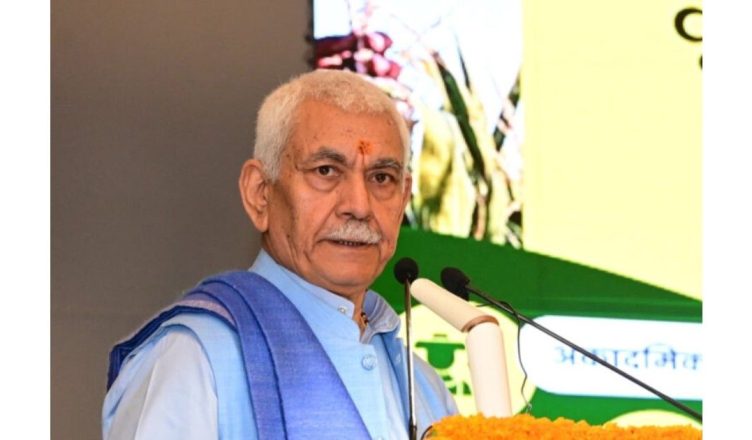
The administrative landscape of Jammu and Kashmir(J&K) may be set for a significant overhaul as Lieutenant Governor Manoj Sinha has approved the introduction of a private member’s bill in the Union Territory’s legislative assembly. The bill, moved by People’s Democratic Party (PDP) legislator Waheed-ur-Rehman Para, proposes a formal legal mechanism for reorganising administrative units, including divisions, districts, sub-divisions, and tehsils.
The proposed legislation, titled the Jammu and Kashmir Territorial Administrative Reorganization Bill, 2026, has been submitted for consideration during the ongoing Budget session of the Jammu and Kashmir Assembly in Jammu. The session is scheduled to resume on March 27 after a recess and continue until April 4.
Key Announcements and Proposals
At the core of the bill is a proposal to introduce two new administrative divisions in Jammu and Kashmir—Chenab and Pir Panjal—alongside the existing Jammu and Kashmir divisions. These divisions are intended to improve governance in geographically complex and underserved regions.
- Chenab Division: Proposed to be headquartered in Doda, this division would cater to areas in the Chenab Valley, known for difficult terrain and limited administrative access.
- Pir Panjal Division: With its headquarters in Rajouri, this division aims to strengthen governance in the Pir Panjal region, which has long faced developmental and connectivity challenges.
In addition to new divisions, the bill outlines the creation of several new districts across both Jammu and Kashmir regions.
In the Kashmir Division, proposed districts include:
- Tral-Awantipora (Hill District)
- Ashmuqam-Pahalgam (Hill District)
- Beerwah
- Sopore
- Handwara
- Gurez
- Tangdhar-Karnah (Hill District)
- Norabad (Hill District)
In the Jammu Division, proposed districts include:
- Nowshera
- Bhaderwah
- Banihal
- Thathri
- Akhnoor
- Billawar
- Kotranka
- Mendhar
The creation of these districts is aimed at decentralising governance and ensuring that administrative services are more accessible to residents, especially in remote and mountainous areas.
Legal and Administrative Framework
The introduction of the bill follows provisions under the Jammu and Kashmir Reorganisation Act, 2019, which governs the administrative functioning of the Union Territory after its reorganisation. Under Section 36(1) of the Act, the Lieutenant Governor’s approval is required for the introduction of such legislation.
The proposed bill seeks to establish a statutory framework that would guide future decisions on administrative restructuring. It empowers the government to assign districts to specific divisions through official notifications, based on criteria such as:
- Geographical continuity
- Administrative efficiency
- Socio-cultural cohesion
- Balanced regional development
This marks a shift from ad hoc administrative decisions to a more structured and transparent legislative process.
Official Perspective
While the bill is a private member’s initiative, the approval for its introduction signals institutional openness to discussing administrative reforms. Officials familiar with the development indicate that the objective is not merely territorial expansion but addressing long-standing governance challenges.
The draft legislation highlights that many regions in Jammu and Kashmir face difficulties due to large administrative jurisdictions, inaccessible terrain, and uneven development. By creating smaller administrative units, the government aims to improve service delivery, enhance governance efficiency, and bring decision-making closer to the people.
Legislative Timeline and Assembly Proceedings
The bill has been submitted to the Assembly Secretariat and is expected to be taken up during designated days for private members’ business.
According to the notified legislative schedule:
- March 30 and April 1 have been allocated for private members’ bills
- March 31 and April 2 are reserved for private members’ resolutions
The Budget session itself began earlier this year, with Chief Minister Omar Abdullah presenting the Union Territory’s budget on February 6. The first phase of the session, held from February 2 to February 20, saw detailed discussions on departmental grants.
The upcoming phase is expected to witness debates on legislative proposals, including this reorganisation bill.
Context and Background
The question of administrative reorganisation in Jammu and Kashmir is not new. Over the years, several regions—particularly those in hilly and remote areas—have demanded district status or separate administrative divisions to address governance gaps.
Following the abrogation of Article 370 in 2019 and the subsequent reorganisation of the state into a Union Territory, the administrative structure has remained largely intact, with some incremental changes. However, stakeholders across political and civil society groups have argued that the existing framework does not adequately address regional disparities.
For instance, areas like Chenab Valley and Pir Panjal have often cited issues such as:
- Limited access to government offices
- Poor infrastructure connectivity
- Delays in service delivery
- Lack of focused developmental planning
The proposed bill attempts to respond to these concerns by creating administrative units that are better aligned with regional needs.
Why This Bill Matters
The introduction of a formal legal framework for administrative restructuring could have far-reaching implications.
1. Decentralised Governance:
Smaller administrative units can enable quicker decision-making and more responsive governance. Local authorities would be better positioned to address region-specific challenges.
2. Improved Public Services:
Residents in remote areas often travel long distances to access basic services. New districts and divisions could reduce this burden and improve access to healthcare, education, and administrative services.
3. Balanced Regional Development:
By redistributing administrative focus, the government can address developmental imbalances between regions. This is particularly important in a geographically diverse territory like Jammu and Kashmir.
4. Greater Representation:
New administrative units often lead to increased political and bureaucratic representation, giving local populations a stronger voice in governance.
Potential Challenges and Considerations
While the bill outlines a comprehensive vision, its implementation could face several challenges:
- Resource Allocation: Creating new districts and divisions requires significant financial and human resources, including infrastructure, staffing, and administrative setup.
- Political Consensus: As a private member’s bill, its passage will depend on broader political support within the विधानसभा.
- Administrative Complexity: Redrawing boundaries and reallocating resources could lead to transitional challenges and require careful planning.
- Public Response: While some regions may welcome the changes, others may raise concerns over boundary demarcations or administrative priorities.
Public Impact
If enacted, the bill could directly impact millions of residents across Jammu and Kashmir. For people living in remote and hilly regions, the changes could translate into:
- Reduced travel time for accessing government services
- Faster processing of administrative requests
- Improved infrastructure development
- Better disaster response and emergency services
Additionally, the focus on hill districts highlights an attempt to address the unique challenges faced by mountainous regions, including connectivity issues and limited economic opportunities.
Conclusion and Next Steps
The introduction of the Jammu and Kashmir Territorial Administrative Reorganization Bill, 2026 marks an important step in addressing longstanding governance challenges in the Union Territory. By proposing new divisions and districts, the bill seeks to bring administrative structures closer to the people and ensure more equitable development.
However, its future will depend on legislative debate, political consensus, and administrative feasibility. As the Assembly reconvenes, discussions around the bill are likely to draw attention from policymakers, regional stakeholders, and the public alike.
If passed, the legislation could redefine the administrative map of Jammu and Kashmir and set a precedent for structured governance reforms in the region.
Inputs and images : Hindusthan Samachar
Edited By E. Devanshi varma
Also Read: UP Summer Readiness Gets 5 Key Directives as AK Sharma Pushes for Uninterrupted Power in Varanasi
Follow us on Google News: Click Here
Last Updated on: Thursday, March 26, 2026 2:58 pm by E. Devanshi Varma | Published by: E. Devanshi Varma on Thursday, March 26, 2026 2:58 pm | News Categories: India
About The Author
