
Thiruvananthapuram, April 9:
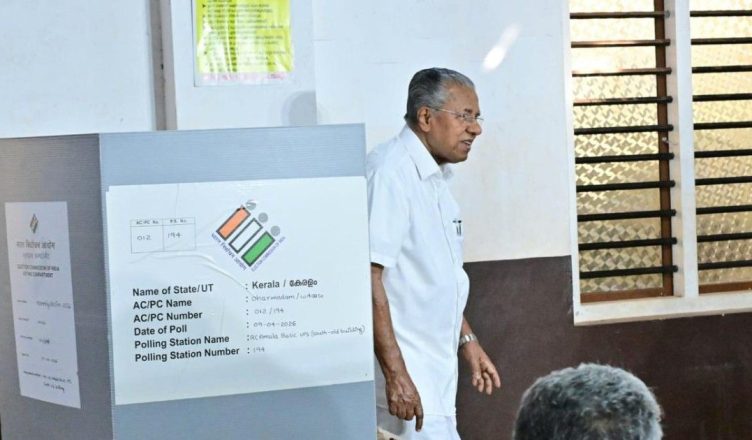
Kerala Chief Minister Pinarayi Vijayan on Thursday described the ongoing elections as a critical juncture that will influence the state’s long-term future. Casting his vote in Thiruvananthapuram, he underscored the importance of maintaining the state’s development momentum and warned against disruptions to ongoing progress.
Speaking to reporters after voting at a local polling station, Vijayan said Kerala has witnessed substantial advancements across sectors in recent years. He emphasized that the current election is not just about political change but about preserving and continuing a development path that, according to him, has yielded tangible results.
Key Highlights from the Chief Minister’s Remarks
Vijayan framed the election as a referendum on governance and development. He argued that the state has taken “firm steps” toward becoming a more developed society and stressed that these efforts must not be interrupted.
He pointed to improvements across sectors such as infrastructure, social welfare, and public services, though he did not cite specific data during the interaction. According to him, voters are aware of these changes and are likely to support continuity in governance.
The Chief Minister also suggested that there is a broad public preference for stability, adding that many voters want ongoing projects to be completed without delays. He linked this sentiment to support for the ruling Left Democratic Front (LDF), which he leads.
Emphasis on Governance and Transparency
A key aspect of Vijayan’s message was his government’s claim of maintaining high standards of transparency. He asserted that Kerala remains among the least corrupt states in India, attributing this to the political culture fostered by the LDF.
While such claims are often part of political messaging during elections, the Chief Minister argued that public perception reflects confidence in the current administration’s integrity. He suggested that even critics of the government recognize the importance of maintaining development and governance standards.
Vijayan also noted that voters are increasingly focused on results rather than rhetoric, indicating a shift toward performance-based political evaluation.
Official Statement Reframed
Addressing the media, Vijayan said the election carries long-term implications for Kerala’s development trajectory. He reiterated that the state has achieved “notable milestones” and that there is a need to sustain that progress.
He expressed confidence that the electorate understands the importance of continuity and believes that the current administration is best positioned to deliver on development goals. He also stated that public trust in governance is rooted in consistent policy implementation and transparency.
Political Context and Electoral Landscape
The Chief Minister’s remarks come at a time when Kerala is witnessing a competitive electoral contest. Major political alliances, including the ruling LDF, the United Democratic Front (UDF), and the Bharatiya Janata Party (BJP), have been actively campaigning across the state.
Kerala’s political landscape is traditionally characterized by bipolar competition between the LDF and UDF, with power alternating between the two fronts over decades. However, recent elections have seen attempts by the BJP to expand its presence, adding a third dimension to the contest.
Vijayan’s emphasis on continuity reflects the LDF’s broader campaign strategy, which highlights governance achievements and ongoing development initiatives as key electoral issues.
Addressing Divisive Politics
During his interaction with reporters, Vijayan dismissed concerns about attempts to influence voters through divisive or communal narratives. He stated that such strategies are unlikely to succeed in Kerala, which has historically maintained a strong emphasis on social harmony and secular politics.
Kerala’s electorate is often regarded as politically aware and socially conscious, with high literacy rates contributing to informed voting behavior. Analysts frequently note that issues such as education, healthcare, and welfare schemes tend to carry more weight than identity-based politics in the state.
The Chief Minister’s remarks appeared to reinforce this narrative, positioning development as the central theme of the election.
Response to Controversies
When asked about a recent controversial remark, Vijayan chose not to elaborate, stating that it could be interpreted in different ways. His response suggested a cautious approach, possibly aimed at avoiding further escalation during the sensitive election period.
He also made an indirect reference to corruption cases involving political opponents, mentioning that a sitting Chief Minister in the country had faced legal action. However, he refrained from naming any individual and said he would comment further after the elections.
Such statements, while not uncommon during campaigns, highlight the broader political tensions that often accompany electoral contests in India.
Background: Kerala’s Development Model
Kerala has long been cited as an example of a state that prioritizes human development indicators. It consistently ranks high in literacy, healthcare access, and social welfare metrics compared to other Indian states.
The LDF government has, in recent years, focused on infrastructure projects, digital initiatives, and welfare schemes aimed at improving quality of life. These include investments in public health systems, education reforms, and housing programs.
However, critics have raised concerns about fiscal management, unemployment, and the sustainability of welfare spending. The current election is therefore also seen as a test of how voters evaluate these competing narratives.
Why This Election Matters
The significance of the ongoing election lies in its potential to shape Kerala’s policy direction for the coming years. A continuation of the current government could mean the extension of existing programs and policies, while a change in leadership might bring shifts in priorities.
For voters, the choice is not only about political alignment but also about governance style, economic strategy, and social policies. Issues such as job creation, economic growth, and infrastructure development are likely to influence voter decisions.
The Chief Minister’s emphasis on continuity suggests that the ruling front is seeking a renewed mandate to complete ongoing projects and introduce new initiatives without disruption.
Public Impact and Voter Considerations
For residents of Kerala, the outcome of the election will have direct implications on daily life. Government policies influence access to healthcare, education, employment opportunities, and social welfare benefits.
Voters are also likely to consider how effectively the current administration has managed challenges such as economic pressures and public service delivery. The perception of transparency and accountability in governance could play a significant role in shaping electoral outcomes.
Additionally, the election results will determine how Kerala positions itself in terms of economic development and social progress in the coming years.
Looking Ahead
With polling underway and campaigning intensifying, all major political fronts are making their final appeals to voters. The Chief Minister’s remarks reflect confidence within the ruling alliance, but the final outcome will depend on voter turnout and preferences across constituencies.
As Kerala heads toward the conclusion of this electoral process, the focus remains on whether voters will choose continuity or opt for change. The results are expected to provide insights not only into the state’s political direction but also into broader trends in voter behavior and governance expectations.
Thiruvananthapuram, April 9:
Kerala Chief Minister Pinarayi Vijayan on Thursday described the ongoing elections as a critical juncture that will influence the state’s long-term future. Casting his vote in Thiruvananthapuram, he underscored the importance of maintaining the state’s development momentum and warned against disruptions to ongoing progress.
Speaking to reporters after voting at a local polling station, Vijayan said Kerala has witnessed substantial advancements across sectors in recent years. He emphasized that the current election is not just about political change but about preserving and continuing a development path that, according to him, has yielded tangible results.
Key Highlights from the Chief Minister’s Remarks
Vijayan framed the election as a referendum on governance and development. He argued that the state has taken “firm steps” toward becoming a more developed society and stressed that these efforts must not be interrupted.
He pointed to improvements across sectors such as infrastructure, social welfare, and public services, though he did not cite specific data during the interaction. According to him, voters are aware of these changes and are likely to support continuity in governance.
The Chief Minister also suggested that there is a broad public preference for stability, adding that many voters want ongoing projects to be completed without delays. He linked this sentiment to support for the ruling Left Democratic Front (LDF), which he leads.
Emphasis on Governance and Transparency
A key aspect of Vijayan’s message was his government’s claim of maintaining high standards of transparency. He asserted that Kerala remains among the least corrupt states in India, attributing this to the political culture fostered by the LDF.
While such claims are often part of political messaging during elections, the Chief Minister argued that public perception reflects confidence in the current administration’s integrity. He suggested that even critics of the government recognize the importance of maintaining development and governance standards.
Vijayan also noted that voters are increasingly focused on results rather than rhetoric, indicating a shift toward performance-based political evaluation.
Official Statement Reframed
Addressing the media, Vijayan said the election carries long-term implications for Kerala’s development trajectory. He reiterated that the state has achieved “notable milestones” and that there is a need to sustain that progress.
He expressed confidence that the electorate understands the importance of continuity and believes that the current administration is best positioned to deliver on development goals. He also stated that public trust in governance is rooted in consistent policy implementation and transparency.
Political Context and Electoral Landscape
The Chief Minister’s remarks come at a time when Kerala is witnessing a competitive electoral contest. Major political alliances, including the ruling LDF, the United Democratic Front (UDF), and the Bharatiya Janata Party (BJP), have been actively campaigning across the state.
Kerala’s political landscape is traditionally characterized by bipolar competition between the LDF and UDF, with power alternating between the two fronts over decades. However, recent elections have seen attempts by the BJP to expand its presence, adding a third dimension to the contest.
Vijayan’s emphasis on continuity reflects the LDF’s broader campaign strategy, which highlights governance achievements and ongoing development initiatives as key electoral issues.
Addressing Divisive Politics
During his interaction with reporters, Vijayan dismissed concerns about attempts to influence voters through divisive or communal narratives. He stated that such strategies are unlikely to succeed in Kerala, which has historically maintained a strong emphasis on social harmony and secular politics.
Kerala’s electorate is often regarded as politically aware and socially conscious, with high literacy rates contributing to informed voting behavior. Analysts frequently note that issues such as education, healthcare, and welfare schemes tend to carry more weight than identity-based politics in the state.
The Chief Minister’s remarks appeared to reinforce this narrative, positioning development as the central theme of the election.
Response to Controversies
When asked about a recent controversial remark, Vijayan chose not to elaborate, stating that it could be interpreted in different ways. His response suggested a cautious approach, possibly aimed at avoiding further escalation during the sensitive election period.
He also made an indirect reference to corruption cases involving political opponents, mentioning that a sitting Chief Minister in the country had faced legal action. However, he refrained from naming any individual and said he would comment further after the elections.
Such statements, while not uncommon during campaigns, highlight the broader political tensions that often accompany electoral contests in India.
Background: Kerala’s Development Model
Kerala has long been cited as an example of a state that prioritizes human development indicators. It consistently ranks high in literacy, healthcare access, and social welfare metrics compared to other Indian states.
The LDF government has, in recent years, focused on infrastructure projects, digital initiatives, and welfare schemes aimed at improving quality of life. These include investments in public health systems, education reforms, and housing programs.
However, critics have raised concerns about fiscal management, unemployment, and the sustainability of welfare spending. The current election is therefore also seen as a test of how voters evaluate these competing narratives.
Why This Election Matters
The significance of the ongoing election lies in its potential to shape Kerala’s policy direction for the coming years. A continuation of the current government could mean the extension of existing programs and policies, while a change in leadership might bring shifts in priorities.
For voters, the choice is not only about political alignment but also about governance style, economic strategy, and social policies. Issues such as job creation, economic growth, and infrastructure development are likely to influence voter decisions.
The Chief Minister’s emphasis on continuity suggests that the ruling front is seeking a renewed mandate to complete ongoing projects and introduce new initiatives without disruption.
Public Impact and Voter Considerations
For residents of Kerala, the outcome of the election will have direct implications on daily life. Government policies influence access to healthcare, education, employment opportunities, and social welfare benefits.
Voters are also likely to consider how effectively the current administration has managed challenges such as economic pressures and public service delivery. The perception of transparency and accountability in governance could play a significant role in shaping electoral outcomes.
Additionally, the election results will determine how Kerala positions itself in terms of economic development and social progress in the coming years.
Looking Ahead
With polling underway and campaigning intensifying, all major political fronts are making their final appeals to voters. The Chief Minister’s remarks reflect confidence within the ruling alliance, but the final outcome will depend on voter turnout and preferences across constituencies.
As Kerala heads toward the conclusion of this electoral process, the focus remains on whether voters will choose continuity or opt for change. The results are expected to provide insights not only into the state’s political direction but also into broader trends in voter behavior and governance expectations.
Inputs and images : Hindusthan Samachar
Edited By E. Devanshi varma
Also Read: Modi Targets TMC Governance in Bengal with 5 Key Claims on Investment and Jobs
Follow us on Google News: Click Here
Last Updated on: Thursday, April 9, 2026 2:38 pm by E. Devanshi Varma | Published by: E. Devanshi Varma on Thursday, April 9, 2026 2:38 pm | News Categories: Politics
About The Author
