
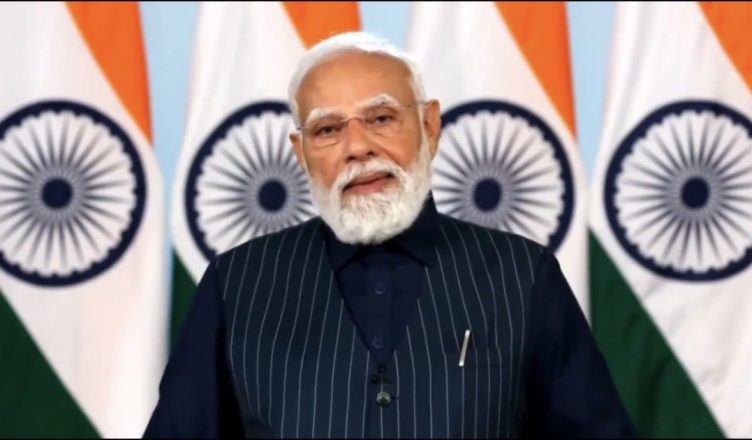
New Delhi, April 10: Prime Minister Narendra Modi on Friday called on India’s youth to remain calm and thoughtful during challenging situations, emphasizing the importance of mental resilience in both personal and national development. In a message shared on the social media platform X, the Prime Minister referred to a classical Sanskrit verse to underline how composure and careful decision-making can help individuals overcome even the most difficult circumstances.
His remarks come at a time when conversations around mental well-being, stress management, and youth empowerment are gaining prominence in India’s public discourse.
Key Highlights
- PM Modi cited an ancient Sanskrit subhashita (wise saying) to stress calmness during adversity.
- He encouraged young people to rely on rational thinking rather than panic in crises.
- The message positioned resilience and composure as essential traits for nation-building.
- The Prime Minister linked individual strength of character to India’s broader developmental goals.
A Sanskrit Verse with Modern Relevance
In his post, the Prime Minister shared the following Sanskrit aphorism:
“Vyāsane vā arthakṛcchre vā bhaye vā jīvanāntake।
Vimṛśan vai svayā buddhyā dhṛtimān nāvasīdati॥”
The verse conveys a timeless message: a person who remains composed and uses their intellect to reflect deeply—even during hardship, financial difficulties, fear, or life-threatening situations—does not succumb to despair.
By invoking this classical wisdom, the Prime Minister aimed to connect India’s philosophical heritage with present-day challenges faced by individuals, particularly the youth.
Official Statement Reframed
In his message, Prime Minister Modi highlighted that staying calm and thinking clearly are not just personal virtues but essential life skills. He noted that young people, who often face uncertainty and pressure, must cultivate the ability to pause, reflect, and make informed decisions rather than reacting impulsively.
He further expressed confidence in India’s youth, describing them as driven and ambitious. According to him, their determination and clarity of thought are key factors in shaping the country’s future. By adopting a composed mindset, he suggested, they can turn challenges into opportunities and contribute meaningfully to national progress.
Context and Background
India has a long tradition of philosophical teachings that emphasize mental discipline, self-control, and rational thinking. Ancient texts such as the Upanishads, Bhagavad Gita, and various subhashitas often highlight the importance of equanimity—remaining steady regardless of external circumstances.
In recent years, there has been renewed interest in applying these principles to modern life, particularly in areas such as stress management, leadership, and education. Government leaders, including the Prime Minister, have frequently referenced such teachings to promote values like resilience, patience, and clarity.
PM Modi’s emphasis on youth empowerment has also been a consistent theme across his public engagements. Programs related to skill development, entrepreneurship, and education reforms have aimed to equip young Indians with both technical and soft skills. His latest message aligns with this broader narrative, focusing on emotional and mental strength as equally important components of success.
Why This Message Matters Today
The relevance of this message lies in the increasing pressures faced by young people in a rapidly changing world. Academic competition, career uncertainties, financial challenges, and the influence of digital media can contribute to stress and anxiety.
In such an environment, the ability to remain calm and think clearly becomes crucial. Experts in psychology and behavioral sciences often stress that decision-making under stress tends to be less effective. Emotional reactions can lead to errors in judgment, whereas a composed approach allows for better evaluation of options and consequences.
By highlighting this principle, the Prime Minister’s message reinforces the importance of emotional intelligence—a concept widely recognized in modern education and professional development.
Bridging Tradition and Modern Challenges
One notable aspect of the Prime Minister’s message is the blending of traditional knowledge with contemporary relevance. While the Sanskrit verse originates from ancient literature, its core idea aligns closely with modern concepts such as mindfulness, critical thinking, and resilience.
This approach reflects a broader effort to reinterpret India’s cultural heritage in a way that resonates with today’s generation. Rather than presenting tradition as static, it positions it as a source of practical guidance for current challenges.
Such messaging can also help make classical knowledge more accessible, especially to younger audiences who may not be familiar with Sanskrit or traditional texts.
Public Impact: Who Benefits and How
The primary audience for this message is India’s youth, who make up a significant portion of the country’s population. By encouraging calmness and rational thinking, the message aims to:
- Help students and young professionals manage stress more effectively.
- Promote better decision-making in academic and career choices.
- Encourage a balanced approach to challenges, reducing impulsive reactions.
- Foster a mindset that values long-term growth over short-term setbacks.
Beyond individuals, the broader implication is that a generation equipped with resilience and clarity can contribute more effectively to society and the economy. In fields ranging from entrepreneurship to public service, the ability to navigate uncertainty is increasingly seen as a key competency.
The Role of Leadership Messaging
Public statements by national leaders often serve as signals that shape societal conversations. By addressing themes like mental resilience and composure, the Prime Minister is contributing to a wider dialogue on well-being and personal development.
Such messaging can also complement policy initiatives. For instance, educational reforms that emphasize holistic development—covering emotional, cognitive, and social skills—can benefit from parallel narratives that highlight the importance of these qualities.
In this sense, the message is not just symbolic but also part of a broader effort to redefine what success and progress mean in a modern context.
A Continued Focus on Youth-Led Growth
India’s demographic profile, with a large and growing youth population, presents both opportunities and challenges. Harnessing this demographic dividend requires not only access to education and employment but also the development of soft skills such as adaptability, resilience, and critical thinking.
The Prime Minister’s remarks reflect an understanding of this dynamic. By encouraging young people to stay composed and think independently, he is advocating for a mindset that can support innovation and problem-solving.
As India continues to navigate economic, technological, and social changes, such qualities are likely to play an increasingly important role.
Looking Ahead
While the message itself is brief, its implications are far-reaching. It underscores the idea that personal qualities like calmness and thoughtful decision-making are not just individual traits but collective assets.
As discussions around mental health and well-being gain traction in India, messages that normalize the importance of emotional resilience can contribute to a more supportive environment. They can also encourage individuals to seek balance in an increasingly fast-paced world.
By drawing on a Sanskrit verse to convey a modern lesson, the Prime Minister has highlighted how enduring principles can guide present and future actions. The emphasis on composure, reflection, and determination serves as a reminder that progress—both personal and national—often begins with clarity of mind.
Inputs and images : Hindusthan Samachar
Edited By E. Devanshi varma
Also Read: Assam HSLC Results Show 30-Year Positive Rise in Pass Percentage, Despite Fluctuations
Follow us on Google News: Click Here
Last Updated on: Friday, April 10, 2026 2:16 pm by E. Devanshi Varma | Published by: E. Devanshi Varma on Friday, April 10, 2026 2:16 pm | News Categories: Politics
About The Author
