
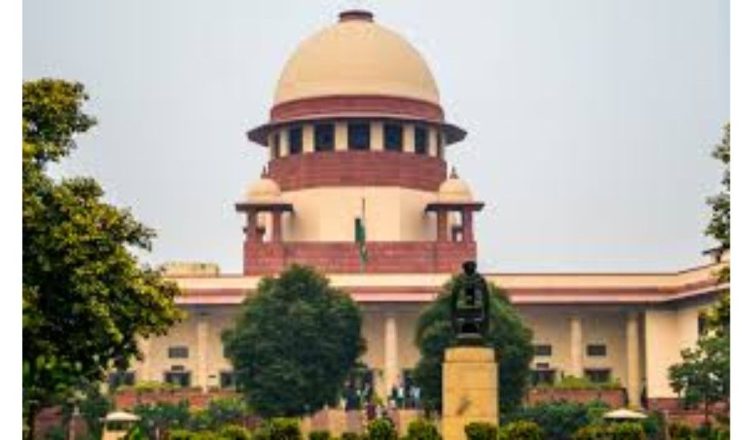
In a sharp response to a troubling law-and-order incident, the Supreme Court of India on April 2 directed the deployment of central forces in parts of West Bengal following the reported hostage-taking of seven judicial officers. The officers were engaged in Special Intensive Revision (SIR) duties when they were allegedly surrounded and detained by a group of protesters in Malda district.
The directive came during a hearing led by Chief Justice Justice Surya Kant, who expressed strong concern over the incident, describing it as a serious affront not only to the officers involved but also to the dignity of the judiciary.
Key Developments and Court Observations
During the proceedings, the apex court made it clear that any attempt to intimidate or obstruct judicial officers would not be tolerated. The bench noted that the situation in West Bengal appeared “highly polarized,” with even administrative and legal processes being influenced by political tensions.
The court specifically highlighted that the act of surrounding and detaining judicial officers amounted to a direct violation of institutional integrity. It observed that such actions undermine the authority of courts and pose a threat to the independence of the judiciary.
The bench also questioned the state administration’s delayed response. According to details presented during the hearing, no immediate action was taken to disperse the crowd or secure the release of the officers, raising concerns about administrative preparedness and accountability.
What Happened in Malda
The incident occurred on April 1 at around 3:30 PM at the office of a Block Development Officer (BDO) in Malda district. A group of protesters reportedly gathered outside the premises where judicial officers were conducting Special Intensive Revision (SIR) duties—an exercise typically linked to updating electoral rolls and ensuring voter data accuracy.
Seven judicial officers, including three women judges, were allegedly held inside the premises for several hours. Eyewitness accounts and official submissions indicate that the officers were unable to leave due to the crowd surrounding the building.
The situation escalated as no immediate intervention was made by local authorities. It was only later in the evening that steps were initiated to address the crisis. The officers were finally released around midnight.
Administrative Lapses Highlighted
A particularly concerning aspect of the case, as noted in court, was the absence of senior district officials during the crisis. The Chief Justice of the Calcutta High Court reportedly informed the Supreme Court that neither the District Magistrate nor the Superintendent of Police reached the spot during the critical hours.
This lack of on-ground leadership prompted further scrutiny. The High Court Chief Justice had to personally intervene by contacting the state’s Director General of Police (DGP) to ensure the safety of the detained officers.
The delay in response has raised broader questions about coordination between the judiciary and the executive during sensitive assignments such as electoral revisions, which often require heightened security.
Supreme Court’s Directive on Security
Taking serious note of the developments, the Supreme Court ordered the deployment of central forces to ensure the safety of judicial officers engaged in such duties in West Bengal. The court emphasized that judicial personnel must be able to carry out their responsibilities without fear, intimidation, or obstruction.
Central forces are typically deployed in situations where state machinery is either overwhelmed or where neutrality and enhanced security presence are deemed necessary. The directive signals a lack of confidence in the existing arrangements and underscores the gravity of the situation.
The bench also indicated that further monitoring of the situation may be undertaken to ensure compliance with its orders.
Understanding Special Intensive Revision (SIR)
The Special Intensive Revision (SIR) is a periodic exercise carried out to update electoral rolls. It involves verifying voter details, removing duplicates, and adding eligible new voters. Judicial officers are often assigned supervisory roles to ensure transparency and fairness in the process.
Given its importance in maintaining the integrity of elections, the SIR process is considered sensitive and requires cooperation from local authorities and the public. Disruptions to such exercises can have implications for electoral credibility.
Broader Context: Political Polarisation in West Bengal
West Bengal has witnessed heightened political activity and tensions in recent years, particularly around elections and administrative processes. The Supreme Court’s observation about the state being “highly polarized” reflects ongoing concerns about the intersection of politics and governance.
Incidents involving disruptions to official duties, especially those linked to elections, have drawn attention from courts in the past. The latest episode adds to a series of developments that point to challenges in maintaining administrative neutrality in politically charged environments.
Public and Institutional Impact
The incident has significant implications for both the judiciary and the general public.
For the judiciary, it raises concerns about the safety of officers performing official duties, particularly in field assignments. Judicial independence is a cornerstone of democratic systems, and any threat to it can have far-reaching consequences.
For the public, the disruption of processes like the SIR could affect the accuracy of electoral rolls, which in turn impacts voting rights. Ensuring that such exercises are conducted smoothly is essential for maintaining trust in the electoral system.
The deployment of central forces is expected to provide a sense of security and restore confidence among officials tasked with carrying out these responsibilities.
Official Position and Response
While the state government’s detailed response is yet to be fully outlined in court, the Advocate General of West Bengal, Kishor Datta, was present during the hearing and responded to the court’s queries.
The Supreme Court’s remarks suggest that it expects a more proactive approach from the state in preventing such incidents in the future. The court’s intervention also indicates that accountability mechanisms may be examined if lapses continue.
Legal and Constitutional Significance
From a legal standpoint, the incident touches upon several constitutional principles, including the rule of law, separation of powers, and protection of public officials.
The judiciary relies on the executive branch for enforcement and security. When that support appears inadequate, it creates a gap that can undermine governance. The Supreme Court’s directive aims to address this gap by bringing in central forces as a neutral security mechanism.
The case may also set a precedent for how similar incidents are handled in other states, particularly during election-related activities.
Looking Ahead
The order marks an immediate step toward restoring order and ensuring the safety of judicial officers in West Bengal. However, the incident highlights deeper structural and administrative challenges that may require long-term solutions.
Strengthening coordination between state authorities and the judiciary, improving rapid response mechanisms, and ensuring accountability at the district level are likely to be key areas of focus in the coming weeks.
As the situation develops, further directions from the court and responses from the state government will play a crucial role in shaping the next steps.
Inputs and images : Hindusthan Samachar
Edited By E. Devanshi varma
Also Read: Gaurav Gogoi Levels 5 Key Allegations Against BJP Government at Bokajan Rally
Follow us on Google News: Click Here
Last Updated on: Thursday, April 2, 2026 2:29 pm by E. Devanshi Varma | Published by: E. Devanshi Varma on Thursday, April 2, 2026 2:29 pm | News Categories: News
About The Author
