
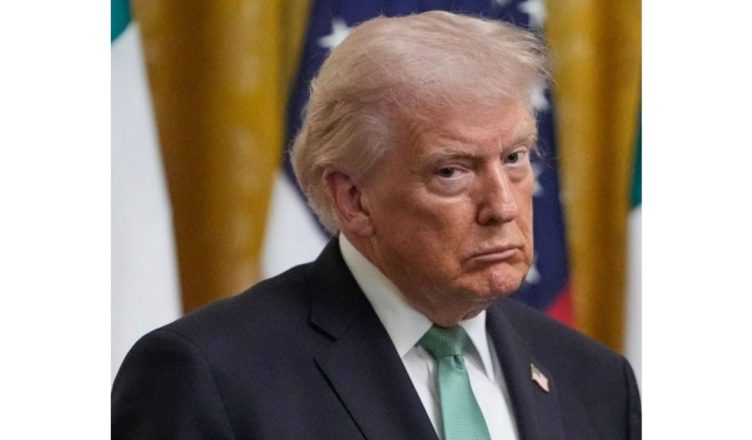
Washington, April 6 — A brief but highly provocative message posted by Donald Trump on his social media platform has triggered widespread concern among global leaders and security analysts. The US President appeared to indicate a specific timeline for potential military action against Iran, intensifying an already volatile situation in the region.
The post, published on April 5 around 8:00 PM Eastern Time on Truth Social, read: “Tuesday, 8:00 PM Eastern Time!” While the message lacked context, it has been widely interpreted as either a final deadline for diplomatic compliance or a signal of imminent military strikes.
Key Announcements and Developments
The timing of the post has drawn particular attention due to its unusual nature. Military operations are typically shrouded in secrecy to maintain strategic advantage. Publicly sharing a potential timeline for action is considered highly unconventional and has raised questions about both intent and implications.
Earlier the same day, President Trump had issued a strongly worded warning to Iran, stating that failure to reach a peace agreement within 48 hours could result in targeted attacks on critical infrastructure. These reportedly include power plants, bridges, and other essential civilian assets.
The situation escalated further following reports of a US military aircraft incident. A weapons systems officer aboard an F-15E Strike Eagle was rescued after the aircraft was downed over Iranian territory. While details remain limited, the incident has added another layer of tension to an already strained relationship.
Official Statements and Interpretation
While no formal clarification has been issued by the White House regarding the exact meaning of the post, defense analysts and foreign policy experts have offered varying interpretations.
Some believe the message represents a calculated pressure tactic aimed at forcing Iran to reopen the strategically critical Strait of Hormuz, which has reportedly been disrupted amid ongoing tensions. Others view it as a potential signal to both domestic and international audiences, demonstrating a firm stance on US strategic interests.
A senior defense analyst, speaking on condition of anonymity, noted that “publicly declaring a specific time for possible military action is extremely rare and could either be a psychological tactic or a genuine operational signal.”
Context and Background
The Strait of Hormuz is one of the world’s most important maritime chokepoints, responsible for the transit of nearly a fifth of global oil supply. Any disruption in this region has immediate consequences for international energy markets and global trade.
Tensions between the United States and Iran have fluctuated over the years, often influenced by disputes over nuclear policy, regional influence, and economic sanctions. Recent developments suggest a renewed phase of confrontation, with both nations taking increasingly assertive positions.
The reported closure or restriction of shipping through the Strait has heightened concerns among global economies, particularly those heavily dependent on oil imports. This has placed additional pressure on diplomatic channels to prevent further escalation.
The downing of the US aircraft adds a military dimension to the crisis. While it remains unclear whether the incident was accidental or deliberate, it has significantly complicated the situation and may influence decision-making in Washington.
Why This Situation Matters
The implications of a potential US strike on Iran extend far beyond the two nations directly involved. Any military conflict in the region could disrupt global oil supply chains, leading to price volatility and economic uncertainty worldwide.
For countries in Asia and Europe that rely heavily on oil transported through the Strait of Hormuz, the stakes are particularly high. Even a temporary disruption could lead to supply shortages and increased energy costs.
Additionally, targeting civilian infrastructure, as suggested in earlier statements, raises concerns under international law. Such actions could attract criticism from global organizations and allied nations, potentially isolating the US diplomatically.
The situation also underscores the growing role of social media in modern geopolitics. Platforms like Truth Social are increasingly being used by political leaders to communicate directly with the public, bypassing traditional diplomatic channels. While this allows for immediate messaging, it also increases the risk of misinterpretation and escalation.
Public and Global Reaction
Global reactions have been cautious but concerned. Several governments have urged restraint and called for renewed diplomatic engagement to avoid a broader conflict.
Market responses have also reflected uncertainty. Oil prices showed signs of volatility following the announcement, indicating investor concern over potential disruptions in supply.
Within the United States, reactions have been mixed. Some political figures have supported the administration’s firm stance, arguing that strong measures are necessary to protect strategic interests. Others have expressed concern over the lack of clarity and the potential risks of escalation.
What Comes Next
With the indicated timeline approaching, attention is now focused on whether diplomatic efforts can yield a breakthrough. It remains unclear whether backchannel negotiations are underway or if any concessions have been offered by either side.
Military analysts suggest that even if no immediate action occurs at the specified time, the message itself has already altered the strategic landscape. It has increased pressure on Iran while also signaling a willingness by the US to take decisive action if necessary.
At the same time, the lack of detailed official communication leaves room for uncertainty. This ambiguity can be both a strategic tool and a source of risk, depending on how it is interpreted by different stakeholders.
As the situation develops, global leaders are likely to monitor events closely, balancing the need for security with the imperative to avoid a wider conflict that could have far-reaching consequences.
Inputs and images : Hindusthan Samachar
Edited By E. Devanshi varma
Also Read: Alexander Leonov Dies at 74, 7 Key Contributions to Hypersonic Missile Development Remembered
Follow us on Google News: Click Here
Last Updated on: Monday, April 6, 2026 9:02 am by E. Devanshi Varma | Published by: E. Devanshi Varma on Monday, April 6, 2026 9:02 am | News Categories: News
About The Author
