
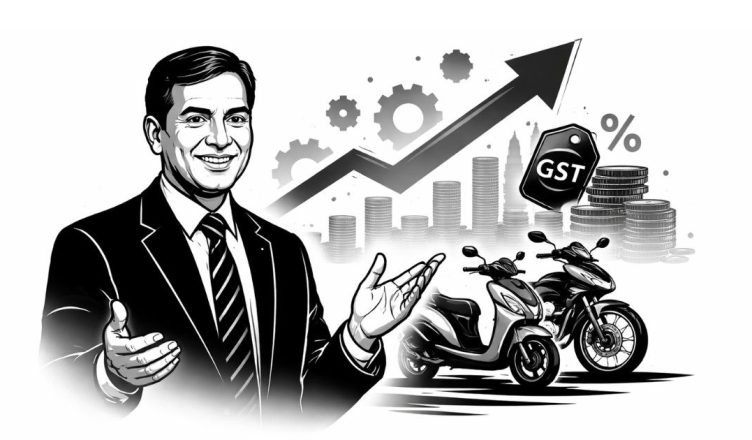
At the center of this conversation is TVS Motor Company, one of India’s largest two-wheeler manufacturers. The company’s leadership has shared insights on long-term two-wheeler sector growth and the impact of GST (Goods and Services Tax) on pricing, demand, and investment.
This matters today because the two-wheeler industry directly affects millions of Indian households, especially in semi-urban and rural areas. It is often seen as a key indicator of middle-class consumption and economic health.
Below is a detailed, reader-first analysis of what the TVS Motor CEO’s outlook means for buyers, dealers, investors, and the broader Indian economy.
Why the Two-Wheeler Sector Is Critical for India
India is the world’s largest two-wheeler market. Motorcycles and scooters are not just lifestyle products. They are essential transport tools.
They help people:
- Travel to work
- Run small businesses
- Access education
- Improve mobility in rural regions
In many states, a two-wheeler is the first vehicle a family buys. That makes this sector highly sensitive to income levels, fuel prices, and tax policies.
Industry experts often track two-wheeler sales to understand consumer confidence trends.
TVS Motor CEO’s Long-Term Growth Outlook
According to company leadership, the long-term story for the two-wheeler market remains positive.
1. Structural Demand Still Strong
The CEO emphasized that India’s young population and growing workforce will continue to drive demand.
Key long-term growth drivers include:
- Rising rural income levels
- Expansion of road infrastructure
- Increasing urban migration
- Growing need for affordable mobility
India adds millions of working-age citizens every year. For many of them, a two-wheeler is the most practical transport option.
2. Rural Market Recovery
In recent years, rural demand slowed due to:
- Inflation pressure
- Higher vehicle prices
- Weather-related farm income issues
However, early signs now show gradual improvement.
Better monsoons and stable crop prices are helping rural cash flow. This could support stronger motorcycle sales in the coming quarters.
Electric Two-Wheelers: A Major Growth Engine
Another key point highlighted by industry leadership is the rising role of electric vehicles (EVs).
EV Adoption Is Rising
Electric scooters are gaining popularity in cities due to:
- Lower running costs
- Government incentives
- High fuel prices
- Improved battery range
TVS has invested in electric mobility through products like the iQube electric scooter.
The company sees electric two-wheelers as a long-term growth opportunity rather than a short-term trend.
Battery and Infrastructure Improvements
Charging infrastructure is expanding across major cities. Battery technology is also improving, leading to:
- Better range
- Faster charging
- Improved safety standards
Industry leaders believe that EV penetration in the two-wheeler segment will continue to rise steadily over the next decade.
GST Impact on Two-Wheelers: What the CEO Indicated
One of the most important policy discussions revolves around GST.
Currently:
- Most two-wheelers fall under the 28% GST slab
- Electric two-wheelers attract a lower 5% GST rate
This difference has sparked industry debate.
Why GST Matters So Much
A two-wheeler is often priced between ₹60,000 and ₹1.5 lakh for entry-level and mid-range models.
A small tax reduction can significantly affect:
- On-road price
- EMI affordability
- First-time buyer decisions
Industry stakeholders have long requested that two-wheelers be treated as essential mobility products rather than luxury items.
Potential Impact of a GST Revision
If GST is reduced:
- Prices may fall
- Demand could rise
- Rural buyers may benefit
- Dealer volumes may increase
However, no official change has been announced. Any revision would depend on GST Council decisions.
The CEO indicated that tax rationalization, if considered, could support industry expansion.
Cost Pressures and Pricing Strategy
Two-wheeler makers have faced rising input costs in recent years.
Key cost factors include:
- Steel prices
- Aluminum costs
- Semiconductor shortages
- Logistics expenses
Manufacturers have had to pass on some of these costs to consumers.
However, with commodity prices stabilizing globally, companies are now focusing on balancing margins with competitive pricing.
Exports: A Key Revenue Contributor
India is also a major exporter of motorcycles and scooters.
TVS exports to markets in:
- Africa
- Latin America
- Southeast Asia
Currency movements and global demand conditions influence export performance.
Company leadership has suggested that export markets remain important for long-term stability.
Premiumization Trend in Motorcycles
Another noticeable shift is premiumization.
More Indian buyers are now upgrading from entry-level bikes to higher-cc models.
Reasons include:
- Rising incomes
- Improved financing options
- Aspirational buying
- Lifestyle choices
TVS has strengthened its presence in the premium segment with performance motorcycles under the Apache brand.
This trend helps companies improve profitability.
Financing and EMI Accessibility
Financing plays a major role in two-wheeler sales.
A large percentage of buyers purchase vehicles through loans.
Key points affecting demand:
- Interest rates
- Bank and NBFC lending policies
- Down payment requirements
If lending conditions remain stable, it could support higher sales volumes in FY2026 and beyond.
Impact on Employment and Supply Chain
The two-wheeler sector supports:
- Manufacturing jobs
- Dealer networks
- Service centers
- Component suppliers
Thousands of MSMEs depend on auto component orders.
Any growth in this sector creates a multiplier effect across industries.
Digital Sales and Changing Consumer Behavior
Customer behavior is also changing.
More buyers now:
- Compare models online
- Check reviews and mileage data
- Book test rides digitally
- Use online financing calculators
Manufacturers are investing in digital showrooms and online booking systems.
This improves transparency and buyer convenience.
What This Means for Buyers in 2026
For Indian consumers, the CEO’s outlook suggests:
- The two-wheeler market remains stable
- Electric models will expand
- Premium motorcycles may see strong launches
- Policy changes like GST rationalization could impact pricing
Buyers should monitor:
- Upcoming model launches
- Festive discounts
- State EV subsidies
- GST announcements
Industry Outlook for FY2026 and Beyond
The broader outlook remains cautiously optimistic.
Growth will depend on:
- Rural income stability
- Inflation trends
- Government policy
- Fuel prices
- Interest rates
If macroeconomic conditions remain supportive, the two-wheeler sector could return to steady multi-year growth.
Conclusion: A Sector at an Important Turning Point
India’s two-wheeler industry stands at a key moment.
Traditional motorcycles remain essential for mobility. At the same time, electric scooters are shaping the future.
The leadership of TVS Motor Company believes that long-term growth fundamentals remain strong.
However, policy support — especially around GST rationalization — could play a major role in unlocking the next phase of expansion.
For Indian households, dealers, and investors, the message is clear:
The two-wheeler story is far from over. It is evolving.
And the coming years will define how India balances affordability, innovation, and sustainability in personal mobility.
Also Read: Cancún Airport Chaos: 3 Major Travel Disruptions Trigger Fresh Panic Grounds Hundreds of Flights
Follow us on google news: Click Here
Last Updated on: Monday, February 23, 2026 2:33 pm by News Estate Team | Published by: News Estate Team on Monday, February 23, 2026 2:33 pm | News Categories: News
About The Author
