
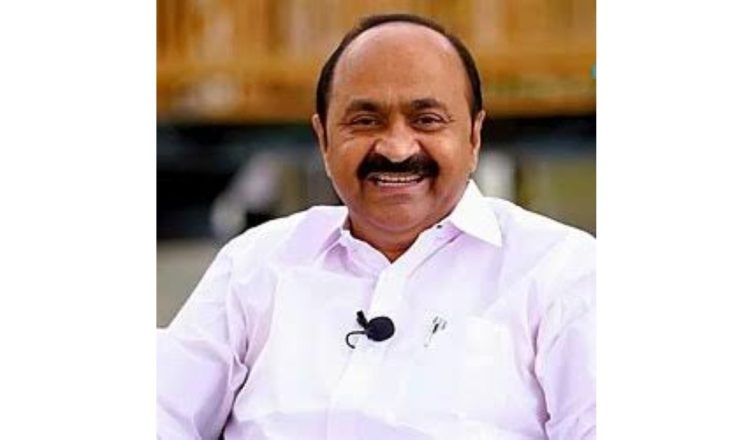
Kochi, April 10: Leader of the Opposition V.D. Satheesan on Thursday expressed strong confidence in the United Democratic Front’s (UDF) chances in the ongoing Kerala Assembly elections, predicting a decisive victory for the alliance and a possible clean sweep in four districts.
Addressing reporters in Kochi, Satheesan said the UDF is likely to win all Assembly seats in Ernakulam, Malappuram, Idukki, and Pathanamthitta districts. These four districts together account for 40 constituencies in the Kerala Legislative Assembly, making them crucial to the overall outcome.
He further projected that the UDF could cross the 100-seat mark in the 140-member Assembly, a benchmark that would ensure a comfortable majority and a strong mandate.
Key Announcements and Claims
Satheesan’s remarks underline the UDF’s growing confidence as polling progresses. The key highlights of his statement include:
- Prediction of a clean sweep in four major districts: Ernakulam, Malappuram, Idukki, and Pathanamthitta
- Expectation that the UDF will cross 100 seats in the Assembly
- Assertion that the alliance has regained support from previously alienated groups
- Emphasis on recent electoral performances as indicators of momentum
According to Satheesan, the projection is not based on speculation but on what he described as a “clear political assessment” derived from ground-level feedback and recent electoral trends.
Opposition’s Confidence Rooted in Past Performance
Drawing parallels with earlier elections, Satheesan recalled that the UDF had secured 100 seats in the 2001 Kerala Assembly elections, one of its strongest performances in the state’s political history.
He acknowledged that the alliance experienced a decline in support after 2005, when several social and political groups distanced themselves from the front. However, he claimed that nearly 95% of those groups have now returned to the UDF fold through sustained engagement and organisational efforts.
This regained support base, he suggested, forms the backbone of the alliance’s current confidence.
Momentum from Recent Elections
Satheesan highlighted the UDF’s performance in recent electoral contests as evidence of its growing strength. He pointed to:
- By-election results that favoured UDF candidates
- Gains in local body elections
- A strong showing in parliamentary elections
These outcomes, he said, reflect a consistent upward trend for the alliance in Kerala’s political landscape.
He also noted that the UDF performed well in the last Lok Sabha elections in the state, even as national trends indicated continued support for the ruling party at the Centre. This, he argued, demonstrates Kerala’s distinct political dynamics and the UDF’s ability to consolidate support locally.
“Systematic and Professional Approach”
A key element of Satheesan’s argument was the strategy adopted by the UDF in recent years. He attributed the alliance’s improved performance to what he described as a “systematic and professional approach” to political organisation and campaigning.
This approach, according to him, includes:
- Strengthening grassroots networks
- Targeted outreach to different communities
- Better coordination among alliance partners
- Data-driven campaign planning
Such efforts, he suggested, have helped the UDF reconnect with voters and rebuild trust among sections that had previously drifted away.
Response to “Political Exile” Remarks
Satheesan also addressed questions regarding his earlier comments on “political exile,” a phrase that had drawn attention in political circles.
He maintained that his statements were on record and could be verified, adding that repeated questions from the media appeared aimed more at generating headlines than fostering meaningful discussion.
By downplaying the controversy, he sought to shift the focus back to electoral issues and the UDF’s campaign narrative.
Context: Kerala’s Political Landscape
Kerala has traditionally witnessed a bipolar political contest between the UDF and the Left Democratic Front (LDF), with power alternating between the two alliances over successive elections.
The UDF, led by the Indian National Congress, has historically relied on a coalition of parties and community-based support. Meanwhile, the LDF, led by the Communist Party of India (Marxist), has maintained a strong organisational base and governance record.
In recent years, the LDF has attempted to break the state’s pattern of alternating governments by seeking consecutive terms, while the UDF has focused on consolidating its base and capitalising on anti-incumbency sentiment.
Against this backdrop, Satheesan’s prediction of a 100-plus seat victory signals a high-stakes contest and reflects the opposition’s attempt to project confidence and momentum.
Why These Districts Matter
The four districts highlighted by Satheesan—Ernakulam, Malappuram, Idukki, and Pathanamthitta—are politically significant for several reasons:
- Ernakulam: A key urban and commercial hub with diverse voter demographics
- Malappuram: A stronghold of UDF allies, particularly the Indian Union Muslim League
- Idukki: A district with a mix of rural and plantation-based constituencies
- Pathanamthitta: Known for closely contested seats and shifting voter preferences
A clean sweep in these regions would provide a substantial boost to the UDF’s overall tally and could play a निर्णायक role in determining the final outcome.
Public Impact and Electoral Implications
If the UDF’s projections materialise, the implications could be significant for Kerala’s political and administrative landscape.
A strong mandate would:
- Enable the UDF to implement its policy agenda without major legislative hurdles
- Influence governance priorities in areas such as welfare, infrastructure, and economic development
- Reshape political alignments and strategies for future elections
For voters, the election outcome will determine the direction of governance in the state over the next five years, including decisions on social welfare schemes, employment initiatives, and public services.
At the same time, political analysts caution that pre-election predictions often reflect strategic messaging aimed at energising party workers and influencing voter perception. The actual results will depend on multiple factors, including voter turnout, local issues, and last-mile campaigning.
Looking Ahead
As polling continues, both major alliances are intensifying their campaigns across the state. The UDF’s confident projections are likely to be countered by the ruling front’s own claims of electoral strength, setting the stage for a closely watched contest.
Satheesan reiterated that the UDF is focused on converting its perceived momentum into a decisive mandate. Whether this confidence translates into electoral success will become clear when votes are counted.
For now, the opposition’s assertion of crossing the 100-seat mark and sweeping key districts adds a new dimension to the political narrative in Kerala, highlighting the competitive nature of the ongoing Assembly elections.
Inputs and images : Hindusthan Samachar
Edited By E. Devanshi varma
Also Read: BJP Odisha names 72-member State Executive Committee, expands leadership structure
Follow us on Google News: Click Here
Last Updated on: Friday, April 10, 2026 2:27 pm by E. Devanshi Varma | Published by: E. Devanshi Varma on Friday, April 10, 2026 2:27 pm | News Categories: India, News
About The Author
