
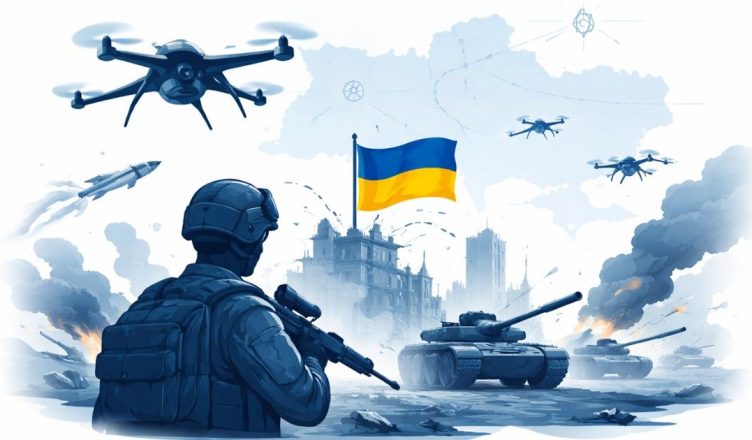
The war between Russia and Ukraine has entered its fifth year in 2026. What began in February 2022 as a large military invasion has now turned into a long and grinding conflict. The battlefield has changed. Weapons have changed. Military strategy has changed.
But the biggest concern today is not only about the fighting on the ground. It is about what this war means for regional security, global stability, energy markets, and India’s strategic interests.
The conflict is no longer limited to tanks and artillery. It is now driven by drones, precision strikes, cyber warfare, and long-range attacks. As the war stretches into another year, experts warn that the risks of wider instability remain serious.
Here is a detailed look at where the war stands in its fifth year and what could happen next.
1. Drone Warfare Has Redefined the Battlefield
One of the biggest changes in this war is the rise of drone warfare.
In 2022, drones were used mainly for surveillance. By 2024 and 2025, both sides began using large numbers of attack drones, loitering munitions, and long-range unmanned systems.
Now in 2026, drones are central to daily combat operations.
How Drones Changed the War
- Low-cost drones can damage expensive tanks and air defence systems
- Swarm attacks make traditional defence systems less effective
- Long-range drones can hit targets deep inside enemy territory
- Real-time surveillance improves artillery accuracy
This has made the battlefield more unpredictable.
Military analysts say drone production capacity has become as important as troop strength. Countries are investing heavily in local drone manufacturing. Electronic warfare systems are also being upgraded to jam or block enemy drones.
For India, this shift is closely watched. It highlights how modern wars may be fought in the future, especially along sensitive borders.
2. Strategy Has Shifted From Rapid Gains to Long-Term Attrition
In the early phase of the war, there were fast-moving offensives and counter-offensives. Cities changed control. Frontlines moved.
By the fifth year, the war has largely turned into a war of attrition.
This means both sides aim to:
- Wear down the opponent’s military capacity
- Damage supply lines
- Destroy energy infrastructure
- Stretch economic resources
Large-scale breakthroughs have become rare. Instead, there are small territorial gains, heavy artillery exchanges, and targeted strikes.
Energy and Infrastructure Remain Key Targets
Energy grids, fuel depots, and transport networks continue to face attacks. These strikes aim to weaken morale and reduce industrial output.
The conflict has shown how modern wars target not just soldiers but also critical infrastructure.
3. Western Military Support and Russian Adaptation
A key factor in the war’s survival into its fifth year is continued foreign involvement.
Several Western countries have provided:
- Advanced air defence systems
- Long-range missiles
- Financial support
- Training and intelligence assistance
At the same time, Russia has adapted its strategy.
It has focused on:
- Expanding domestic defence production
- Strengthening military supply chains
- Deepening partnerships with friendly nations
The conflict has therefore become more than a regional war. It has turned into a major geopolitical contest.
This has raised concerns about long-term global polarization.
4. Regional Security Concerns Are Growing
As the war enters its fifth year, regional security risks remain high.
Border Tensions
Countries in Eastern Europe remain alert. Military exercises have increased. Defence budgets across Europe have risen sharply since 2022.
Several NATO members have strengthened their eastern defences. Russia has also reinforced positions near strategic zones.
Risk of Escalation
Experts warn about possible risks such as:
- Accidental strikes near NATO borders
- Cyber attacks spilling into other countries
- Disruption in global trade routes
While direct confrontation between Russia and NATO has been avoided so far, the possibility of escalation remains a major concern.
5. Economic Impact Is Still Being Felt Worldwide
Even in its fifth year, the war continues to affect global markets.
Energy Prices
Since 2022, global oil and gas markets have faced repeated shocks. Although prices have stabilized compared to early war peaks, volatility remains.
Europe has diversified energy sources. Asian countries, including India, have adjusted trade flows.
Food Security
Ukraine and Russia are key exporters of grains and fertilizers. Disruptions have affected supply chains, especially in developing countries.
Shipping risks in the Black Sea region have also impacted exports.
For India, these developments matter. Changes in oil prices, fertilizer supply, and global trade directly affect inflation and economic planning.
Cyber Warfare and Information Battles
Another major shift in the fifth year is the continued use of cyber warfare.
Both sides have faced:
- Cyber attacks on government systems
- Attempts to disrupt communications
- Online disinformation campaigns
Digital warfare has become a parallel battlefield.
Governments around the world are investing more in cyber defence systems. India has also stepped up cybersecurity awareness and preparedness in recent years.
Humanitarian Situation After Five Years
After five years of conflict, the humanitarian cost remains severe.
Millions of people have been displaced since February 2022. Cities have faced repeated damage. Infrastructure rebuilding has been slow in contested regions.
Humanitarian agencies continue to provide aid, but access remains challenging in some frontline areas.
The long duration of the war has created fatigue among global donors. However, reconstruction planning remains an important discussion point for the future.
Peace Talks: Is There Any Real Progress?
Several rounds of negotiations have taken place over the years. However, no lasting political settlement has been reached.
Key challenges include:
- Territorial control disputes
- Security guarantees
- Sanctions and economic restrictions
- War crime investigations
Diplomatic channels remain open, but progress has been limited.
Experts believe that without a major shift in battlefield dynamics, a comprehensive peace agreement may remain difficult.
What Could Happen Next? 3 Possible Scenarios
As the war moves deeper into its fifth year, analysts outline three broad scenarios.
1. Prolonged Stalemate
The most likely near-term scenario is continued fighting with limited territorial change.
This would mean:
- Ongoing drone and missile strikes
- Continued foreign military support
- Slow economic strain on both sides
2. Escalation
A sudden escalation could occur due to:
- A major strategic strike
- Expanded use of advanced weapons
- Wider regional involvement
This remains a serious but uncertain risk.
3. Negotiated Settlement
A negotiated solution could emerge if:
- Military fatigue increases
- International pressure grows
- Economic costs become unsustainable
However, current conditions suggest that immediate resolution is unlikely.
Why This War Matters to India
For Indian readers, the Ukraine war is not a distant issue.
It affects:
- Oil import costs
- Fertilizer supply
- Defence cooperation trends
- Global diplomatic alignments
India has maintained a balanced diplomatic position, calling for dialogue and peace while protecting its national interests.
The conflict also offers lessons in modern warfare, especially the growing role of drones and electronic systems.
Global Security in 2026: A Fragile Balance
Five years into the war, the world faces a fragile balance.
The conflict has:
- Reshaped European defence policies
- Accelerated military modernization
- Increased focus on drone technology
- Deepened geopolitical divisions
While global powers have avoided direct confrontation, tensions remain high.
The longer the war continues, the greater the risk of unintended consequences.
Conclusion: A War That Has Entered a Dangerous Phase
As the Ukraine war enters its fifth year in 2026, it stands at a critical moment.
The fighting has evolved from large tank battles to high-tech drone warfare. The strategy has shifted from rapid offensives to long-term attrition. Regional security concerns remain serious. Economic and humanitarian impacts continue.
There is no clear end in sight.
What happens next will depend on battlefield developments, diplomatic efforts, and global political will.
For now, the conflict remains volatile. The fifth year is not just another chapter. It may shape the future of regional and global security for years to come.
Follow us o google news: Click Here
Last Updated on: Wednesday, February 25, 2026 3:06 pm by News Estate Team | Published by: News Estate Team on Wednesday, February 25, 2026 3:06 pm | News Categories: News
About The Author
