
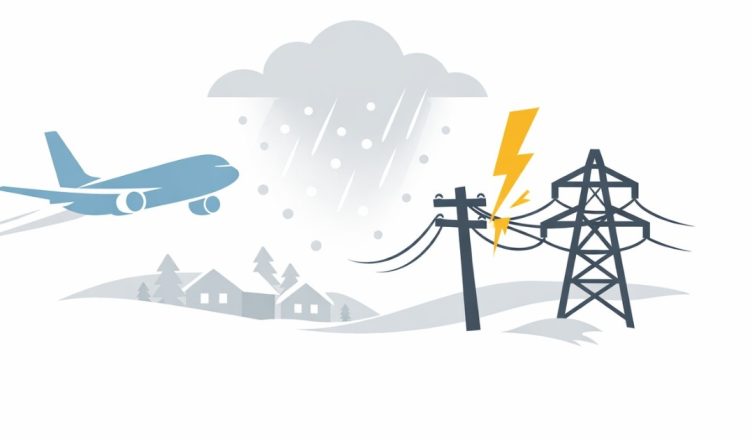
A severe winter storm has hit the US East Coast, bringing heavy snowfall, strong winds, and freezing temperatures. Major cities across the region are facing serious disruption. Thousands of flights have been cancelled. Roads have been shut. Several states have issued emergency declarations.
For Indian readers, this weather crisis is important for three key reasons. First, many Indians travel to the United States for work, study, and business. Second, flight disruptions can affect global travel routes. Third, extreme weather in major economies often impacts global supply chains and markets.
The situation is changing quickly. Authorities are asking residents to stay indoors as snow continues to fall in many areas.
Heavy Snowfall Paralyzes Major Cities
The blizzard has affected densely populated areas along the East Coast. Cities such as New York, Boston, Philadelphia, and Washington, D.C. have reported heavy snow accumulation.
In some places, snowfall crossed several inches within hours, making roads slippery and unsafe. Visibility dropped sharply due to strong winds. Snow ploughs worked continuously, but the intensity of the storm slowed clearing operations.
Public transport services were suspended or reduced in multiple cities. Subway systems operated on limited schedules. Bus services faced delays.
Officials warned that even after the snowfall stops, icy roads could remain dangerous for days.
Thousands of Flights Cancelled Across Airports
One of the biggest impacts has been on air travel.
Major airports including John F. Kennedy International Airport, LaGuardia Airport, and Boston Logan International Airport reported large-scale cancellations and delays.
Airlines cancelled thousands of flights as runways became unsafe due to snow and ice. Aircraft de-icing operations caused further delays. Passengers were advised to check flight status before leaving for the airport.
For Indian travellers connecting through US hubs, the disruption could mean missed connections and extended layovers.
Airlines are offering rebooking options in many cases. However, the situation depends on weather conditions improving.
Emergency Declarations Issued in Several States
Governors in multiple states declared emergencies to speed up response efforts.
Emergency declarations allow authorities to:
- Mobilize additional rescue teams
- Deploy National Guard units
- Allocate funds for snow removal
- Open emergency shelters
Residents were urged to avoid non-essential travel. Officials warned that stranded vehicles could block emergency response teams.
Power companies were placed on alert due to the risk of outages from falling trees and damaged power lines.
Schools, Offices and Public Services Closed
The storm forced widespread closures.
Schools in several districts cancelled in-person classes. Some shifted to online learning for the day. Government offices shut down in many areas.
Private companies advised employees to work from home. Retail businesses reported lower footfall as people stayed indoors.
Hospitals remained operational but postponed non-urgent procedures.
These closures reflect the seriousness of the weather conditions and the need to reduce road traffic.
Power Outages Raise Safety Concerns
Strong winds combined with heavy snow increased the risk of power failures.
Utility providers warned customers to prepare for possible outages. In winter conditions, loss of electricity can be dangerous due to heating system failure.
Authorities advised residents to:
- Keep emergency kits ready
- Store drinking water
- Charge mobile devices
- Avoid using outdoor generators indoors
Safety officials also warned against carbon monoxide risks from improper heating methods.
Impact on Global Travel and Indian Passengers
The United States is a key global aviation hub. Many flights between India and North America connect through East Coast airports.
When severe weather disrupts these airports, ripple effects can spread worldwide.
Indian passengers flying to cities like New York, Boston, or Washington may face:
- Flight cancellations
- Delays of several hours
- Rescheduled departures
- Missed connecting flights
Travellers are advised to:
- Monitor airline notifications
- Keep travel insurance documents ready
- Avoid unnecessary airport visits without confirmation
Travel agents in India reported increased queries from concerned passengers.
How Severe Is This Blizzard?
Meteorologists described the storm as a powerful winter system combining heavy snow and strong winds.
Blizzard conditions are officially declared when:
- Visibility drops below 400 metres
- Winds exceed 35 miles per hour
- Conditions last for at least 3 hours
Such storms can create whiteout conditions, where drivers cannot see the road ahead.
While the exact snowfall totals vary by location, authorities have warned that clean-up operations may take time even after the storm weakens.
Climate Pattern or Seasonal Storm?
Winter storms are common in the US Northeast. However, experts say extreme weather events are becoming more intense in some regions.
Heavy snowfall combined with strong winds increases the risk of transport collapse. Urban areas are particularly vulnerable because of high traffic density.
For India, understanding global weather trends matters. Climate-related disruptions in major economies can impact oil prices, shipping schedules, and supply chains.
Emergency Response and Public Advisory
Authorities across the region are coordinating response efforts.
Snowplough teams are clearing highways. Rescue teams are responding to stranded motorists. Public shelters are open for those without heating.
Residents have been advised to:
- Stay indoors
- Avoid driving unless necessary
- Check on elderly neighbours
- Follow official weather updates
Officials warned against spreading misinformation. They asked citizens to rely on official alerts from weather agencies and local governments.
What Happens Next?
Weather forecasts suggest that snowfall may gradually reduce as the storm system moves away. However, freezing temperatures are expected to remain.
The biggest risk after the snowfall ends is black ice. This thin layer of ice is hard to see and can cause accidents.
Airports are expected to resume operations gradually. However, flight backlogs may take time to clear.
Rail and bus services will also restart in phases once tracks and roads are cleared.
Advice for Indian Students and Professionals in the US
Many Indian students and IT professionals live on the US East Coast.
Community groups are sharing local updates through social media. Universities have issued campus advisories and emergency helplines.
Students are advised to:
- Follow university alerts
- Avoid walking during heavy snow
- Use official transport advisories
- Stock basic groceries
Indian missions in the US typically monitor such situations. Travellers facing serious difficulties can contact local emergency services.
Economic and Market Impact
Weather disruptions can temporarily affect economic activity.
Retail sales often decline during major snowstorms. Delivery services slow down. Supply chains may experience short-term delays.
Financial markets sometimes react to severe weather, especially if energy production or logistics are affected.
However, most experts say the economic impact of short-term storms is usually temporary unless damage is severe.
Why This Story Matters for Indian Readers
The US is one of India’s largest trade partners. It is also a major destination for Indian students and professionals.
Severe weather in key US cities can:
- Disrupt global aviation
- Affect multinational companies
- Delay business meetings
- Impact supply shipments
In a connected world, regional weather crises can have global ripple effects.
For Indian travellers and families with relatives in the US, staying informed is essential.
Key Updates at a Glance
- Heavy snowfall across US East Coast cities
- Thousands of flights cancelled
- Emergency declarations issued in multiple states
- Schools and offices closed
- Power outage risks reported
- Travel advisories remain active
Authorities continue to monitor conditions. Residents have been urged to remain cautious until normal services resume.
Conclusion: Travel Recovery May Take Time
The US East Coast blizzard has created widespread disruption. Air travel has been severely affected. Road movement remains limited in many areas.
While snow removal operations are underway, full recovery may take several days depending on weather conditions.
For Indian readers planning travel or with family in the region, the best approach is to follow verified updates and remain patient.
Extreme weather events are reminders of how interconnected global systems are. A single storm in one region can affect travellers and businesses worldwide.
Officials say public safety remains the top priority as the situation continues to evolve.
Also Read: India Joins US-Led Pax Silica Coalition: 7 Big Impacts on Semiconductor and AI Supply Chains
Follow us on google news: Click Here
Last Updated on: Tuesday, February 24, 2026 8:19 pm by News Estate Team | Published by: News Estate Team on Tuesday, February 24, 2026 8:19 pm | News Categories: News
About The Author
