
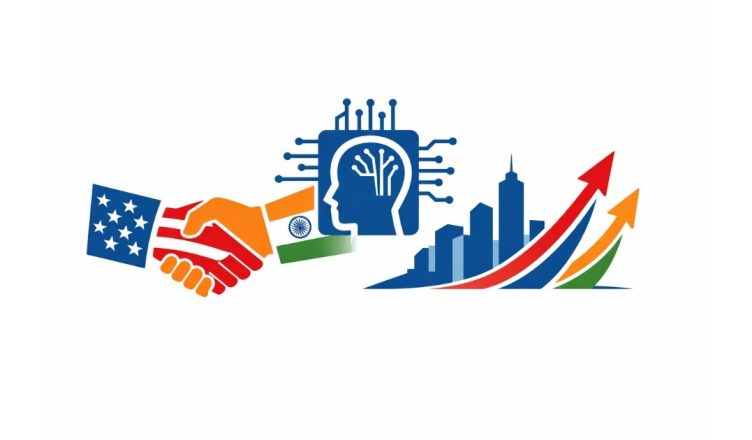
India’s push to become a global artificial intelligence hub gained fresh momentum this week as major announcements at the AI Summit 2026 opened the door to new U.S.–India technology partnerships.
The summit, held in New Delhi on 19 February 2026, brought together policymakers, global tech firms, venture capital leaders, and startup founders. Several cross-border agreements and collaboration plans were unveiled during the event.
For startups, this is not just another policy conference. It could shape access to funding, advanced AI tools, cloud infrastructure, research partnerships, and global markets over the next few years.
Here is what happened at the summit and why it matters.
Why AI Summit 2026 Matters for India Today
India is already home to over 100,000 startups, with AI becoming one of the fastest-growing sectors. From fintech and health-tech to agritech and logistics, AI tools are now at the core of many new businesses.
The AI Summit 2026 focused on:
- Expanding U.S.–India technology collaboration
- Strengthening AI research and innovation
- Building secure and ethical AI systems
- Supporting startups and developers
- Improving digital infrastructure
The presence of senior government officials and global tech leaders signals that artificial intelligence is now a top economic and strategic priority for both countries.
For Indian startups, this means stronger global connections and better access to resources.
Key U.S.–India Tech Deals Announced at AI Summit 2026
1. Expanded AI Research Partnerships
One of the major outcomes of the summit was the announcement of deeper research collaboration between Indian institutions and U.S. technology companies.
The focus areas include:
- Generative AI
- Healthcare AI tools
- Semiconductor-linked AI research
- Climate and agriculture AI solutions
These partnerships are expected to create joint innovation labs and exchange programs. Indian startups working in deep tech may gain access to advanced research support and mentorship.
2. Cloud and Infrastructure Support for Startups
Large global cloud providers announced expanded support programs for Indian AI startups.
This includes:
- Access to advanced computing power
- AI development tools
- Startup credits and incubation support
For early-stage startups, computing costs are often one of the biggest barriers. Access to global cloud infrastructure can reduce costs and improve speed to market.
3. Investment and Venture Capital Interest
U.S. venture capital firms showed strong interest in India’s AI ecosystem during the summit.
India is now seen as:
- A fast-growing AI talent base
- A large digital consumer market
- A cost-efficient innovation hub
Industry analysts believe cross-border investment deals may rise in 2026 and 2027 as global investors look for new AI growth markets beyond the United States.
For founders, this could mean easier access to global funding networks.
4. Focus on Responsible and Secure AI
Another key theme was responsible AI development.
Discussions included:
- Data privacy standards
- AI safety frameworks
- Transparency in AI systems
- Reducing bias in algorithms
India and the U.S. both stressed the need to balance innovation with safety. For startups, this means compliance requirements may increase, but it also builds trust with global customers.
5. Talent Development and Skill Programs
Skill development was a central focus at the summit.
New initiatives aim to:
- Train developers in advanced AI tools
- Support AI education in universities
- Encourage collaboration between industry and academia
India produces a large number of engineering graduates every year. With structured AI training programs, this talent pool could become even more competitive globally.
For startups, better-trained talent means faster product development and stronger teams.
What This Means for Indian Startups
Easier Access to Global Markets
U.S.–India tech partnerships can help startups expand internationally.
Startups that build AI products in India may now find:
- Better entry into U.S. enterprise markets
- Partnerships with global firms
- Opportunities to serve multinational clients
This reduces dependence on only domestic growth.
Higher Competition in the AI Sector
While opportunities are rising, competition will also increase.
As global firms deepen their India presence:
- More AI tools will enter the market
- Funding competition may grow
- Talent hiring could become tougher
Startups will need strong product differentiation to succeed.
Boost for Tier-2 and Tier-3 Startup Hubs
AI innovation is no longer limited to Bengaluru, Hyderabad, or Delhi.
With cloud access and digital collaboration tools, founders from smaller cities can also participate in global projects.
Government support programs linked to the summit may further push AI adoption across states.
Impact on Key Sectors in India
Healthcare
AI-based diagnostics, predictive health tools, and hospital management systems are expected to gain momentum.
Cross-border research collaboration could improve:
- Medical imaging AI
- Drug discovery support
- Telemedicine platforms
health-tech startups may benefit from advanced datasets and global clinical research links.
Agriculture
AI tools for crop prediction, soil analysis, and supply chain management are gaining traction.
With global collaboration, agritech startups can build smarter tools for Indian farmers while also targeting international markets.
Financial Technology
fintech ecosystem is already strong.
AI-driven fraud detection, credit scoring, and digital lending tools could see major growth if cross-border investment increases.
Manufacturing and Semiconductor Ecosystem
AI plays a key role in advanced manufacturing.
With India expanding its semiconductor ecosystem, AI-based design and production systems could receive new investment and research support.
Government’s Strategic AI Push
The summit reflects India’s broader goal of becoming a global AI leader.
In recent years, the government has:
- Promoted digital public infrastructure
- Encouraged startup growth
- Supported semiconductor manufacturing
- Increased focus on data governance
The AI Summit 2026 aligns with these long-term goals.
Stronger cooperation with the U.S. also strengthens India’s position in global technology discussions.
Challenges Ahead
Despite the positive outlook, several challenges remain.
Data Regulation Clarity
Startups need clear and stable policies around:
- Data storage
- Cross-border data sharing
- AI governance standards
Policy uncertainty can slow innovation.
Infrastructure Gaps
While major cities have strong tech infrastructure, smaller regions still face:
- Limited high-speed connectivity
- Fewer research labs
- Limited investor networks
Bridging this gap will be critical.
Global Geopolitical Risks
Technology partnerships are influenced by global political and trade relations.
Any changes in global trade policies or security concerns could impact cross-border AI collaboration.
Why This Story Is Trending in India
Search interest around:
- “AI Summit 2026”
- “U.S.–India tech deals”
- “AI startups India”
- “AI investment 2026”
has increased sharply in the last 24 hours.
Startup founders, investors, and students are closely tracking announcements from the summit.
The topic is also gaining traction on professional networks and technology forums.
What Startup Founders Should Watch Next
Over the coming months, founders should monitor:
- Details of announced partnership programs
- Startup funding windows
- Government-backed AI grants
- Policy updates related to AI compliance
Concrete implementation will matter more than summit announcements.
The Road Ahead for India’s AI Ecosystem
The AI Summit 2026 has positioned India as a serious global player in artificial intelligence.
If partnerships translate into:
- Real investment
- Research collaboration
- Talent development
- Market access
Indian startups could enter a new growth phase in 2026–2028.
However, long-term success will depend on execution, policy clarity, and the ability of startups to innovate at scale.
For now, the message from New Delhi is clear: AI is not just a future opportunity. It is a present economic priority.
And for startup ecosystem, the coming years may define its place in the global AI race.
Also Read: 5 Critical Concerns After Suspected Karachi Gas Leak Trigger Serious Regional Security Fears
Follow us on google news: Click Here
Last Updated on: Thursday, February 19, 2026 7:21 pm by News Estate Team | Published by: News Estate Team on Thursday, February 19, 2026 7:21 pm | News Categories: News
About The Author
