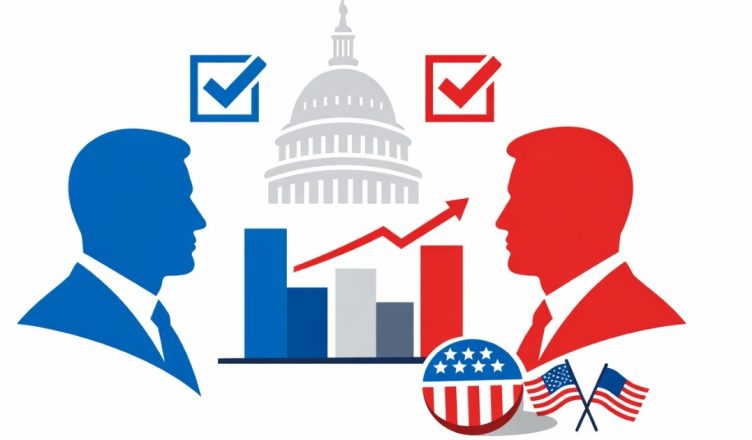
The US Presidential Race 2026 has entered a critical phase. Fresh national polls show a tight contest. Campaign rallies are growing in scale. Fundraising numbers are rising. Key swing states are once again at the center of attention.
For Indian readers, this election is important. The United States is India’s largest trading partner. It is also a key strategic ally in defence, technology, and global security. The next US president will shape policies on immigration, visas, trade tariffs, and Indo-Pacific security.
With less than a year left before the vote, poll numbers, campaign strategy, and voter turnout trends are closely watched across the world.
Latest Poll Numbers: A Tight National Contest
Recent public opinion surveys show a competitive race. While exact numbers vary by polling agency, most national polls suggest:
- The gap between the top candidates is within 3–5 percentage points
- Voter preference is divided sharply along party lines
- Independent voters could decide the outcome
- Youth and suburban voters remain key blocs
Polling experts caution that national polls do not directly decide the winner. The US uses the Electoral College system, where results in individual states matter more than overall national vote share.
Swing States to Watch
The most competitive states in 2026 include:
- Pennsylvania
- Michigan
- Wisconsin
- Arizona
- Georgia
- Nevada
In many of these states, surveys show candidates separated by less than 2–4 percentage points. This makes campaign visits and local messaging crucial.
Key Campaign Developments in 2026
1. Focus on Economy and Inflation
Economic issues remain the top concern for American voters.
Campaign speeches frequently mention:
- Cost of living
- Job growth
- Tax policy
- Energy prices
- Housing affordability
Candidates are highlighting recent economic data. Supporters point to job creation numbers and falling inflation trends. Critics question wage growth and consumer confidence.
The economy is expected to remain the main issue until Election Day.
2. Immigration and Border Policy Debate
Immigration continues to shape campaign messaging.
Both major parties have outlined different approaches on:
- Border security
- Asylum rules
- Work permits
- Legal immigration reforms
This issue is particularly important in border states like Arizona and Texas, but it also influences suburban voters nationwide.
3. Foreign Policy and Global Conflicts
Global tensions have made foreign policy central to the campaign.
Voters are hearing debates about:
- US support for allies
- Relations with China
- Military spending
- NATO commitments
- Middle East diplomacy
The next president will shape US engagement in global conflicts and economic alliances.
For India, US foreign policy direction will influence trade deals, defence cooperation, and Indo-Pacific strategy.
4. Fundraising Milestones
Campaign fundraising is strong on both sides.
Recent disclosures show:
- Millions of dollars raised in small online donations
- Significant support from party committees
- Increased spending on digital ads
Digital outreach has become central. Social media campaigns, targeted video ads, and online town halls are playing a larger role than traditional rallies alone.
5. Youth and Suburban Voter Strategy
Campaign teams are targeting specific groups:
- First-time voters
- College students
- Women voters
- Minority communities
- Suburban professionals
Polling suggests turnout among these groups could influence results in key states.
Youth voters, in particular, are concerned about climate change, student debt, and job opportunities.
Role of the Electoral College
The US President is not elected directly by popular vote. Instead, the Electoral College decides the outcome.
There are 538 electoral votes in total.
A candidate needs 270 electoral votes to win.
Even if a candidate wins the national popular vote, they can lose the election if they do not secure enough electoral votes in key states. This happened in previous elections.
That is why campaigns are investing heavily in swing states rather than safe states.
Campaign Messaging: What Voters Are Hearing
Economic Stability vs Policy Change
One campaign is promoting stability and continuity. The other is arguing for policy change and reform.
Key differences include:
- Tax rates
- Healthcare approach
- Environmental regulation
- Government spending levels
Voters are comparing these plans carefully.
Debates and Public Appearances
Televised debates are expected to play a major role.
Debates usually focus on:
- Leadership experience
- Policy clarity
- Crisis management ability
Strong debate performances can shift poll numbers by a few percentage points, especially among undecided voters.
Impact on India and Global Markets
Trade and Economic Ties
The United States and India have strong trade relations.
Key sectors include:
- Technology
- Pharmaceuticals
- Defence
- Renewable energy
Changes in US trade policy could impact tariffs, supply chains, and export opportunities.
Immigration and Visa Policies
Indian professionals closely watch US visa policy.
Programs such as high-skilled work visas directly affect:
- IT professionals
- Engineers
- Healthcare workers
- Students
Campaign statements about immigration reforms are therefore important for Indian families and businesses.
Stock Market Sensitivity
US elections often influence global markets.
Indian investors monitor:
- US Federal Reserve policy signals
- Dollar strength
- Technology stock performance
Market volatility tends to increase during major political cycles.
Voter Turnout Trends to Watch
In recent US elections, turnout has been historically high.
Factors influencing turnout in 2026 include:
- Early voting rules
- Mail-in ballot policies
- Voter registration drives
- Court decisions affecting election laws
Higher turnout usually benefits candidates who energise young and independent voters.
Digital Campaigning in 2026
Digital strategy has evolved significantly.
Campaigns now use:
- Data-driven targeting
- AI-powered ad placement
- Live video engagement
- Micro-influencer outreach
This makes online engagement a major battlefield.
Fact-checking and misinformation control are also key concerns. Platforms are under pressure to monitor political content carefully.
What Happens Next
The coming months will include:
- Party conventions
- Final candidate nominations
- Vice-presidential announcements
- National debates
- Policy rollouts
Polling trends may shift as new events unfold.
Historically, undecided voters make their final decision in the last few weeks before voting day.
Key Dates to Remember
- Mid-2026: Party conventions
- Late 2026: Presidential debates
- Election Day 2026: Nationwide voting
- January 2027: Presidential inauguration
These dates could bring major changes in poll numbers and public opinion.
Why This Election Is Seen as High-Stakes
Political analysts describe the 2026 contest as high-stakes for several reasons:
- Economic recovery challenges
- Global security tensions
- Domestic policy divisions
- Strong voter mobilisation
The narrow margins in swing states suggest the outcome could be decided by a small number of votes.
Conclusion: A Close Race With Global Impact
The US Presidential Race 2026 remains competitive. Poll numbers show a tight national contest. Swing states are critical. Economic issues dominate debates. Fundraising and digital outreach are intense.
For India and the wider world, the result will influence trade policy, immigration rules, defence partnerships, and global diplomacy.
As campaigns enter their final phase, every poll shift and policy announcement matters. Voters in key states will ultimately decide who secures 270 electoral votes and becomes the next President of the United States.
With months still to go, the race remains open. The coming weeks could reshape the political landscape — not only in America, but across the global economy.
Edited By: E.Devanshi Varma
Also Read: March 2026 Smartphone Launches: Expected Features and Prices in India
Follow us on google news: Click Here
Last Updated on: Tuesday, March 3, 2026 5:41 pm by News Estate Team | Published by: News Estate Team on Tuesday, March 3, 2026 5:41 pm | News Categories: Trending
About The Author
