

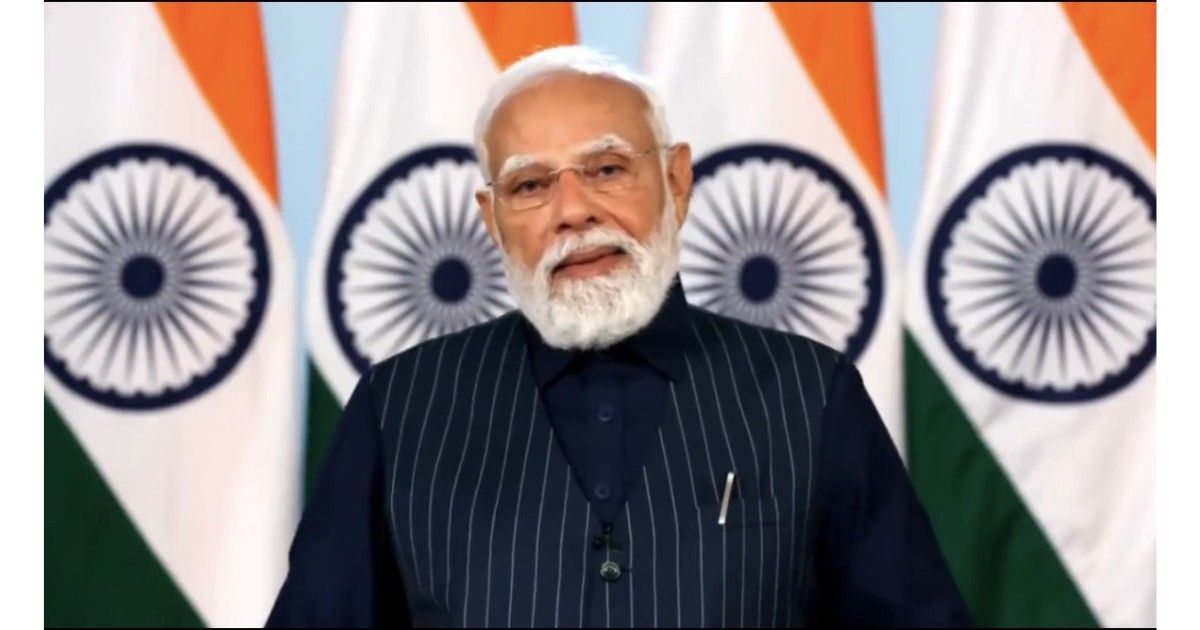
New Delhi, April 3: Prime Minister Narendra Modi on Friday underscored the broader role of education in shaping not just careers but character, calling it a vital force that elevates individuals and strengthens the nation. In a message shared on social media platform X, the Prime Minister emphasized that education goes beyond livelihood and serves as a foundation for excellence, innovation, and ethical living.
His remarks come amid ongoing national discussions around education reforms, skill development, and the role of youth in India’s growth trajectory.
Education Beyond Livelihood
In his message, the Prime Minister stated that education should not be viewed merely as a means to secure employment. Instead, he described it as a powerful tool that refines human potential and contributes to the larger good of society.
He noted that an educated and value-driven youth population is key to achieving excellence across sectors. According to him, education enables individuals to push boundaries, set new benchmarks, and contribute meaningfully to the country’s global standing.
The Prime Minister’s emphasis aligns with India’s broader policy direction, where education is increasingly being positioned as a driver of holistic development rather than just economic mobility.
Key Highlights from the Prime Minister’s Message
- Education is a tool for personal and societal transformation
- Knowledge combined with values leads to excellence
- Youth empowerment is central to national progress
- India’s global reputation is strengthened through achievements driven by education
- Intellectual and moral development must go hand in hand
These points reflect a growing focus on integrating ethical learning with academic and professional training.
Sanskrit Verse and Its Meaning
As part of his message, the Prime Minister shared a Sanskrit subhashita (wise saying), which reads:
“श्रियः प्रदुग्धे विपदो रुणद्धि यशांसि सूते मलिनं प्रमार्ष्टि।
संस्कारशौचेन परं पुनीते शुद्धा हि बुद्धिः किल कामधेनुः॥”
The verse draws a comparison between a pure, well-cultivated intellect and Kamadhenu, the mythical wish-fulfilling cow in Indian tradition. It suggests that a refined and value-based intellect can:
- Generate prosperity
- Prevent or mitigate difficulties
- Bring recognition and success
- Remove negativity and impurities from life
In essence, the verse highlights the transformative potential of education when combined with ethical grounding and discipline.
Official Statement Interpreted
Through his post, the Prime Minister conveyed that education enriched with moral values acts as a guiding force for individuals. It shapes decision-making, encourages responsible behavior, and fosters a sense of purpose.
He implied that true education is not limited to acquiring knowledge or technical skills. Instead, it involves cultivating a mindset that prioritizes integrity, resilience, and continuous learning.
This perspective reflects a long-standing philosophical view in India, where education has traditionally been associated with character-building as much as intellectual development.
Context: Education Reforms in India
The Prime Minister’s remarks come in the backdrop of ongoing efforts to transform India’s education system. In recent years, the government has introduced initiatives aimed at making education more inclusive, flexible, and aligned with global standards.
One of the key frameworks guiding these changes is the National Education Policy (NEP) 2020. The policy emphasizes:
- Holistic and multidisciplinary learning
- Development of critical thinking and creativity
- Integration of vocational education from an early stage
- Use of technology to enhance access and quality
The NEP also stresses the importance of value-based , echoing the Prime Minister’s recent message.
Additionally, various skill development programs and digital learning platforms have been launched to prepare students for a rapidly evolving job market.
Why This Message Matters
The Prime Minister’s statement is significant for several reasons.
First, it reinforces the idea that education is central to India’s long-term development strategy. As the country aims to position itself as a global knowledge hub, the quality and orientation of its system become crucial.
Second, the focus on values addresses concerns about the broader purpose of education. While economic growth and job creation remain important, there is increasing recognition of the need for ethical leadership and responsible citizenship.
Third, the emphasis on youth highlights the demographic advantage India currently holds. With a large young population, investing in education and skill development is essential to harness this potential.
Public Impact: Who Benefits and How
The ideas shared by the Prime Minister have implications for multiple stakeholders.
Students:
The message encourages students to look beyond grades and career prospects. It highlights the importance of developing a well-rounded personality, including ethical values and critical thinking skills.
Educators:
Teachers and institutions may see this as a call to integrate value-based learning into their curricula. It reinforces the need for teaching methods that go beyond rote learning.
Parents:
For families, the message serves as a reminder that education is not just about academic success. It underscores the importance of nurturing character and discipline alongside intellectual growth.
Policy Makers:
The emphasis on holistic supports ongoing reforms and may influence future policy decisions aimed at improving the quality and relevance of education.
Industry and Employers:
Organizations increasingly value soft skills such as integrity, adaptability, and problem-solving. A value-driven system can help produce a workforce better suited to modern challenges.
Bridging Tradition and Modern Education
One notable aspect of the Prime Minister’s message is the use of a classical Sanskrit verse to convey a contemporary idea. This approach reflects an attempt to connect traditional wisdom with modern educational goals.
India’s philosophy has historically emphasized the concept of “Vidya”—knowledge that liberates and empowers. By referencing this tradition, the Prime Minister highlights the continuity between past and present approaches to learning.
At the same time, the message aligns with global trends that stress the importance of lifelong learning, emotional intelligence, and ethical leadership.
Challenges in Realizing the Vision
While the message sets an aspirational tone, translating it into practice involves several challenges.
- Ensuring equitable access to quality education across urban and rural areas
- Bridging the digital divide in an increasingly technology-driven learning environment
- Training educators to adopt new teaching methodologies
- Balancing academic rigor with value-based learning
Addressing these issues will require sustained efforts from both the government and private sector, as well as collaboration with educational institutions.
The Road Ahead
As India continues to expand its infrastructure and implement policy reforms, the focus on holistic development is likely to remain central. The Prime Minister’s message adds to this narrative by emphasizing the deeper purpose of education.
In a rapidly changing world, where technological advancements are reshaping industries and societies, the need for adaptable, ethical, and well-informed individuals is more important than ever.
By linking with excellence and moral values, the message underscores a vision of development that goes beyond economic indicators. It points toward a model where progress is measured not just by achievements, but by the quality of thought and character that drives them.
Inputs and images : Hindusthan Samachar
Edited By E. Devanshi varma
Also Read: Owaisi Targets BJP and Congress, Makes 3 Key Appeals to ‘Miya’ Voters in Assam Campaign
Follow us on Google News: Click Here