


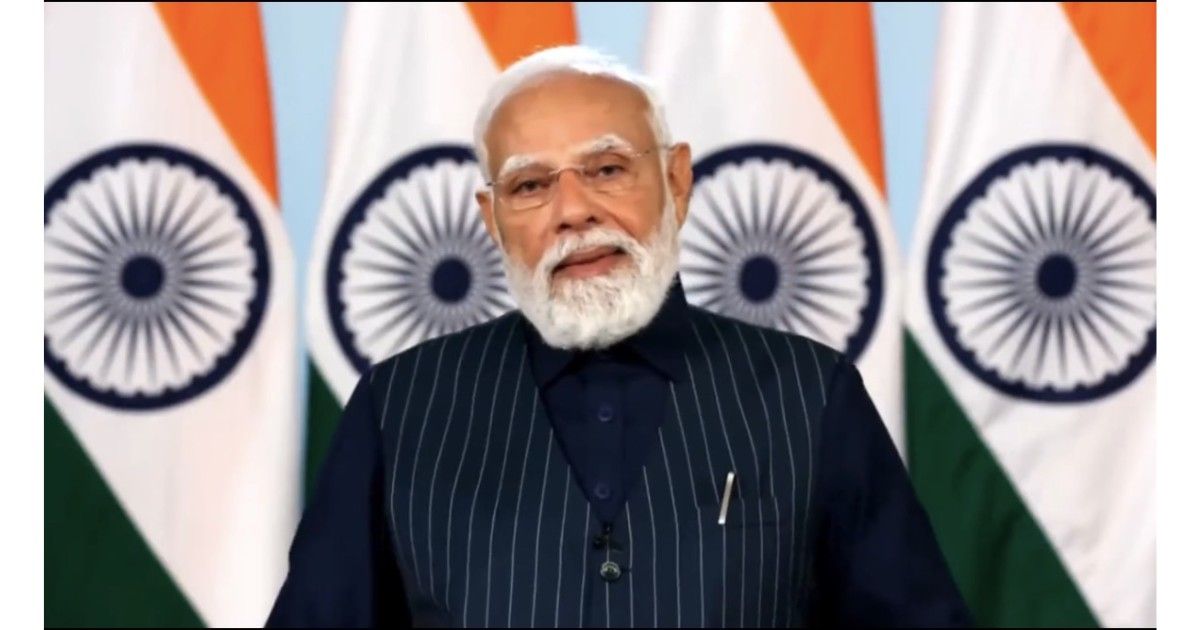
Marking Earth Day on April 22, Prime Minister Narendra Modi reiterated the importance of environmental responsibility, describing the Earth as a “Divine Mother” deserving of reverence and protection. In a message shared on social media platform X, the Prime Minister drew upon ancient Indian philosophy to emphasize that safeguarding the planet is not only an ecological necessity but also a moral and intergenerational obligation.
The statement aligns with broader global conversations on climate change and sustainability, as nations increasingly face the consequences of environmental degradation.
Key Announcements and Highlights
In his message, the Prime Minister shared a Sanskrit verse that metaphorically portrays the Earth as a nurturing entity, likened to a “cosmic milch cow” that sustains life through its natural resources. The verse underscores the need to use these resources responsibly without causing harm.
Rather than announcing new policy measures, the statement focused on reinforcing a philosophical framework rooted in India’s traditional ecological knowledge. The Prime Minister emphasized:
- The Earth as a life-sustaining force that must be respected
- The importance of balancing development with environmental preservation
- The duty to ensure that future generations inherit a healthy planet
- The role of cultural values in shaping sustainable practices
The message was framed not as a policy directive, but as a reminder of India’s long-standing ethos of living in harmony with nature.
Official Statement Explained
In his post, the Prime Minister quoted a Sanskrit subhashita:
“यस्यां वृक्षा वानस्पत्या ध्रुवास्तिष्ठन्ति विश्वहा।
पृथिवीं धेनुं प्रदुहां न उदिच्छन्तु नमोऽस्तु पृथिव्यै॥”
While the original verse is poetic, its meaning can be interpreted in contemporary terms. It depicts Earth as a provider that supports life through vegetation, forests, and biodiversity. The imagery of a “milch cow” suggests abundance, but also implies restraint—taking only what is needed without exploitation.
The Prime Minister elaborated that humanity must approach natural resources with care and responsibility, ensuring that usage does not disrupt ecological balance.
He further suggested that this perspective is deeply embedded in Indian culture, where nature is not merely a resource but a living entity worthy of respect.
Context and Background
India has historically drawn upon its cultural and spiritual traditions to frame environmental discourse. Ancient texts, including the Vedas and Puranas, often describe nature as sacred, with rivers, mountains, and forests treated as divine entities.
In recent years, this philosophical approach has increasingly intersected with modern policy initiatives. Programs such as the National Action Plan on Climate Change (NAPCC), Swachh Bharat Mission, and renewable energy expansion efforts reflect attempts to translate these values into actionable strategies.
India is also a signatory to international agreements like the Paris Climate Accord, committing to reduce emissions intensity and expand non-fossil fuel energy capacity.
The Prime Minister’s Earth Day message can be seen as part of this broader narrative—linking traditional wisdom with contemporary environmental challenges.
Why This Message Matters
The timing of the statement is significant. Earth Day is globally observed as a moment to reflect on environmental challenges, including climate change, biodiversity loss, and pollution.
India, as one of the world’s fastest-growing economies, faces a dual challenge:
- Sustaining economic growth
- Managing environmental impact
Urbanization, industrial expansion, and population growth have increased pressure on natural resources. Issues such as air pollution, water scarcity, and deforestation remain critical concerns.
By invoking cultural values, the Prime Minister’s message attempts to frame environmental responsibility not just as a policy issue, but as a societal duty.
This approach may resonate with a broader audience, particularly in a country where cultural narratives often influence public behavior.
Public Impact and Relevance
The message carries implications for multiple stakeholders:
Citizens:
It reinforces the idea that environmental protection is a shared responsibility. Everyday actions—such as reducing waste, conserving water, and adopting sustainable practices—are positioned as contributions to a larger cause.
Policymakers:
The emphasis on balance between development and sustainability may guide future policy discussions, particularly in sectors like energy, infrastructure, and agriculture.
Businesses:
Companies may interpret the message as encouragement to adopt environmentally responsible practices, including sustainable sourcing, waste reduction, and clean energy usage.
Youth and Future Generations:
The reference to intergenerational responsibility highlights the long-term consequences of present-day decisions, making environmental awareness a critical issue for younger populations.
Linking Tradition with Modern Sustainability
One of the key themes in the Prime Minister’s message is the integration of ancient wisdom with modern environmentalism.
Traditional Indian practices—such as water conservation systems, community forest management, and sustainable agriculture—offer examples of resource-efficient living.
In recent years, there has been renewed interest in these practices, particularly as climate change intensifies the need for sustainable solutions.
By referencing a Sanskrit verse, the Prime Minister situates contemporary environmental concerns within a historical framework, suggesting that solutions may lie not only in technology but also in cultural values.
Global Perspective
The message also aligns with global efforts to promote sustainability. Across the world, governments and organizations are emphasizing:
- Renewable energy adoption
- Conservation of biodiversity
- Reduction of carbon emissions
- Sustainable consumption patterns
India’s approach, which combines policy measures with cultural narratives, presents a distinct model in the global environmental discourse.
While countries differ in their strategies, the underlying principle remains consistent: the need to protect the planet for future generations.
Challenges Ahead
Despite growing awareness, significant challenges remain:
- Rapid urbanization continues to strain infrastructure and natural resources
- Climate change impacts, including extreme weather events, are becoming more frequent
- Balancing economic growth with environmental sustainability remains complex
Experts often point out that while cultural narratives can influence behavior, they must be supported by concrete policy measures, technological innovation, and institutional frameworks.
The effectiveness of such messages ultimately depends on how they translate into action at both individual and systemic levels.
The Way Forward
The Prime Minister’s Earth Day message does not introduce new policies but reinforces an existing narrative—one that positions environmental protection as both a cultural value and a practical necessity.
As India continues to develop, the challenge will be to integrate sustainability into every aspect of growth. This includes urban planning, energy use, agriculture, and industrial development.
The emphasis on intergenerational equity—ensuring that future generations inherit a livable planet—adds urgency to these efforts.
By invoking the idea of Earth as a “Divine Mother,” the message seeks to foster a sense of responsibility that goes beyond regulations and policies, encouraging a deeper, value-driven commitment to environmental stewardship.
Inputs and images : Hindusthan Samachar
Edited By E. Devanshi varma
Also Read: Odisha Issues 7 Safety Measures for Census Enumerators Amid Field Incidents
Follow us on Google News: Click Here