


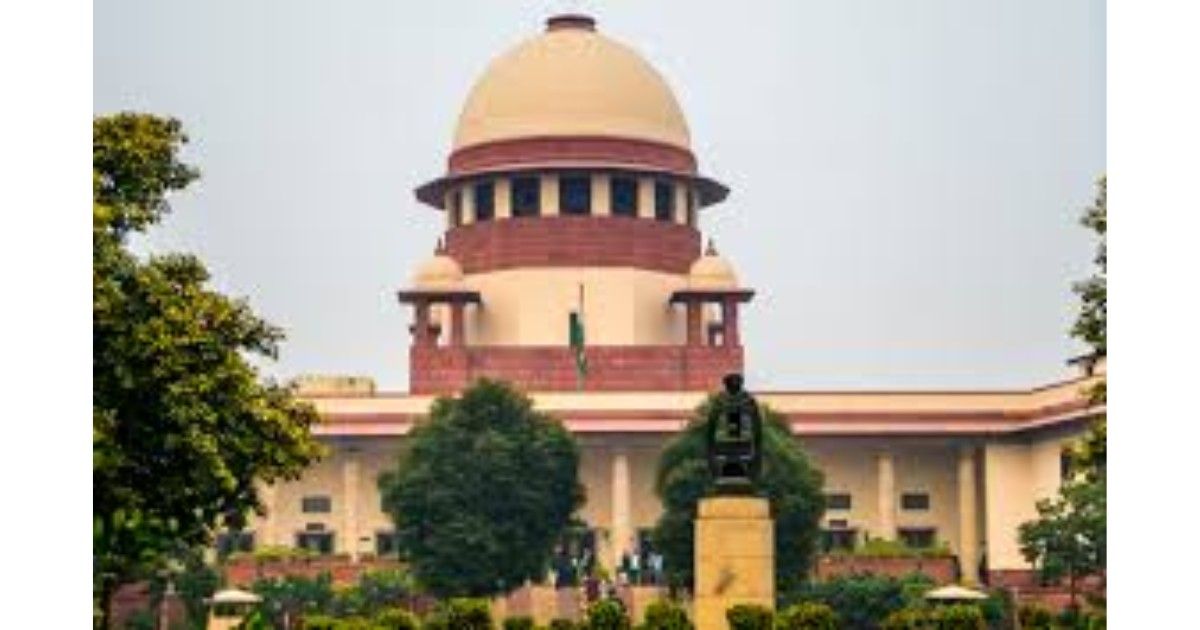
In a significant procedural decision, the Supreme Court of India on Monday declined to entertain a petition challenging the ongoing demolition drive in Gurugram, directing the petitioners instead to approach the Punjab and Haryana High Court.
A Bench led by Chief Justice Surya Kant disposed of the plea while granting liberty to the petitioners to seek urgent relief from the High Court on the same day.
The development comes amid growing concerns from affected residents, who allege that demolitions are being carried out without proper notice and in violation of due process.
Key Announcements and Highlights
- The Supreme Court refused to directly intervene in the Gurugram demolition drive.
- Petitioners were granted liberty to urgently approach the Punjab and Haryana High Court.
- The apex court emphasized that interpretation of a High Court order must be addressed by the same court.
- The High Court was requested to hear the matter expeditiously upon urgent mention.
- The decision effectively leaves immediate oversight of the demolition drive with the High Court.
What Happened in Court
During the hearing, senior advocate Gopal Shankarnarayanan, representing the petitioners, argued that the Gurugram administration was conducting demolitions without issuing proper notices to residents.
He further contended that authorities were allegedly misinterpreting an interim order issued earlier by the Punjab and Haryana High Court. According to him, the order did not explicitly authorize demolition actions, yet it was being used as justification for ongoing operations.
The Bench, however, questioned where such alleged misinterpretation should be corrected. It observed that if a High Court order is being wrongly applied or interpreted, the appropriate forum for clarification or correction would be the High Court itself.
Shankarnarayanan requested the Supreme Court to grant an interim stay on demolitions for three to four days, allowing petitioners time to move the High Court. The apex court declined this request, reiterating that the matter should be addressed by the jurisdictional High Court without delay.
Supreme Court’s Reasoning
The Supreme Court’s decision reflects a consistent judicial principle: higher courts generally avoid intervening in matters that fall within the jurisdiction of lower courts unless exceptional circumstances arise.
By directing the petitioners back to the Punjab and Haryana High Court, the apex court reinforced the idea that:
- A High Court is best positioned to interpret and enforce its own orders.
- Procedural hierarchy must be maintained to ensure judicial efficiency.
- Immediate relief should be sought at the appropriate level before escalating matters.
The Bench also showed urgency by allowing petitioners to make an “urgent mentioning” before the High Court’s Chief Justice, ensuring that the matter could be heard promptly.
Background: The High Court’s Earlier Order
The controversy is linked to an earlier interim order issued by the Punjab and Haryana High Court concerning Haryana’s “stilt-plus-four-floor” housing policy.
This policy allowed the construction of residential buildings with stilt parking and up to four floors. However, the High Court had stayed the policy, citing concerns over:
- Infrastructure strain in rapidly urbanising areas like Gurugram
- Public safety risks due to increased density
- Allegations that revenue considerations were being prioritised over planning norms
Importantly, the interim order did not explicitly mandate demolition of existing structures. This has become a central point of dispute, with petitioners arguing that authorities are overextending the scope of the order.
Why the Demolition Drive Matters
Gurugram, part of the National Capital Region (NCR), has seen rapid urban expansion over the past two decades. With this growth has come a surge in:
- Unauthorised constructions
- Violations of building norms
- Pressure on civic infrastructure such as roads, water supply, and sewage systems
Authorities often carry out demolition drives to enforce urban planning regulations. However, such actions frequently lead to legal challenges, particularly when residents claim lack of notice or arbitrary enforcement.
In this case, the petitioners’ primary concerns include:
- Absence of proper legal notices before demolition
- Lack of clarity on which structures are deemed illegal
- Alleged misuse of judicial orders to justify administrative action
Legal and Administrative Implications
The Supreme Court’s refusal to intervene does not amount to an endorsement of the demolition drive. Instead, it places responsibility on the High Court to:
- Examine whether its interim order is being correctly interpreted
- Determine whether due process is being followed
- Provide immediate relief if any illegality is found
Legal experts note that this approach ensures that:
- Judicial discipline is maintained
- Case-specific facts are examined in detail by the appropriate forum
- Litigants are not encouraged to bypass procedural steps
The High Court now becomes the central authority in deciding the legality and continuation of the demolition drive.
Public Impact: Who Is Affected
The ongoing demolitions have direct consequences for several groups:
Residents and Homeowners:
Individuals living in structures flagged for demolition face the risk of displacement. Many claim they were unaware of legal violations at the time of purchase.
Builders and Developers:
Real estate developers may face scrutiny if constructions are found to violate approved plans or zoning regulations.
Local Administration:
Authorities must balance enforcement of rules with adherence to legal procedures, including issuing notices and allowing time for response.
Urban Planning Ecosystem:
The case highlights broader challenges in managing unplanned urban growth, especially in rapidly developing cities like Gurugram.
Broader Context: Urban Governance Challenges
The Gurugram demolition issue is part of a larger national pattern where courts frequently intervene in urban planning disputes. Key challenges include:
- Weak enforcement of building regulations
- Delays in legal approvals
- Lack of coordination between civic agencies
- Rising demand for housing leading to regulatory shortcuts
Courts often step in to ensure compliance with planning norms, but such interventions can create uncertainty for residents and developers alike.
What Happens Next
Following the Supreme Court’s direction, the petitioners are expected to:
- File or mention their plea urgently before the Punjab and Haryana High Court
- Seek immediate interim relief, possibly including a stay on demolitions
- Argue the scope and interpretation of the High Court’s earlier order
The High Court may then:
- Clarify whether demolitions are permissible under its interim order
- Examine whether due process has been followed
- Issue fresh directions to the administration
Given the urgency highlighted by the Supreme Court, a hearing could take place within a short timeframe.
Final Outlook
The Supreme Court’s decision underscores the importance of judicial hierarchy and procedural discipline while ensuring that litigants are not left without remedy. By directing the matter back to the Punjab and Haryana High Court, the apex court has effectively placed immediate responsibility on the regional judiciary to address both legal interpretation and citizen grievances.
For affected residents, the coming days will be critical as the High Court examines whether the demolition drive aligns with legal safeguards and its own earlier directions. The outcome could set an important precedent for how urban enforcement actions are carried out in fast-growing cities across India.
Inputs and images : Hindusthan Samachar
Edited By E. Devanshi varma
Also Read: Delhi Court Defers Sentencing in 25-Year-Old Raid Case, Decision Expected Tuesday
Follow us on Google News: Click Here