


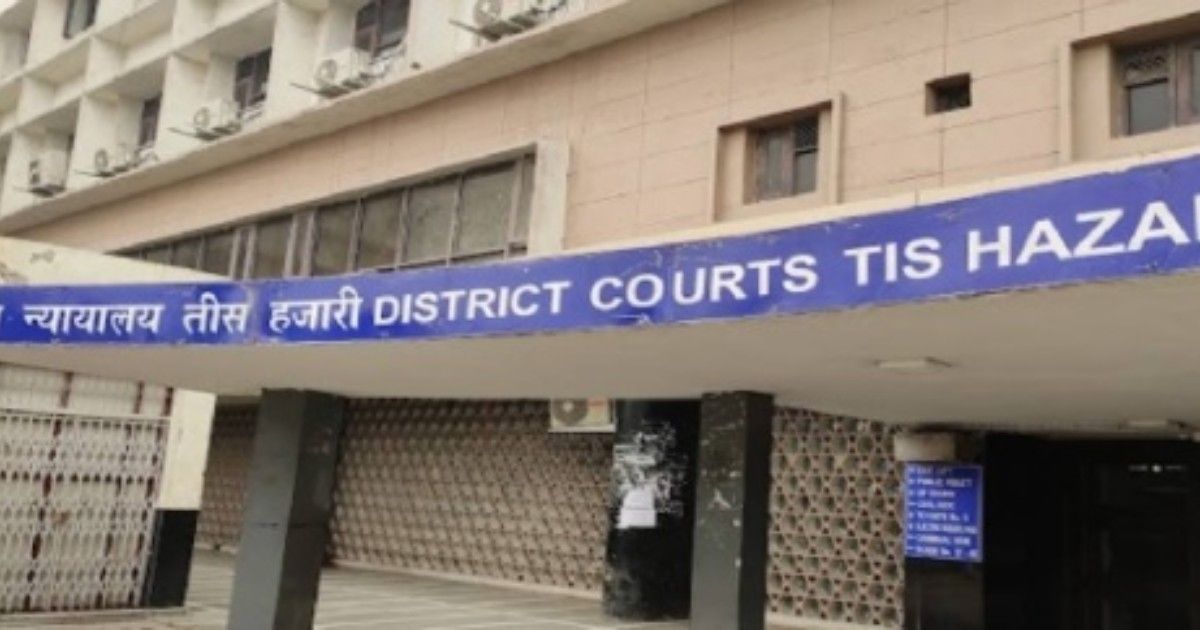
A Delhi court has postponed the sentencing of two convicted officials in a decades-old case involving an alleged незакон raid on the residence of a senior tax officer. The matter, which dates back to October 2000, has resurfaced after the court found both accused guilty earlier this month. The Tis Hazari Court is now expected to decide the quantum of punishment on April 28, following last-minute settlement discussions between the parties.
The case centers on allegations that officials misused their authority to conduct an unlawful search and arrest an Indian Revenue Service (IRS) officer, raising questions about accountability within investigative agencies.
Key Developments in the Case
The sentencing hearing, originally scheduled earlier, was deferred by Judicial Magistrate First Class Shashank Nandan Bhatt after both the prosecution and defense informed the court that they were exploring a possible settlement.
The two convicted individuals — Ramanish, a former Joint Director of the Central Bureau of Investigation (CBI), and retired Assistant Commissioner of Police (ACP) V.K. Pandey — have reportedly put forward proposals to resolve the matter outside court.
The complainant, Ashok Agrawal, a former IRS officer, has responded with conditions that include an unconditional apology and financial compensation. The court has taken note of these developments and will consider the settlement aspect before determining the sentence.
Conviction Under IPC Sections
Earlier, on April 18, the court convicted both accused under multiple provisions of the Indian Penal Code (IPC), including:
- Section 323 (voluntarily causing hurt)
- Section 427 (mischief causing damage)
- Section 448 (house trespass or house-breaking to commit an offence)
- Section 34 (acts done by several persons in furtherance of common intention)
These charges relate to allegations that the officials unlawfully entered Agrawal’s residence, caused damage, and subjected him to wrongful treatment during the operation.
Background of the Incident
The case originates from an incident on October 19, 2000, when a team of officials conducted a raid at Agrawal’s residence in Delhi. At the time, Agrawal was serving as Deputy Director of Enforcement.
According to his complaint, the search and subsequent arrest were not only procedurally flawed but also motivated by malice. He alleged that the actions were taken to target him personally rather than to pursue a legitimate investigation.
The court, in its earlier ruling, found merit in these claims, stating that the raid was not conducted in good faith and appeared to be a deliberate misuse of power.
Court’s Observations on Abuse of Authority
In a significant observation, the court noted that the raid was carried out with the intent to undermine a prior directive issued by the Central Administrative Tribunal (CAT).
The CAT, in an order dated September 28, 2000, had directed authorities to review Agrawal’s suspension within four weeks. Instead of complying with this directive, the court found that officials allegedly attempted to bypass or sabotage the order.
According to the court’s findings, a meeting was held on the evening of October 18, 2000, where the accused allegedly planned the raid and arrest for the following morning.
The court concluded that the actions were premeditated and not aligned with lawful procedure. It further stated that the officials used their positions to harass and target the complainant, raising serious concerns about misuse of institutional authority.
Settlement Angle Gains Importance
The possibility of a settlement has added a new dimension to the case at the sentencing stage. While criminal convictions typically proceed to sentencing based on established guilt, courts may consider mitigating factors, including reconciliation between parties.
Agrawal’s demand for an unconditional apology suggests that acknowledgment of wrongdoing is central to any resolution. Compensation, on the other hand, reflects the alleged personal and professional harm he claims to have suffered over the years.
The court is expected to weigh these factors carefully before delivering its decision on sentencing.
Legal Context and Significance
Cases involving alleged abuse of power by investigative agencies are relatively rare but carry significant implications. They test the balance between authority and accountability within law enforcement institutions.
This case is particularly notable due to:
- The seniority of the officials involved
- The long delay between the incident and conviction
- Judicial findings pointing to deliberate misuse of power
The conviction under Section 448 (house trespass) and related provisions underscores the seriousness with which courts view unauthorized entry into a private residence, especially when carried out by officials acting under the color of law.
Why This Case Matters
The outcome of this case could have broader implications for how accountability is enforced within investigative bodies.
For public servants, it reinforces the principle that authority must be exercised within legal boundaries. For citizens, it highlights the availability of legal recourse even in cases involving powerful institutions, though the long duration of this case also reflects systemic delays.
The court’s observations about the intent behind the raid may also contribute to ongoing discussions about institutional reforms and safeguards against misuse of power.
Public Impact and Institutional Accountability
From a public perspective, the case raises important questions:
- How are internal checks within agencies enforced?
- What mechanisms exist to prevent misuse of authority?
- How effective is the legal system in addressing such grievances over time?
While the conviction provides a measure of accountability, the 25-year timeline underscores challenges in timely justice delivery.
For government institutions, the case serves as a reminder of the need for transparency and adherence to due process, particularly in sensitive operations like raids and arrests.
What Happens Next
The Tis Hazari Court will resume proceedings on April 28, where it is expected to decide the quantum of punishment for the convicted officials.
The court may also take into account any progress in settlement discussions before issuing its final order. Possible outcomes could range from custodial sentences to fines or other penalties, depending on the court’s assessment of the case and mitigating factors.
The decision will mark a crucial step in concluding a case that has spanned over two decades and drawn attention to issues of power, accountability, and justice within the system.
Inputs and images : Hindusthan Samachar
Edited By E. Devanshi varma
Also Read: Jadavpur Rally Highlights 5 Criticisms as Narendra Modi Targets TMC on Education and Jobs
Follow us on Google News: Click Here