


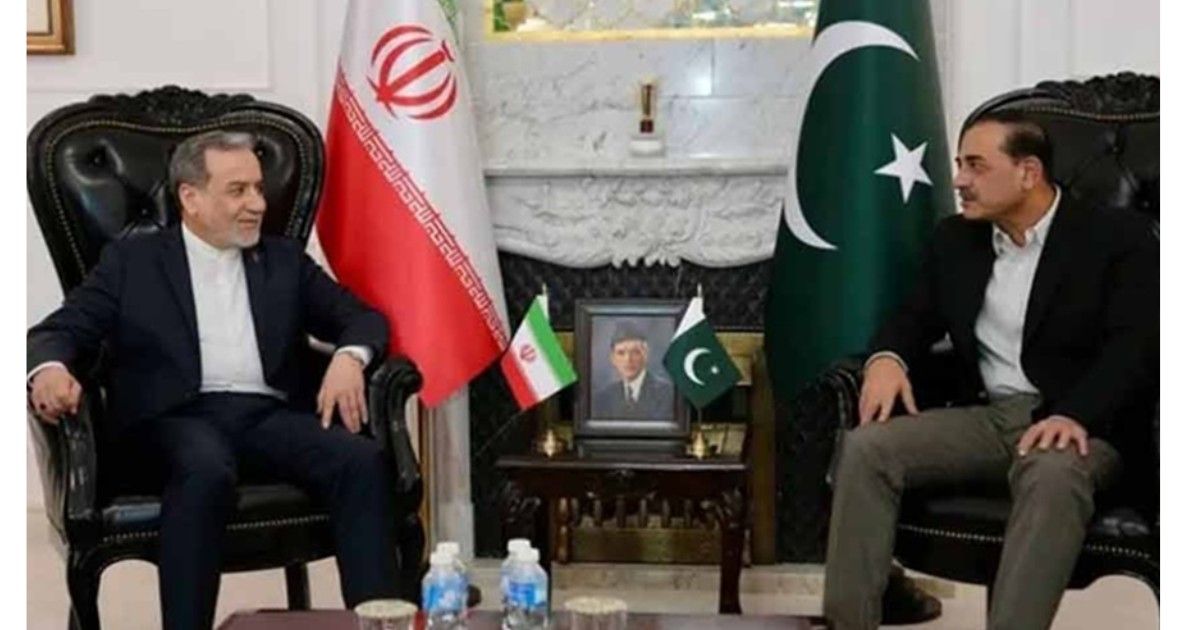
Iran has accelerated its diplomatic outreach amid escalating tensions with the United States, dispatching Foreign Minister Abbas Araghchi on a multi-country tour aimed at building momentum for de-escalation. After high-level discussions in Oman and Pakistan, Araghchi departed Islamabad late Sunday for Russia, where he is scheduled to meet President Vladimir Putin in Moscow.
The visit comes at a critical juncture, with indirect talks between Iran and the United States showing tentative signs of progress, even as skepticism persists on both sides about the prospects for a sustained diplomatic breakthrough.
Iran’s Expanding Diplomatic Outreach
Araghchi’s recent engagements reflect a broader strategy by Tehran to involve regional and global stakeholders in efforts to reduce tensions. His diplomatic tour began in Oman, a country that has historically played a mediating role in Iran-US relations.
In Muscat, Araghchi met Sultan Haitham bin Tariq Al-Said to discuss the evolving situation and outline Iran’s proposals for a potential ceasefire framework. Oman’s quiet diplomacy has previously facilitated backchannel communications between Tehran and Washington, making it a key player in the current efforts.
Following his Oman visit, Araghchi traveled to Islamabad, where he held discussions with Pakistan’s military leadership, including Army Chief Asim Munir. The talks reportedly focused on Iran’s perspectives regarding de-escalation and possible pathways to end hostilities.
Pakistani officials described the discussions as constructive, though both sides maintained a cautious public stance. The absence of detailed official statements suggests the sensitivity of the ongoing diplomatic efforts.
Engagement with Pakistan: A Strategic Step
Iran’s engagement with Pakistan signals an attempt to anchor its diplomatic efforts within the regional framework. Pakistan’s geographical proximity, political leverage, and existing channels with both Iran and the United States position it as a potentially influential intermediary.
Sources familiar with the discussions indicated that Iran shared its “views and considerations” on resolving the conflict, including parameters for a ceasefire and broader regional stability. Pakistan, in turn, is believed to have conveyed these perspectives through informal channels to other stakeholders.
There are also indications that future rounds of dialogue may include Gulf nations, expanding the diplomatic format beyond bilateral or indirect US-Iran talks. Such a move could help build broader regional consensus and reduce the risk of unilateral escalations.
Moscow Visit: Seeking Strategic Alignment
Araghchi’s arrival in Russia marks the next phase of Iran’s diplomatic push. His meeting with President Putin is expected to focus on aligning positions regarding the ongoing crisis and exploring Russia’s potential role in facilitating a resolution.
Russia has maintained close ties with Iran while also positioning itself as a global power capable of influencing geopolitical outcomes. By engaging Moscow, Tehran appears to be seeking political backing and strategic coordination, particularly given Russia’s role in broader West Asian affairs.
According to Russian officials, discussions will cover ceasefire mechanisms, negotiation frameworks, and developments across the region. The talks are also likely to address how any potential agreement would fit into Russia’s broader geopolitical interests.
Indirect Communication with the United States
Parallel to these diplomatic engagements, Iran has reportedly conveyed messages to the United States through intermediaries, including Pakistan. These communications are said to outline Tehran’s non-negotiable positions, particularly concerning its nuclear program and control over the Strait of Hormuz.
While these exchanges are not part of formal negotiations, they are seen as preparatory steps aimed at narrowing differences and setting the stage for more structured dialogue.
However, uncertainty continues to cloud the process. Araghchi has publicly questioned whether Washington is genuinely committed to diplomacy, citing the cancellation of a planned visit by US envoys to Islamabad.
On the other hand, US President Donald Trump has indicated that discussions would continue remotely and expressed confidence that the conflict could be resolved soon. The contrasting signals highlight the fragile nature of the current diplomatic environment.
Challenges and Uncertainties in the Negotiation Process
Despite increased diplomatic activity, several challenges remain. One of the primary obstacles is the lack of direct communication between Iran and the United States. Reliance on intermediaries can slow progress and introduce misinterpretations.
Additionally, both sides have significant strategic concerns. For Iran, maintaining sovereignty over its nuclear program and safeguarding critical maritime routes are central priorities. For the United States, ensuring regional stability and addressing security concerns remain key objectives.
The involvement of multiple stakeholders, while potentially beneficial, also adds complexity. Aligning the interests of regional powers, global actors, and the primary parties to the conflict will require careful negotiation and sustained diplomatic effort.
Broader Regional Implications
The ongoing diplomatic push has significant implications for the wider West Asia region. Prolonged tensions between Iran and the United States have historically contributed to instability, affecting global energy markets, regional security, and international trade routes.
Efforts to de-escalate the situation could therefore have far-reaching consequences. A successful diplomatic outcome may not only reduce the risk of conflict but also create opportunities for broader regional cooperation.
Conversely, failure to achieve progress could exacerbate existing tensions, potentially leading to further escalation.
Public Impact and Why It Matters
For the general public, particularly in regions directly affected by the tensions, the outcome of these diplomatic efforts carries substantial importance. Reduced hostilities could lead to improved security conditions, economic stability, and greater predictability in global markets.
In countries like India, which rely heavily on energy imports from the region, stability in West Asia is closely linked to economic considerations such as fuel prices and trade routes.
Moreover, the involvement of multiple regional players underscores the interconnected nature of modern geopolitics, where conflicts in one area can have ripple effects across the globe.
What Lies Ahead
The coming days are expected to be critical in determining the direction of the diplomatic process. Araghchi’s discussions in Moscow could help clarify Russia’s stance and influence the next phase of negotiations.
At the same time, the possibility of expanded talks involving Gulf states suggests a move toward a more inclusive diplomatic framework. Whether this approach will yield tangible results remains to be seen.
For now, Iran’s multi-pronged outreach reflects a calculated effort to break the current deadlock and push toward a negotiated resolution. The success of this strategy will depend on the willingness of all parties involved to move beyond preliminary exchanges and engage in substantive dialogue.
Inputs and images : Hindusthan Samachar
Edited By E. Devanshi varma
Also Read: Unity Drive Gains Momentum with 83-Day Push Against Drug Abuse in Jammu and Kashmir
Follow us on Google News: Click Here