

By Dheeraj Keshav, Director, Arna Dairy
When we talk about quality in dairy, the conversation often begins with what happens after milk reaches a processing facility — testing, pasteurisation, hygiene, cold-chain management and packaging.
But quality begins much earlier.
It begins with the animal.
At Arna Dairy, we work with a trusted network of 17,000+ farmers across Karnataka — delivering over 1.35 lakh litres of milk every day to homes in Bangalore. Working at this scale has reinforced something we have understood through generations in dairy: the health, nutrition and everyday care of cattle influence the dairy ecosystem long before milk reaches a collection centre.
Animal welfare, therefore, is more than an ethical responsibility. It is closely connected to milk quality, farmer livelihoods and the long-term sustainability of dairy farming.
Our family’s experience in dairy spans more than eight decades and four generations. During this time, the industry has transformed enormously — processing has become more sophisticated, testing more rigorous and supply chains considerably larger. Yet one principle has remained constant: good dairy begins with respect for the animal, the farmer and the systems that connect them.
Animal Health Is Where Quality Begins
Good animal welfare often comes down to getting the fundamentals right every day.
Proper nutrition, access to clean drinking water, hygienic surroundings, responsible handling, preventive healthcare and timely veterinary attention all contribute to healthier cattle.
For dairy companies, these cannot be viewed solely as the farmer’s responsibility. If the industry expects farmers to consistently supply good-quality milk, it must also help strengthen the ecosystem that enables them to do so.
At Arna Dairy, milk collected through village-level centres is tested across parameters including fat, SNF, temperature, adulterants and antibiotics before moving further into the processing system.
These checks are essential, but they assess milk that has already been produced.
A stronger approach to quality needs to begin before milk reaches the testing point. It means looking upstream at cattle health, nutrition, milking hygiene and appropriate milk-handling practices.
The question should not only be, “Does this milk meet our quality standards?”
We should also ask, “What can we do at the farm level to help create better-quality milk in the first place?”
Animal Welfare and Farmer Welfare Go Together
Working closely with dairy-farming communities has reinforced another important lesson for us: supporting the animal also means supporting the person responsible for its everyday care.
For many dairy farmers, cattle are among their most important livelihood assets. When an animal becomes seriously ill or is lost, the impact extends beyond a reduction in milk production. It can affect the financial stability of an entire farming household.
This is why farmer engagement needs to extend beyond simply collecting milk.
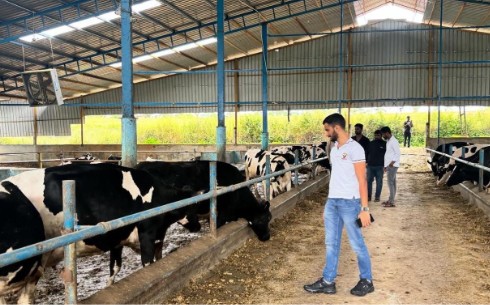
At Arna Dairy, we support farmers through veterinary and cattle-health assistance, feed and nutrition guidance, cattle insurance support, and training around hygiene, milk quality and handling.
In April 2026, we also introduced a cattle insurance programme for dairy cows and buffaloes, enabling farmers within our network to access insurance at a subsidised cost through Arna Dairy chilling centres and milk collection centres.
The thinking behind the initiative is straightforward. When livestock is central to a family’s livelihood, protecting that livestock also means providing the farmer with a degree of financial protection.
Greater security can put farmers in a better position to think long term — from nutrition and preventive healthcare to the overall well-being of their cattle.
Farmers are not simply suppliers of raw milk. They are partners in the quality system.
A stronger dairy ecosystem therefore cannot depend on one intervention alone. Veterinary support, better nutrition, farmer training, insurance, hygienic milk handling and effective collection systems need to work together.
Once milk leaves the farm, testing, chilling, transportation and processing must then protect the quality created at the source.
From Testing Quality to Building Quality
India’s dairy sector is becoming increasingly technology-driven.
Automated processing, sophisticated testing, stronger cold-chain infrastructure and data-led quality systems are helping the industry become more efficient and accountable.
This progress matters. But the next stage of dairy development cannot be about processing more milk alone. We also need to strengthen the conditions under which good milk is produced.
That requires moving beyond a purely corrective approach.
Instead of depending only on testing to identify problems once milk reaches a collection centre, dairy businesses can work further upstream — supporting better cattle nutrition, preventive healthcare, milking hygiene and appropriate milk handling.
Quality then becomes something we build throughout the system, rather than something we simply inspect at the end.
This shift is important because animal welfare, farmer welfare and dairy quality are not separate conversations.
Healthy cattle support farmers. Farmers with greater security and access to the right support are better equipped to care for their animals. Better farm practices contribute to better milk. And better milk strengthens the entire dairy value chain.
What Better Dairy Should Mean
Expectations around food are changing.
Consumers increasingly want to understand where their food comes from, how it is produced and whether the systems behind it are responsible. Hotels, restaurants and food businesses are similarly placing greater emphasis on consistency, food safety, traceability and dependable sourcing.
This gives India’s dairy industry an opportunity to think more broadly about what quality actually means.
Better dairy should not be measured only by litres processed or capacity added.
It should also mean healthier cattle, stronger farmers, responsible sourcing, rigorous quality systems and farming communities capable of building sustainable livelihoods through dairy.
Technology will continue to transform the sector. Better testing, automated processing, improved cold chains and data-led monitoring can make dairy more efficient, transparent and accountable.
But technology cannot replace what happens on the farm.
Across more than eight decades and four generations in dairy, our experience has reinforced a simple principle:
Respect the farmer. Care for the animal. Recognise the relationship between the two.
The scale of dairy has changed. The technology has changed. The responsibility has not.
If India wants to build a stronger and more sustainable dairy industry, animal welfare cannot remain at the edge of the conversation.
It has to be where the conversation begins.
Because better dairy doesn’t begin inside a processing plant.
It begins with how we care for the animal that gives us the milk.
About the Author
Dheeraj Keshav is Director of Arna Dairy and a fourth-generation dairy entrepreneur. Drawing on his family’s more than eight decades of experience in dairy, he is focused on strengthening responsible sourcing, farmer livelihoods, animal care and dairy quality. Arna Dairy today works with a network of more than 17,000 farmers across Karnataka.