
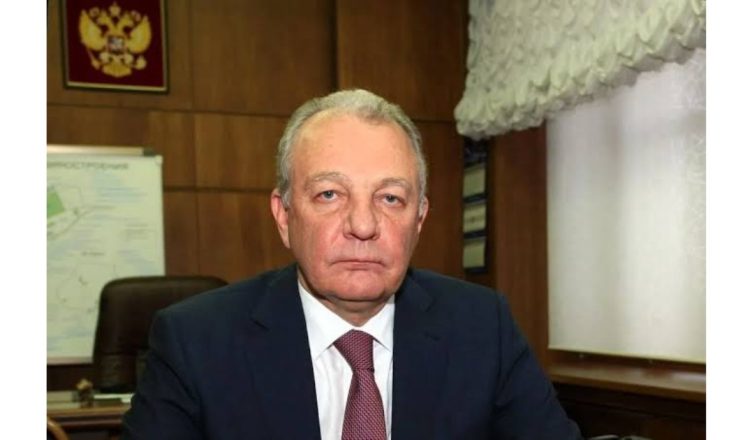
Alexander Leonov, a prominent Russian missile designer known for his leadership in developing advanced hypersonic and cruise missile systems, has died at the age of 74. His passing in early April 2026 has been reported by Russian state-linked media and defence industry sources, though official confirmation on the exact cause and location of his death remains undisclosed.
Leonov played a central role in shaping Russia’s modern missile capabilities and was closely associated with the development of the Zircon hypersonic cruise missile as well as the Indo-Russian BrahMos missile programme. His contributions span several decades and reflect a broader shift in global military technology towards faster, more advanced strike systems.
Key Announcements / Highlights
- Alexander Leonov served as CEO and Chief Designer of NPO Mashinostroyeniya, a major Russian defence enterprise.
- He was a leading figure in the development of the 3M22 Zircon hypersonic missile.
- Leonov also oversaw key developments within the BrahMos Aerospace joint venture between India and Russia.
- His work contributed to advancements in hypersonic glide vehicles and missile defence evasion technologies.
- He received Russia’s highest civilian honour, “Hero of Labour,” in 2019.
Role in Zircon and BrahMos Programmes
Leonov’s most notable contributions were in the field of hypersonic missile technology, particularly through his involvement in the Zircon programme. The Zircon missile, also known as Tsirkon, is a ship- and submarine-launched hypersonic cruise missile capable of reaching speeds up to Mach 9. At such velocities, it can significantly reduce reaction times for defence systems and is designed to evade traditional missile interception technologies.
The missile is reported to have a range of approximately 400 to 1,000 kilometres, depending on its flight profile. Its speed and manoeuvrability have made it a key component of Russia’s naval strategy, particularly in countering maritime threats.
In addition to Zircon, Leonov played a crucial role in the BrahMos programme, a joint venture between India and Russia. As head of NPO Mashinostroyeniya, the Russian partner in BrahMos Aerospace, he oversaw the development and refinement of multiple versions of the missile.
The BrahMos missile, derived from the Russian Oniks cruise missile, is one of the fastest supersonic cruise missiles in operational service. Under Leonov’s leadership, the programme expanded to include BrahMos-NG (Next Generation), a lighter and more adaptable version designed for deployment on a wider range of platforms, including smaller aircraft and naval vessels.
Official Statement
While no detailed official statement has been released by Russian authorities regarding Leonov’s death, defence industry sources have acknowledged his passing as a significant loss to Russia’s scientific and military community.
Russian agencies have described him as a “pivotal figure” in advancing the country’s missile technology, particularly during a period when hypersonic systems became a strategic priority. His leadership is credited with modernising Russia’s approach to both conventional and strategic strike capabilities.
Broader Contributions to Defence and Space Systems
Beyond the high-profile Zircon and BrahMos projects, Leonov’s work extended into several other critical defence and aerospace systems.
Under his leadership, NPO Mashinostroyeniya contributed to the development of coastal defence systems such as the Bastion complex, which uses the Oniks (Yakhont) missile. These systems are designed to protect coastlines by targeting enemy ships at long distances, enhancing a country’s defensive posture.
His organisation also played a role in earlier missile systems like Granit, a long-range anti-ship cruise missile, and contributed to advanced military technologies such as the Avangard hypersonic glide vehicle. Hypersonic glide vehicles differ from traditional ballistic missiles in that they can manoeuvre during flight at extremely high speeds, making them difficult to detect and intercept.
Additionally, Leonov’s work included involvement in radar surveillance satellite systems, highlighting his influence beyond missile design and into broader aerospace and defence infrastructure.
Context / Background
Leonov’s career reflects the evolution of missile technology over the past three decades. During the late 20th century, missile systems primarily focused on improving range and payload capacity. However, in recent years, the focus has shifted towards speed, precision, and the ability to bypass increasingly sophisticated defence systems.
Hypersonic weapons, defined as those capable of travelling at speeds greater than Mach 5, have become a central area of development for major military powers, including Russia, the United States, and China. These systems are seen as a way to gain a strategic advantage by reducing response times and increasing the difficulty of interception.
Russia has been particularly active in this field, with programmes like Zircon and Avangard positioned as key elements of its defence strategy. Leonov’s work placed him at the forefront of this technological transition.
The BrahMos programme, meanwhile, represents a rare example of sustained defence collaboration between India and Russia. Since its inception in the late 1990s, BrahMos Aerospace has developed a range of missile systems for land, sea, and air platforms. The ongoing development of BrahMos-NG indicates continued efforts to adapt to modern warfare requirements, including stealth and versatility.
Public Impact
Leonov’s contributions have had implications not only for Russia but also for global defence dynamics. His work on hypersonic systems has influenced how countries approach missile defence and strategic deterrence.
For India, the BrahMos programme remains a critical component of its defence capabilities. The continued development of BrahMos-NG, initiated during Leonov’s tenure, is expected to enhance India’s ability to deploy missiles across a wider range of platforms, including fighter jets and smaller naval vessels.
Globally, the advancement of hypersonic technology has triggered increased investment in countermeasures and defence systems. As more countries pursue similar technologies, the strategic balance in regions such as the Indo-Pacific and Europe continues to evolve.
Leonov’s work has therefore contributed to shaping not only specific weapons systems but also broader military strategies and geopolitical considerations.
Legacy and Future Outlook
Alexander Leonov’s legacy is closely tied to the rise of hypersonic weapons as a defining feature of modern military technology. His leadership in developing systems that combine speed, precision, and evasive capabilities has set benchmarks for future advancements in the field.
Defence analysts suggest that the programmes he helped lead, particularly Zircon and BrahMos-NG, will continue to influence military planning and procurement decisions for years to come. These systems are expected to remain integral to both Russian and Indian defence strategies.
His death also highlights the role of individual engineers and scientists in shaping complex defence technologies. While large organisations and state policies drive development, figures like Leonov often provide the technical vision and leadership necessary to bring such projects to fruition.
As countries continue to prioritise hypersonic research and development, the foundations laid by Leonov and his contemporaries are likely to play a lasting role in defining the next generation of missile systems and global security dynamics.
Inputs and images : Hindusthan Samachar
Edited By E. Devanshi varma
Also Read: Northern Railway Adds 40 Special Train Runs Between Delhi and Katra for Summer Rush
Follow us on Google News: Click Here
Last Updated on: Monday, April 6, 2026 8:51 am by E. Devanshi Varma | Published by: E. Devanshi Varma on Monday, April 6, 2026 8:51 am | News Categories: Trending
About The Author
