
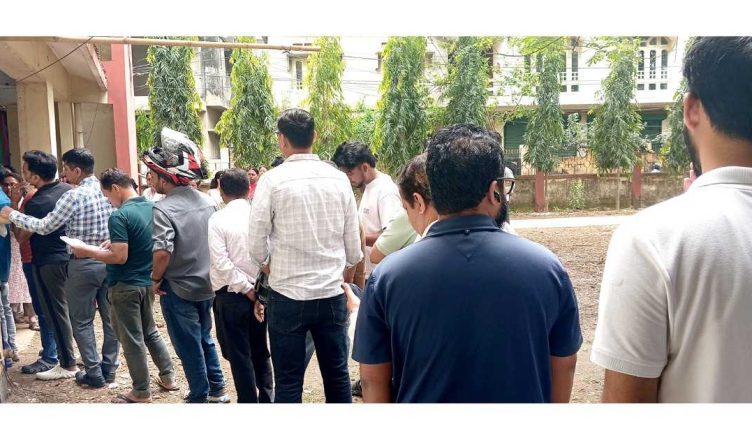
Voting for the Assam Assembly Elections 2026 is underway across all 126 constituencies, with 38.92% voter turnout recorded till 11 AM on April 9, according to data released by the Election Commission. Polling began at 7 AM under tight security arrangements, with voters turning up steadily at booths across the state.
Early trends indicate moderate to high participation in several districts, suggesting a strong public response in one of the most significant democratic exercises in the region.
Key Highlights from Early Voting
The initial hours of polling witnessed a consistent flow of voters in both urban and rural constituencies. Election officials reported that polling stations opened on time, and no major disruptions were recorded in the early phase.
Some districts reported turnout figures above the state average, reflecting heightened voter engagement. Majuli recorded the highest turnout at 44.30%, followed by Goalpara at 43.19% and Morigaon at 42.80%. Other districts such as Darrang (41.96%), Kamrup (41.01%), and Hojai (40.89%) also saw strong participation.
In contrast, relatively lower turnout was observed in urban-centric districts like Kamrup (Metro), which reported 31.87% voter participation till 11 AM. Similarly, Karbi Anglong (33.26%) and Tamulpur (35.75%) lagged behind the state average during the early hours.
Here is a snapshot of district-wise turnout till 11 AM:
- Bajali: 40.39%
- Baksa: 39.70%
- Barpeta: 38.01%
- Biswanath: 39.81%
- Bongaigaon: 40.15%
- Cachar: 38.46%
- Charaideo: 39.91%
- Chirang: 38.95%
- Darrang: 41.96%
- Dhemaji: 39.14%
- Dhubri: 40.65%
- Dibrugarh: 37.69%
- Dima Hasao: 38.67%
- Goalpara: 43.19%
- Golaghat: 39.17%
- Hailakandi: 36.00%
- Hojai: 40.89%
- Jorhat: 38.91%
- Kamrup (Metro): 31.87%
- Kamrup: 41.01%
- Karbi Anglong: 33.26%
- Kokrajhar: 38.54%
- Lakhimpur: 39.15%
- Majuli: 44.30%
- Morigaon: 42.80%
- Nagaon: 39.20%
- Nalbari: 37.38%
- Sivasagar: 38.42%
- Sonitpur: 39.34%
- South Salmara Mankachar: 42.61%
- Sribhumi: 38.97%
- Tamulpur: 35.75%
- Tinsukia: 37.53%
- Udalguri: 37.74%
- West Karbi Anglong: 35.76%
Voting Arrangements and Security Measures
Authorities have deployed extensive security personnel across polling booths to ensure a peaceful and transparent election process. Sensitive and vulnerable polling stations are under heightened surveillance, with central armed police forces assisting local law enforcement.
Polling is being conducted using Electronic Voting Machines (EVMs) along with Voter Verifiable Paper Audit Trail (VVPAT) systems to enhance transparency. Election officials also confirmed that mock polls were conducted before voting began to ensure proper functioning of equipment.
Special arrangements have been made for elderly voters, persons with disabilities, and first-time voters to facilitate easier access to polling stations. In several areas, volunteers and election staff were seen assisting voters, contributing to a smooth polling experience.
Official Statement
Election authorities stated that polling has progressed in an orderly manner so far, with no major incidents reported. Officials emphasized that the turnout is expected to increase as more voters arrive at polling stations later in the day.
They also urged citizens to participate actively and exercise their democratic right responsibly. According to officials, weather conditions have remained favorable, further supporting voter turnout in most parts of the state.
Context and Background
The Assam Assembly Elections are a crucial political event that determines the composition of the state’s legislative body and influences governance for the next five years. The state has a diverse electorate, with varying political preferences across regions, making the election both competitive and significant.
In previous assembly elections, Assam recorded varying turnout patterns, with rural areas often showing higher participation compared to urban centers. Early trends in the current election appear to follow a similar pattern, with districts like Majuli and Goalpara leading in voter turnout.
The Election Commission has undertaken several awareness campaigns in recent months to encourage voter participation, particularly among young and first-time voters. Initiatives such as voter awareness drives, digital campaigns, and community outreach programs aimed to improve overall turnout.
Public Participation and Voter Sentiment
The steady turnout in the early hours reflects growing awareness among citizens about the importance of electoral participation. In many districts, voters were seen lining up outside polling stations even before voting began, indicating enthusiasm and readiness to engage in the democratic process.
Rural areas, in particular, showed strong participation, with communities mobilizing collectively to cast their votes. In contrast, urban regions displayed a slower start, a trend often attributed to work schedules and lifestyle patterns.
First-time voters and young participants have also played a key role in the early turnout figures. Many expressed their intent to influence governance and policy decisions through their vote, highlighting a shift toward more engaged civic participation.
Why This Election Matters
The Assam Assembly Elections 2026 carry significant implications for the state’s political landscape, governance priorities, and development trajectory. Key issues such as infrastructure development, employment, education, healthcare, and regional identity are expected to influence voter decisions.
The outcome will shape policy direction and administrative focus for the next term, impacting both urban and rural populations. Additionally, the election results are likely to have broader political implications, given Assam’s strategic importance in the northeastern region.
What to Expect Next
As polling continues through the day, officials anticipate a steady rise in voter turnout, especially during the afternoon hours. Historically, turnout tends to increase as more voters step out after completing daily routines.
The Election Commission will release updated turnout figures at regular intervals, providing a clearer picture of overall participation by the end of the polling day.
Counting of votes will take place on the scheduled date following the completion of all polling phases. Results are expected to determine the next government in Assam and set the course for the state’s future governance.
Inputs and images : Hindusthan Samachar
Edited By E. Devanshi varma
Also Read: Clash at Dhing Polling Booth Leaves 2 Groups in Violent Face-Off Over Queue Dispute
Follow us on Google News: Click Here
Last Updated on: Thursday, April 9, 2026 2:20 pm by E. Devanshi Varma | Published by: E. Devanshi Varma on Thursday, April 9, 2026 2:20 pm | News Categories: Politics
About The Author
