
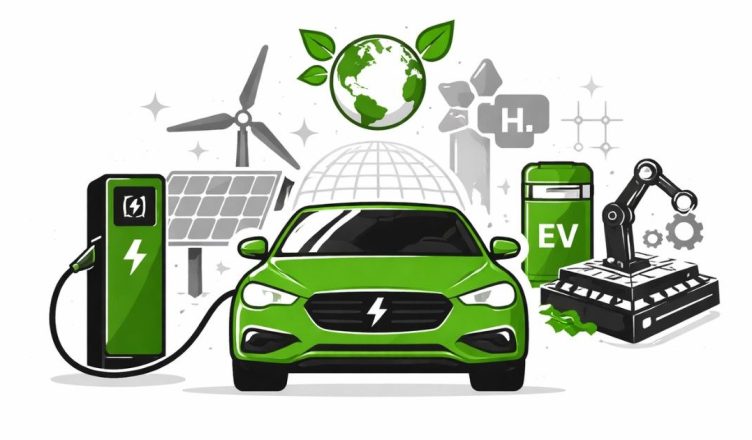
India’s auto sector is entering a major transition. Petrol and diesel vehicles still dominate the roads. But hydrogen fuel and advanced battery technology are now shaping the next phase of growth.
This shift matters in 2026 as India pushes for cleaner transport, lower fuel imports, and better urban air quality. The government has announced strong targets for electric mobility and green hydrogen. Auto companies are investing heavily. Consumers are also showing interest in cleaner vehicles.
From hydrogen fuel cell buses to new battery chemistries, the industry is moving fast. Here is a detailed look at how hydrogen and battery innovations are shaping India’s auto future.
Why Hydrogen and Battery Technology Matter for India
India imports a large share of its crude oil. This affects the economy and increases fuel prices. At the same time, cities face rising pollution.
Electric vehicles (EVs) and hydrogen-powered vehicles can reduce fuel imports and cut emissions.
The government has launched schemes like:
- FAME (Faster Adoption and Manufacturing of Electric Vehicles)
- National Green Hydrogen Mission
The Green Hydrogen Mission has a target to produce 5 million metric tonnes of green hydrogen annually by 2030. This policy push is driving investment in new mobility solutions.
For Indian consumers, the key concerns remain:
- Vehicle price
- Charging or refuelling time
- Driving range
- Long-term reliability
New innovations aim to solve these challenges.
Hydrogen Vehicles: The Next Big Bet
Hydrogen vehicles use fuel cells to generate electricity. They emit only water vapour. Refuelling takes just a few minutes.
Toyota Mirai and Early Demonstrations
Toyota Motor Corporation has showcased the Toyota Mirai in India for pilot projects. The vehicle runs on hydrogen and offers a driving range of over 600 km globally.
Though not yet on sale in India, such demonstrations show long-term potential.
Hydrogen Buses and Commercial Vehicles
Hydrogen may first succeed in buses and heavy trucks. These vehicles need longer range and faster refuelling.
In pilot projects, hydrogen buses have been tested in Indian cities. The focus is on public transport and long-distance freight.
Green Hydrogen Production
Hydrogen must be produced cleanly to be useful for climate goals. Green hydrogen is made using renewable energy.
The National Green Hydrogen Mission, approved in 2023, aims to make India a global hub. This could lower fuel costs over time and help the auto sector adopt hydrogen faster.
Current Challenges
Hydrogen mobility still faces issues:
- Limited refuelling stations
- High vehicle cost
- Expensive infrastructure
Experts believe large-scale rollout may take several years. For now, hydrogen is seen as a strong option for heavy vehicles rather than private cars.
Battery Electric Vehicles: Rapid Growth in India
Battery EVs are already visible on Indian roads. Two-wheelers, three-wheelers, and compact SUVs are leading the shift.
Strong Sales Momentum
India has seen steady growth in EV registrations in recent years. Two-wheelers form the largest share.
Companies such as:
- Tata Motors
- Mahindra & Mahindra
- Ola Electric
have launched multiple electric models.
Electric SUVs and scooters are now common in urban areas.
Improved Driving Range
Earlier EVs offered limited range. New models now provide 300–500 km per charge in many cases. This reduces range anxiety.
Battery density has improved. Vehicles can travel longer distances without increasing battery size significantly.
Fast Charging Expansion
Charging infrastructure is expanding in major cities and highways. Fast chargers can power up vehicles in less than an hour in many cases.
The government has encouraged private players to build charging stations across highways and metro cities.
Next-Generation Battery Innovations
Battery technology is evolving quickly. This is key to making EVs more affordable and practical.
Lithium-Iron-Phosphate (LFP) Batteries
LFP batteries are gaining popularity because they:
- Offer better safety
- Last longer
- Cost less than some alternatives
Many Indian EV makers are shifting to LFP-based systems.
Solid-State Batteries
Solid-state batteries are seen as the future. They promise:
- Higher energy density
- Faster charging
- Improved safety
These batteries are still under development. Commercial use in India may take a few more years.
Battery Manufacturing in India
India is focusing on local battery production. This reduces import dependence.
Under the Production Linked Incentive (PLI) scheme, companies are investing in gigafactories. Domestic manufacturing could lower EV prices in the coming years.
Hydrogen vs Battery: What Works Better for India?
Both technologies have strengths.
Battery EVs are better suited for:
- City cars
- Two-wheelers
- Daily commuting
Hydrogen vehicles may be ideal for:
- Long-haul trucks
- Buses
- Industrial transport
India may adopt a mixed approach rather than choosing only one technology.
Cost Factor: What Buyers Need to Know
EV prices are still higher than petrol models in many cases. However:
- Lower running cost
- Reduced maintenance
- Government incentives
make EVs attractive over time.
Hydrogen vehicles are currently expensive. Prices may fall only after large-scale production begins.
Policy Push and Industry Strategy
The Indian government aims to achieve net-zero emissions by 2070. Clean mobility plays a key role.
Policy support includes:
- Subsidies under FAME
- PLI schemes for battery manufacturing
- Investment in renewable energy
Auto companies are aligning long-term strategies with these goals.
Major carmakers have announced electric-first roadmaps. Hydrogen research is also increasing.
Impact on Jobs and Investment
The shift to hydrogen and battery tech is creating new opportunities:
- Battery manufacturing plants
- EV charging infrastructure
- Hydrogen production facilities
This transition could generate thousands of jobs in the coming decade.
Startups are also entering areas like battery recycling and energy storage solutions.
What Indian Consumers Can Expect in 2026 and Beyond
Over the next few years, Indian buyers may see:
- More affordable EV options
- Improved charging access
- Better battery warranties
- Pilot hydrogen projects in public transport
The real change will depend on infrastructure growth and cost reduction.
The Road Ahead
India’s auto future is not limited to petrol and diesel anymore. Hydrogen and battery technologies are shaping the next generation of mobility.
Battery EVs are already growing fast in cities. Hydrogen may take longer but holds strong promise for heavy transport.
With policy support, local manufacturing, and rising consumer interest, India’s green auto revolution is gaining momentum.
The coming years will decide how quickly these innovations become mainstream. But one thing is clear: the transformation has already begun.
Also Read: Health & Wellness Trends in 2026: Rising Diet Fads, Smart Fitness Goals
Follow us on google news: Click Here
Last Updated on: Monday, February 16, 2026 4:20 pm by News Estate Team | Published by: News Estate Team on Monday, February 16, 2026 4:20 pm | News Categories: News
About The Author
