
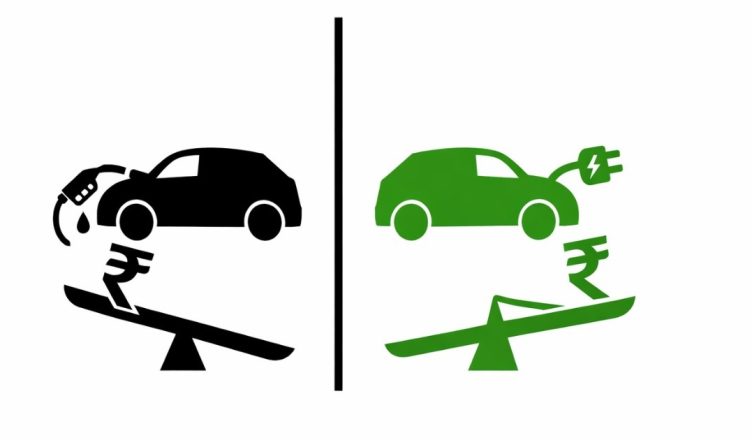
India’s automobile market is changing fast in 2026. Rising Petrol prices, growing interest in electric vehicles (EVs), and better charging networks are pushing many buyers to rethink their next car purchase.
For years, petrol cars were the clear choice for most Indian families. They were cheaper to buy and easy to maintain. But electric cars are no longer a niche product. Many major car brands now offer EV models across price segments.
The big question today is simple: Does buying an electric car make more financial sense than a petrol car in India in 2026?
This report breaks down the costs, savings, and practical factors to help buyers make an informed decision.
Why This Debate Matters in 2026
Fuel prices remain high in most Indian cities. prices in metros often stay above ₹100 per litre. At the same time, electric vehicle sales continue to grow each year.
Government policies at the central and state levels are encouraging EV adoption. Buyers also get road tax benefits in some states. Charging stations are expanding across highways and urban areas.
For middle-class families and daily commuters, the choice between petrol and electric is no longer just about preference. It is about monthly expenses, long-term savings, and resale value.
Upfront Cost: Cars Still Cheaper to Buy
Petrol Cars: Lower Entry Price
In 2026, entry-level petrol hatchbacks in India start from around ₹5–6 lakh (ex-showroom). Compact SUVs begin from around ₹8–9 lakh.
For many first-time car buyers, this lower price remains attractive.
Electric Cars: Higher Initial Investment
Electric cars usually cost more upfront. Entry-level EVs typically start from around ₹8–10 lakh (ex-showroom). Premium models can go much higher.
The higher price is mainly due to the battery pack, which is the most expensive part of an EV.
Financial takeaway:
If your budget is tight and you want the lowest purchase price, a petrol car still costs less at the time of buying.
Running Cost Comparison: Petrol vs Electric
This is where the difference becomes clear.
Fuel Cost of Petrol Cars
Let us assume:
- Average petrol price: ₹100 per litre
- Average mileage: 15–18 km per litre
This means the running cost is roughly ₹5–7 per km, depending on the vehicle and driving style.
For someone driving 1,200 km per month, fuel cost can be around ₹6,000–₹8,000 monthly.
Charging Cost of Electric Cars
Electric cars consume electricity measured in units (kWh).
On average:
- EV efficiency: 6–8 km per unit
- Residential electricity rate: ₹7–₹10 per unit (varies by state)
This brings the running cost to roughly ₹1–₹1.5 per km.
For the same 1,200 km per month, charging cost may be around ₹1,500–₹2,000 monthly.
Key Financial Difference
Petrol car monthly fuel cost: ₹6,000–₹8,000
Electric car monthly charging cost: ₹1,500–₹2,000
That is a possible saving of ₹4,000–₹6,000 per month for regular users.
Over a year, this can mean savings of ₹50,000–₹70,000.
Maintenance Costs: EVs Have an Edge
Petrol Car Maintenance
Petrol vehicles have:
- Engine oil changes
- Filters
- Clutch system
- Gearbox components
Regular servicing is needed. Annual maintenance can range from ₹8,000 to ₹20,000, depending on the segment.
Electric Car Maintenance
Electric cars have:
- Fewer moving parts
- No engine oil
- No clutch
This usually leads to lower servicing costs.
Annual maintenance is often lower than petrol cars, though battery health checks are important.
Important point: Battery replacement is expensive. However, most manufacturers offer battery warranties of 8 years or more in many cases.
Government Incentives and Tax Benefits
While central subsidies have changed over the years, many state governments continue to offer benefits such as:
- Road tax exemption
- Registration fee waiver
- Special EV policies
These benefits can reduce the effective cost of an electric car.
Petrol cars do not receive such incentives.
For buyers in EV-friendly states, the financial case for electric becomes stronger.
Resale Value in 2026
Resale value plays a key role in total ownership cost.
Petrol Cars
Petrol cars have a well-established resale market. Buyers trust traditional engines. Used car dealers easily evaluate them.
Electric Cars
The EV resale market is still developing. Concerns about battery health can affect resale value.
However, as EV adoption grows, confidence in used electric vehicles is improving.
For now, petrol cars still have a slight advantage in resale predictability.
Charging Infrastructure vs Fuel Convenience
Petrol Cars: Easy Refueling
Petrol pumps are available almost everywhere in India. Refueling takes only a few minutes.
For long-distance travel, petrol cars remain more convenient.
Electric Cars: Charging Expanding Fast
Public charging stations are increasing in metros and along highways. Many EV owners charge at home overnight.
Home charging reduces daily hassle. But people living in apartments without fixed parking may face difficulty.
Urban buyers with home charging access benefit the most from EVs.
Long-Term Ownership: 5-Year Cost Comparison
Let us look at a simplified example.
Assumptions:
- Driving: 15,000 km per year
- Ownership: 5 years
- Fuel cost per km (petrol): ₹6
- Charging cost per km (electric): ₹1.5
Petrol Car (5 Years Fuel Cost)
15,000 km × ₹6 = ₹90,000 per year
5 years = ₹4.5 lakh
Electric Car (5 Years Charging Cost)
15,000 km × ₹1.5 = ₹22,500 per year
5 years = ₹1.1 lakh approx
Estimated fuel savings over 5 years: Around ₹3 lakh or more
Even after considering higher upfront cost, frequent drivers may recover the price difference over time.
Who Should Choose Petrol in 2026?
A petrol car may make more financial sense if:
- You drive less than 800 km per month
- You live in an area without easy charging access
- You want lower upfront cost
- You prefer long highway trips without charging stops
Low-usage drivers may not recover the extra EV purchase cost quickly.
Who Should Choose Electric in 2026?
An electric car may be financially better if:
- You drive daily in city traffic
- Your monthly driving is above 1,000 km
- You can install a home charger
- You plan to keep the car for 5 years or more
High-usage drivers benefit the most from lower running costs.
Environmental and Future Policy Factors
Apart from money, many buyers consider environmental impact.
Electric cars produce no tailpipe emissions. This supports cleaner city air.
In the coming years, policies may become stricter for fuel vehicles. Some cities may introduce congestion or pollution-related rules.
While petrol cars remain fully legal and widely used, EV-friendly policies are likely to continue.
Petrol vs Electric in 2026: The Final Financial Verdict
There is no one-size-fits-all answer.
If you focus only on upfront cost, petrol cars are cheaper.
If you look at long-term running expenses, electric cars can save significant money.
For daily urban commuters, EVs often make stronger financial sense over a 5-year period.
For occasional drivers or buyers in smaller towns without charging facilities, petrol still remains practical.
What Indian Buyers Should Do Before Deciding
Before buying, experts suggest:
- Calculate your average monthly driving distance
- Check electricity rates in your state
- Confirm home charging availability
- Compare insurance and service costs
- Review resale trends in your city
A simple cost-per-kilometre comparison can clarify your decision.
The Bottom Line
In 2026, the financial gap between petrol and electric cars is narrowing.
Petrol vehicles remain affordable at purchase. Electric cars offer major savings in daily use.
For many Indian buyers, especially in cities, the shift toward electric is no longer just about being eco-friendly. It is about reducing monthly expenses.
As infrastructure grows and battery technology improves, the financial case for electric vehicles is becoming stronger year after year.
The final decision depends on your driving pattern, budget, and access to charging. But one thing is clear — the debate between petrol vs electric is now central to every new car purchase conversation in India.
Follow us on google news: Click Here
Last Updated on: Friday, February 13, 2026 3:47 pm by News Estate Team | Published by: News Estate Team on Friday, February 13, 2026 3:47 pm | News Categories: News
About The Author
