

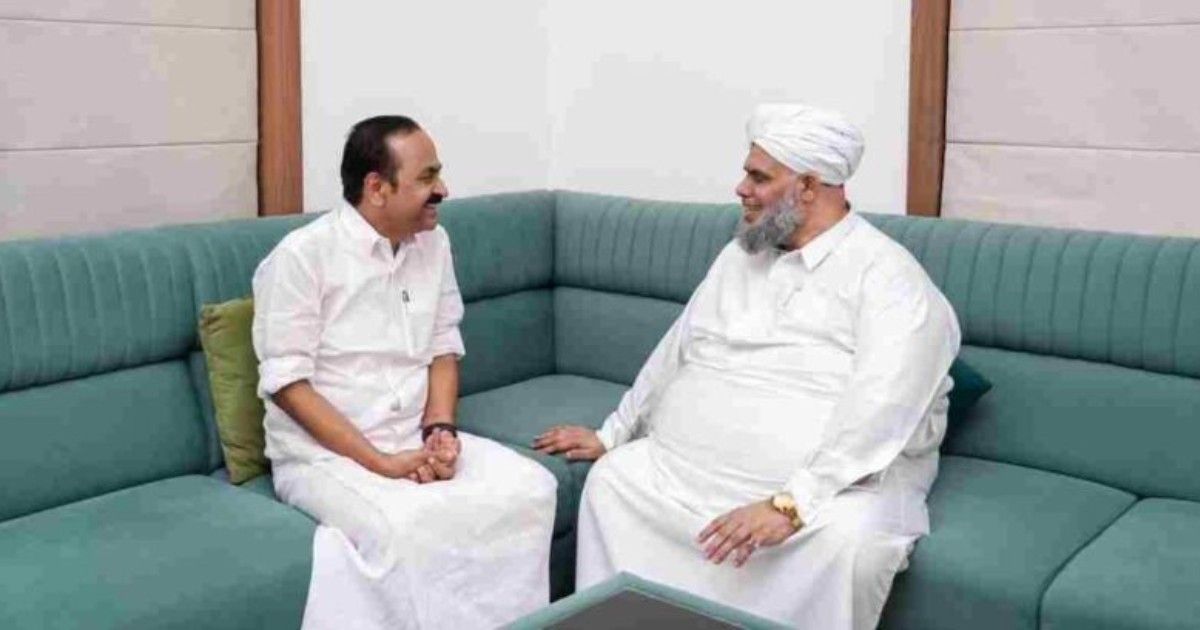
In a development that underscores the growing political momentum in Kerala ahead of the next Assembly elections, Leader of the Opposition V. D. Satheesan met influential religious figure Ibrahimul Khaleelul Bukhari Thangal on March 27 in Malappuram.
The meeting took place at Thangal’s residence in Kadalundi and is being interpreted as part of broader efforts by political parties to engage with key community leaders as electoral strategies begin to take shape.
Key Developments From the Meeting
The interaction between Satheesan and Bukhari Thangal comes at a time when political parties in Kerala are stepping up outreach across social and religious groups.
- The meeting is seen as a strategic move by the Congress-led opposition to strengthen its engagement with the AP Samastha faction.
- Bukhari Thangal is regarded as a significant voice within sections of the Muslim community in Kerala.
- The discussion reflects ongoing efforts to consolidate voter support through community-level engagement.
Bukhari Thangal also holds the position of State General Secretary of the Kerala Muslim Jamaath, further underlining his influence in socio-religious matters.
While details of the conversation were not publicly disclosed, the timing of the meeting suggests it carries electoral significance.
What Bukhari Thangal Said
Following the meeting, Bukhari Thangal addressed the media and emphasized the importance of political awareness and democratic responsibility.
He stated that voters should remain vigilant against communal forces and support those who uphold democratic values. His remarks, while not endorsing any specific political party, highlighted a broader message about safeguarding secular principles.
Thangal also pointed out that members of the Kanthapuram-led faction possess a clear understanding of the political environment and are conscious of their role in shaping outcomes.
His comments reflect a recurring theme in Kerala politics, where religious and community leaders often frame their positions in terms of broader democratic and social concerns rather than explicit political alignments.
Strategic Importance of the Meeting
The significance of this meeting lies in its timing and context.
Kerala’s political landscape is traditionally shaped by strong alliances, ideological narratives, and community dynamics. As elections approach, parties across the spectrum intensify their engagement with influential stakeholders.
Satheesan’s outreach to Bukhari Thangal signals:
- An attempt to reinforce connections with community leadership
- A broader strategy to counter political rivals through grassroots engagement
- Recognition of the role played by socio-religious organizations in shaping voter sentiment
This meeting is not an isolated event but part of a wider pattern of political consultations currently underway in the state.
Parallel Outreach by Other Political Leaders
The importance of Bukhari Thangal in Kerala’s socio-political framework is evident from the fact that leaders from multiple political camps have engaged with him.
Notably, Chief Minister Pinarayi Vijayan had also met Thangal earlier, indicating that outreach efforts are not limited to the opposition.
Such cross-party interactions highlight:
- The competitive nature of political engagement in Kerala
- The importance of maintaining dialogue with community leaders
- The role of informal consultations in shaping electoral narratives
Responding to questions about these meetings, Thangal described them as routine interactions. He noted that discussions with political leaders are a regular part of engagement with various stakeholders and not all such conversations are disclosed publicly.
Understanding AP Samastha and Its Influence
To understand the broader implications of this meeting, it is important to examine the role of the AP Samastha faction.
The AP Samastha, associated with the leadership of Kanthapuram A.P. Aboobacker Musliyar, is a prominent religious organization in Kerala. It has a considerable following, particularly among sections of the Sunni Muslim community.
Organizations like the Kerala Muslim Jamaath often play a role beyond religious guidance. They contribute to:
- Social awareness campaigns
- Educational initiatives
- Public discourse on governance and civic responsibility
While these groups do not officially align with political parties, their views can influence sections of the electorate.
Why This Matters Ahead of Elections
Kerala’s elections are typically characterized by high voter awareness and strong participation. In such a context, community engagement becomes a crucial component of political strategy.
This meeting matters for several reasons:
1. Consolidation of Support
Political parties often seek to strengthen ties with community leaders to consolidate their voter base.
2. Messaging on Secularism
Bukhari Thangal’s remarks on opposing communalism align with broader narratives in Kerala politics, where secularism remains a key theme.
3. Competitive Outreach
The fact that both ruling and opposition leaders are engaging with the same figures indicates a competitive push to gain influence.
4. Early Signals of Alliances
While no formal alliances have been announced, such meetings can serve as indicators of emerging political alignments or understanding.
The Role of Community Leaders in Kerala Politics
Kerala has a unique political culture where literacy, media engagement, and social awareness contribute to informed voting behavior.
However, community leaders still play an important role in:
- Shaping public opinion on key issues
- Encouraging voter participation
- Highlighting social and economic concerns
Their influence is often subtle rather than directive, focusing on values and priorities rather than explicit political endorsements.
Opposition Strategy Under V.D. Satheesan
As Leader of the Opposition, V. D. Satheesan has been actively working to strengthen the Congress-led United Democratic Front (UDF).
His approach includes:
- Expanding outreach across communities
- Addressing governance and policy issues
- Positioning the opposition as a viable alternative to the ruling government
Meetings like this one form part of a broader effort to build consensus and trust among diverse groups.
Ruling Front’s Parallel Efforts
On the other hand, the Left Democratic Front (LDF), led by Pinarayi Vijayan, continues to engage with various stakeholders to maintain its support base.
The LDF’s strategy focuses on:
- Highlighting governance achievements
- Maintaining strong organizational networks
- Engaging with community leaders to address concerns
This dual outreach by both fronts reflects the highly competitive nature of Kerala politics.
Public Impact: What It Means for Voters
For voters, such meetings may not immediately translate into visible changes but can influence the broader political environment.
Key implications include:
- Increased political engagement at the community level
- Greater focus on issues like secularism and democratic values
- Potential shifts in voter sentiment based on outreach efforts
However, Kerala voters are known for evaluating multiple factors, including governance performance, policy outcomes, and leadership credibility.
Transparency and Political Communication
One notable aspect of this development is the limited disclosure of details from the meeting.
While such interactions are common, they raise questions about transparency in political communication. At the same time, leaders often maintain that informal discussions are necessary for candid exchanges.
Bukhari Thangal’s remark that not all friendly conversations can be made public reflects this balance between openness and discretion.
Looking Ahead
As Kerala moves closer to the Assembly elections, similar meetings and consultations are expected to increase.
Political parties are likely to:
- Intensify grassroots outreach
- Engage with a wider range of community leaders
- Refine their messaging to address voter concerns
The coming months will provide clearer indications of how these interactions translate into electoral strategies and outcomes.
The meeting between V. D. Satheesan and Ibrahimul Khaleelul Bukhari Thangal highlights the early stages of political positioning ahead of Kerala’s Assembly elections.
While no formal announcements emerged from the interaction, its significance lies in the broader pattern of engagement between political leaders and influential community figures.
With both the opposition and the ruling front actively reaching out to stakeholders, the political landscape in Kerala is gradually entering an intensified phase. How these efforts shape voter sentiment will become clearer as the election timeline approaches.
Inputs and images : Hindusthan Samachar
Edited By E. Devanshi varma
Follow us on Google News: Click Here