

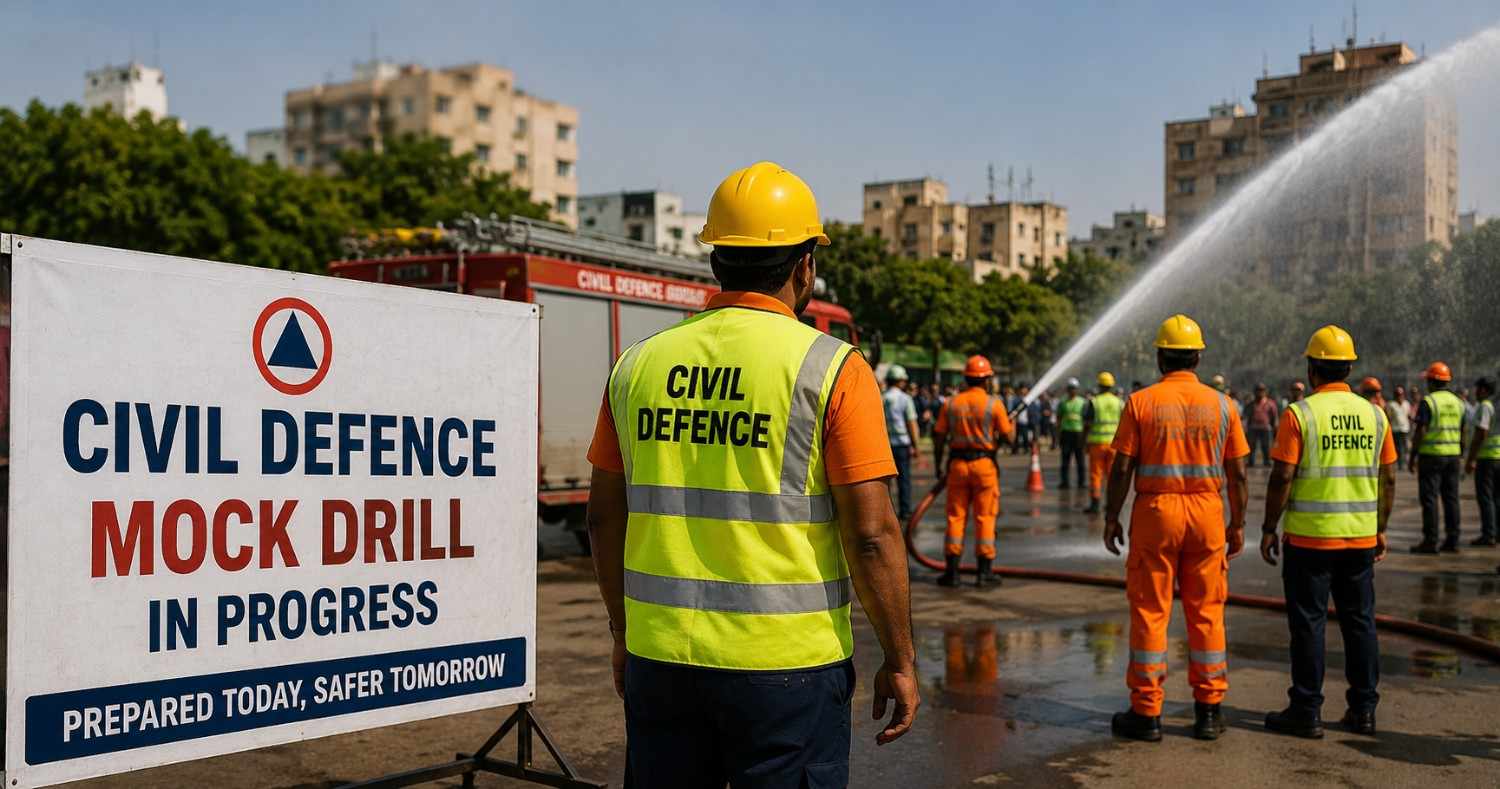
Civil defence mock drills have unexpectedly emerged as one of India’s most discussed public safety topics, drawing attention from citizens, local administrations, security experts, and policymakers alike. While emergency preparedness exercises have long been a part of disaster management planning, the recent surge in public interest reflects a broader conversation about national resilience, crisis response capabilities, and community awareness in an increasingly uncertain world.
Across several regions, mock drills involving emergency services, civil defence volunteers, district administrations, hospitals, fire departments, and law enforcement agencies have highlighted the importance of coordinated responses during emergencies. The exercises have also prompted discussions about how prepared ordinary citizens are to respond during natural disasters, industrial accidents, public emergencies, or security-related incidents.
As urban populations expand and infrastructure networks become more complex, experts argue that preparedness is no longer solely the responsibility of governments and emergency agencies. Instead, effective crisis management increasingly depends on public participation, awareness, and coordinated planning at every level of society.
Why Mock Drills Are Receiving Increased Attention
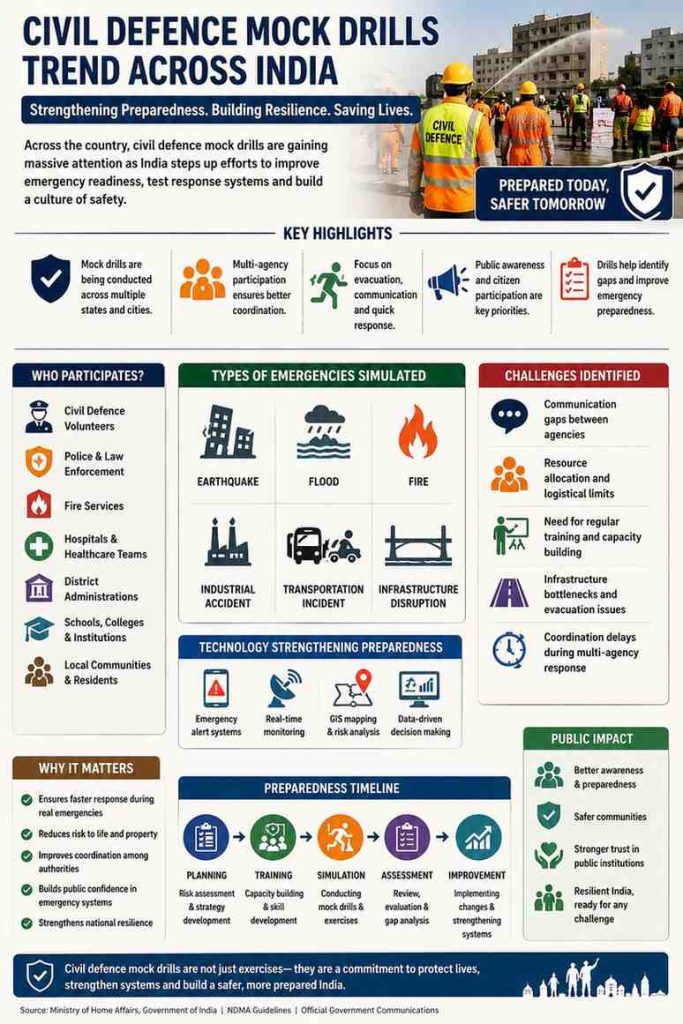
The growing focus on civil defence exercises stems from several converging factors. Rapid urbanization, climate-related disasters, technological risks, and evolving security concerns have increased the need for preparedness measures that can be tested under realistic conditions.
Mock drills allow authorities to evaluate response times, communication systems, evacuation procedures, and coordination among multiple agencies. They also help identify operational weaknesses before a real emergency occurs.
In many cases, these exercises simulate scenarios such as earthquakes, floods, fires, industrial accidents, transportation disruptions, or large-scale public emergencies. The goal is not merely to conduct a demonstration but to assess whether systems and personnel can function effectively under pressure.
Public awareness generated through such exercises has contributed to the recent surge in interest. Images and videos of evacuation drills, emergency response simulations, and coordination exercises have circulated widely online, prompting discussions about preparedness levels in different regions.
The Evolving Role of Civil Defence in Modern India
Civil defence systems were originally developed to help protect civilian populations during emergencies and crises. Over time, their responsibilities have expanded significantly.
Today, civil defence organizations often support disaster response, emergency communications, evacuation planning, first-aid assistance, rescue coordination, and public awareness campaigns. Their work frequently complements the efforts of professional emergency responders and disaster management authorities.
Experts note that modern emergency management increasingly emphasizes resilience rather than reaction. This means preparing communities before disasters occur rather than focusing exclusively on post-crisis recovery.
Mock drills play a central role in this approach by providing practical opportunities to test plans, train personnel, and educate the public about emergency procedures.
Public Participation Becomes a Critical Factor
One of the most significant developments highlighted by recent discussions is the growing recognition of citizen involvement in emergency preparedness.
Emergency management specialists consistently emphasize that the first few minutes of a crisis are often the most critical. During this period, individuals and communities may need to take immediate protective actions before professional responders arrive.
Public participation in drills can help familiarize citizens with evacuation routes, emergency contacts, shelter locations, and basic safety procedures. Such awareness may reduce confusion and improve response effectiveness during actual emergencies.
Educational institutions, residential communities, workplaces, and public facilities increasingly conduct preparedness exercises to strengthen awareness among different population groups.
The broader objective is to create a culture of preparedness where emergency planning becomes a routine aspect of community life rather than an occasional activity.
Technology Is Reshaping Emergency Preparedness
Modern mock drills increasingly incorporate technological tools that were unavailable just a decade ago.
Digital communication platforms, emergency alert systems, geographic information systems, surveillance technologies, and data analytics are now playing important roles in disaster management planning.
Authorities can use these tools to monitor situations in real time, disseminate alerts quickly, coordinate resources more efficiently, and improve situational awareness during emergencies.
The integration of technology into preparedness exercises helps organizations evaluate not only physical response mechanisms but also digital infrastructure that supports crisis management operations.
Cybersecurity experts have additionally pointed out that emergency preparedness now extends beyond physical threats. Critical infrastructure systems, communication networks, and digital services require protection and contingency planning as part of broader resilience strategies.
Challenges Revealed Through Mock Drills
While preparedness exercises are designed to strengthen response capabilities, they often reveal important challenges that require attention.
Communication gaps remain one of the most frequently identified issues during emergency simulations. Effective information sharing between agencies can significantly influence response outcomes during complex incidents.
Resource allocation is another recurring concern. Emergency situations may place extraordinary demands on personnel, equipment, transportation networks, and healthcare systems.
Training consistency also presents challenges. Maintaining preparedness requires regular exercises, continuous education, and periodic reviews of operational procedures.
Infrastructure limitations can become apparent during drills as well. Evacuation routes, emergency shelters, medical facilities, and transportation systems must be capable of supporting large populations under difficult circumstances.
By identifying such weaknesses in controlled environments, authorities gain opportunities to improve plans before real emergencies occur.
The Broader National Security Perspective
Recent conversations surrounding civil defence drills have also highlighted the relationship between preparedness and national resilience.
Security experts often describe resilience as a country’s ability to absorb shocks, maintain essential functions, and recover efficiently from disruptive events.
This concept extends beyond traditional security concerns. Natural disasters, public health emergencies, infrastructure failures, and industrial accidents can all affect societal stability and economic activity.
Preparedness exercises contribute to resilience by helping institutions understand vulnerabilities and strengthen response mechanisms.
From local administrations to national agencies, coordinated planning helps ensure that essential services can continue operating during challenging circumstances.
The increased visibility of mock drills has therefore generated broader discussions about readiness, risk management, and institutional capacity across multiple sectors.
Economic and Social Implications
Preparedness measures can also have important economic consequences.
Major emergencies often result in disruptions to transportation, commerce, supply chains, and public services. Effective response planning may help reduce these impacts by enabling faster recovery and minimizing operational interruptions.
Businesses increasingly incorporate emergency preparedness into their continuity planning strategies. Many organizations conduct internal drills to evaluate employee safety procedures and operational resilience.
On the social front, preparedness initiatives can strengthen public confidence in institutions responsible for emergency management. Transparent communication and visible planning efforts may help build trust between authorities and communities.
At the same time, experts caution that preparedness should not create unnecessary alarm. The objective of drills is preventive readiness rather than generating fear.
Successful exercises demonstrate that systems are being tested and improved to enhance public safety.
Looking Ahead
The growing attention surrounding civil defence mock drills reflects a broader shift toward proactive preparedness in India. As risks evolve and urban environments become more interconnected, emergency planning is increasingly viewed as a shared responsibility involving governments, institutions, businesses, and citizens.
Preparedness exercises provide valuable opportunities to evaluate response capabilities, strengthen coordination, identify vulnerabilities, and improve public awareness. While no system can eliminate risk entirely, regular testing and continuous improvement can enhance resilience and reduce the consequences of unexpected events.
The recent surge in public interest suggests that emergency preparedness is no longer a niche administrative function. Instead, it is becoming an increasingly visible component of public policy, governance, and community engagement. As authorities continue refining response mechanisms and encouraging citizen participation, mock drills are likely to remain an important tool in strengthening India’s capacity to respond effectively to future challenges.
Highlights
- Civil defence mock drills have gained nationwide attention as discussions around emergency preparedness intensify.
- Authorities use drills to test evacuation plans, communication systems, and multi-agency coordination during simulated emergencies.
- Experts say preparedness increasingly depends on both institutional readiness and public participation.
- Modern exercises now incorporate digital technologies, emergency alert systems, and real-time monitoring tools.
- Mock drills often help identify operational gaps in communication, infrastructure, training, and resource allocation.
- Preparedness initiatives are viewed as an important component of broader national resilience and public safety planning.
FAQ
1. What is a civil defence mock drill?
A civil defence mock drill is a simulated emergency exercise designed to test preparedness, response procedures, and coordination among various agencies and communities.
2. Why are mock drills conducted?
They help authorities evaluate emergency plans, identify weaknesses, improve coordination, and increase public awareness before real emergencies occur.
3. Who participates in these exercises?
Participants may include civil defence volunteers, police, fire services, healthcare personnel, district administrations, educational institutions, and local residents.
4. What types of emergencies are commonly simulated?
Mock drills may simulate earthquakes, floods, fires, industrial accidents, transportation incidents, or other public emergency scenarios.
5. How do mock drills benefit the public?
They familiarize citizens with safety procedures, evacuation routes, emergency contacts, and actions to take during crises.
6. Why has public interest in mock drills increased recently?
Greater awareness of disaster risks, security concerns, and emergency preparedness has led to wider public attention and online discussions.
7. What challenges do mock drills often reveal?
Common findings include communication gaps, resource limitations, training needs, infrastructure weaknesses, and coordination challenges.
8. How does technology support modern emergency preparedness?
Authorities increasingly use emergency alert systems, digital communications, data analytics, and mapping technologies to improve response effectiveness.
9. Are mock drills linked to national security?
While primarily focused on public safety and disaster readiness, preparedness exercises contribute to broader national resilience and crisis management capabilities.
10. Can mock drills prevent disasters?
They cannot prevent disasters themselves, but they can improve preparedness, reduce risks, and help minimize the impact of emergencies when they occur.
Edited By E. Devanshi varma
Also Read: IPL Honey-Trap Row Sparks 7 Big Questions Before Playoffs
Follow us on Google News: Click Here