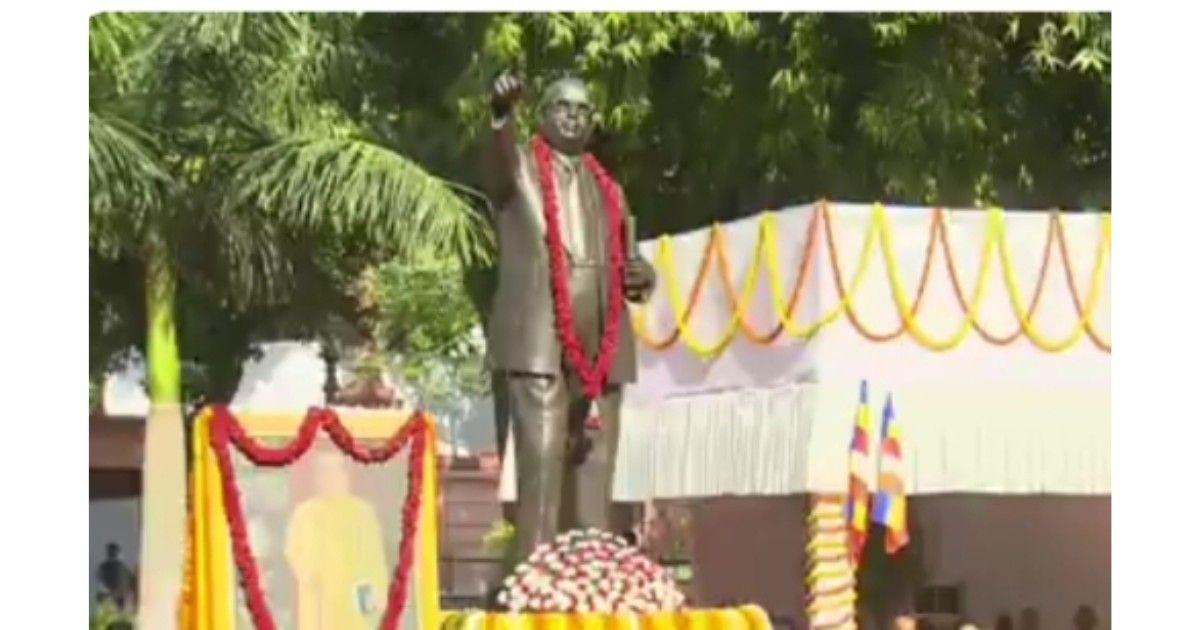


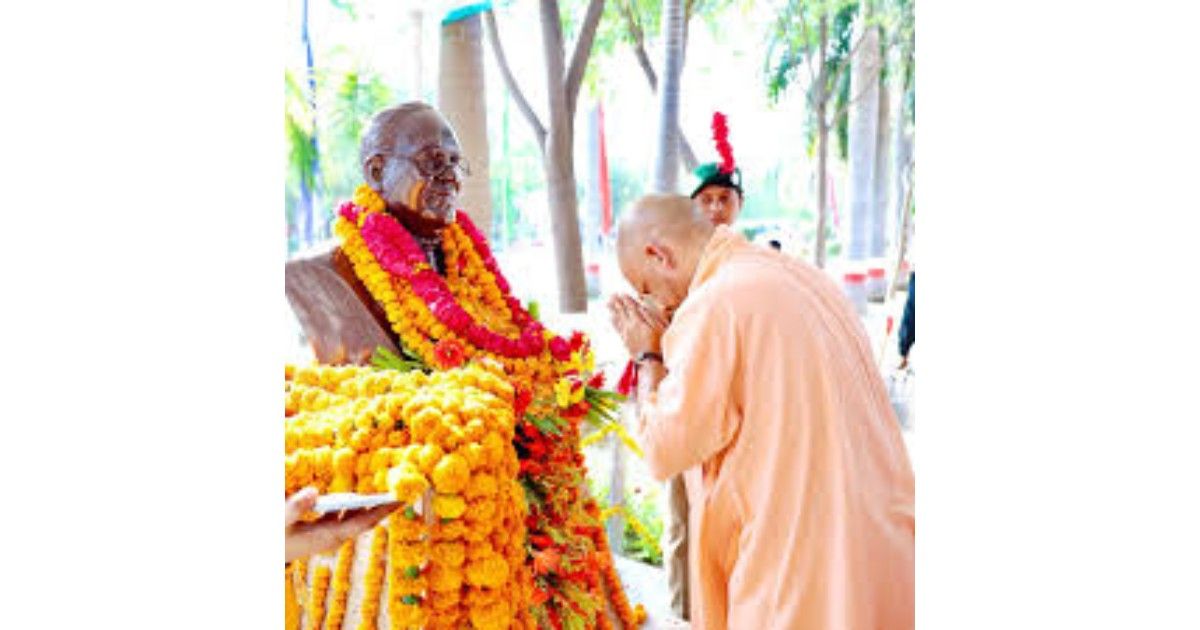
Lucknow, April 14: Uttar Pradesh Chief Minister Yogi Adityanath on Monday paid tribute to Dr. Bhimrao Ramji Ambedkar on his birth anniversary, remembering him as the principal architect of the Indian Constitution and a leading figure in shaping modern India’s democratic framework.
Marking the occasion, the Chief Minister offered floral tributes and highlighted Ambedkar’s enduring contributions to the nation, particularly his efforts to establish equality, justice, and rights for marginalized communities. The day, observed nationwide as Ambedkar Jayanti, commemorates the life and legacy of one of India’s most influential social reformers.
Key Announcements and Highlights
The Uttar Pradesh government used the occasion to reaffirm its commitment to policies and welfare initiatives inspired by Ambedkar’s vision. According to official communication, several themes emerged prominently from the Chief Minister’s message and associated government efforts:
- Commitment to Social Justice: The administration reiterated its focus on policies aimed at uplifting economically weaker sections and socially disadvantaged communities.
- Welfare-Oriented Governance: Ongoing schemes for backward classes and underprivileged groups were positioned as being aligned with Ambedkar’s ideals.
- Educational Empowerment: Stress was placed on expanding access to education, seen as a key driver of empowerment.
- Memorial and Cultural Projects: Continued development of institutions and memorials dedicated to Ambedkar’s legacy remains a priority.
- Promotion of Constitutional Values: The government emphasized the importance of upholding equality, fraternity, and justice as outlined in the Constitution.
These points reflect a broader attempt to connect governance initiatives with the ideological framework laid down by Ambedkar.
Official Statement
In a message shared on social media platform X, the Chief Minister described Ambedkar as a guiding force for the nation. Reframing the statement in clearer terms, He said that Ambedkar’s work laid the foundation for an inclusive and harmonious society rooted in constitutional values.
He noted that his lifelong dedication to public welfare and the upliftment of marginalized communities continues to inspire governance and policy decisions. The Chief Minister also described him as a “priceless gem of Mother India,” adding that his ideas remain relevant in addressing contemporary social and economic challenges.
Context and Background
Dr. B.R. Ambedkar, born on April 14, 1891, played a central role in drafting the Constitution of India. As the chairman of the Drafting Committee, he was instrumental in embedding principles such as fundamental rights, equality before law, and safeguards against discrimination.
Ambedkar’s work extended beyond constitutional drafting. He was a prominent advocate for social reform, particularly in challenging caste-based discrimination and promoting equal opportunities in education and employment. His philosophy emphasized three core principles—“Educate, Organise, and Struggle”—which continue to influence social movements and policymaking in India.
Over the decades, successive governments at both central and state levels have invoked Ambedkar’s legacy while designing welfare schemes, particularly those aimed at Scheduled Castes, Scheduled Tribes, and other marginalized groups.
In Uttar Pradesh, Ambedkar’s legacy holds particular political and social significance due to the state’s large population of historically disadvantaged communities. As a result, commemorative events and policy references linked to Ambedkar are a recurring feature of governance narratives.
Focus on Development and Welfare
The Uttar Pradesh government has consistently linked its welfare programs to Ambedkar’s vision of inclusive development. Officials highlight that schemes targeting housing, healthcare, education, and financial inclusion are designed to reduce inequality and expand access to basic services.
Programs for rural development, scholarships for students from disadvantaged backgrounds, and initiatives to improve infrastructure in underserved areas are often framed within this broader context.
By aligning policy priorities with Ambedkar’s principles, the administration seeks to reinforce its focus on equitable growth. Analysts note that such positioning also reflects the continued political relevance of Ambedkar’s ideology in shaping public discourse.
Memorial and Cultural Initiatives
One of the visible aspects of the state’s efforts to honor Ambedkar’s legacy is the development of memorials and cultural institutions. Among these, the Baba Saheb Memorial and Cultural Centre in Lucknow stands out as a key project aimed at preserving and promoting his contributions.
These initiatives serve multiple purposes. They function as educational spaces for younger generations, provide a platform for cultural activities, and reinforce the symbolic importance of Ambedkar in public life.
Such projects are part of a broader trend across India, where memorialization of national figures plays a role in both cultural preservation and political messaging.
Emphasis on Education
Education remains a central theme in both Ambedkar’s philosophy and the government’s messaging. The Chief Minister reiterated the importance of education as a tool for empowerment, echoing Ambedkar’s belief that knowledge is essential for social transformation.
Efforts to improve educational infrastructure, increase enrollment rates, and provide financial support to students from disadvantaged communities are often highlighted in this context.
Experts point out that while access to education has improved significantly over the years, challenges such as quality, affordability, and inclusivity remain areas requiring sustained attention.
Public Impact: Who Benefits and How
The continued emphasis on Ambedkar’s ideals has direct implications for various sections of society:
- Marginalized Communities: Welfare schemes and affirmative policies aim to address historical inequalities and improve living standards.
- Students and Youth: Increased focus on education and skill development creates opportunities for upward mobility.
- Rural Populations: Development initiatives targeting infrastructure and basic services aim to reduce regional disparities.
- General Public: Reinforcement of constitutional values promotes a more inclusive and rights-based governance framework.
While the effectiveness of these initiatives depends on implementation, the emphasis on inclusivity reflects a broader policy direction aligned with constitutional principles.
Why This Matters
Ambedkar Jayanti is not only a commemorative event but also an opportunity for governments and institutions to reflect on the progress made toward achieving social justice and equality.
By invoking Ambedkar’s legacy, political leaders underscore the continuing relevance of his ideas in addressing modern challenges such as economic disparity, access to education, and social inclusion.
In a rapidly changing socio-economic landscape, the principles enshrined in the Constitution remain central to policymaking and governance. The emphasis on these values during such occasions serves as a reminder of the foundational ideals of the Indian republic.
As the state marks the birth anniversary of Dr. B.R the focus remains on translating his vision into tangible outcomes. The extent to which these ideals are reflected in policy implementation and public impact will continue to shape the broader narrative around governance and social justice in Uttar Pradesh and beyond.
Inputs and images : Hindusthan Samachar
Edited By E. Devanshi varma
Also Read: Ambedkar Jayanti Observed with 3 Key Focus Areas as Mayawati Pays Tribute in Lucknow
Follow us on Google News: Click Here