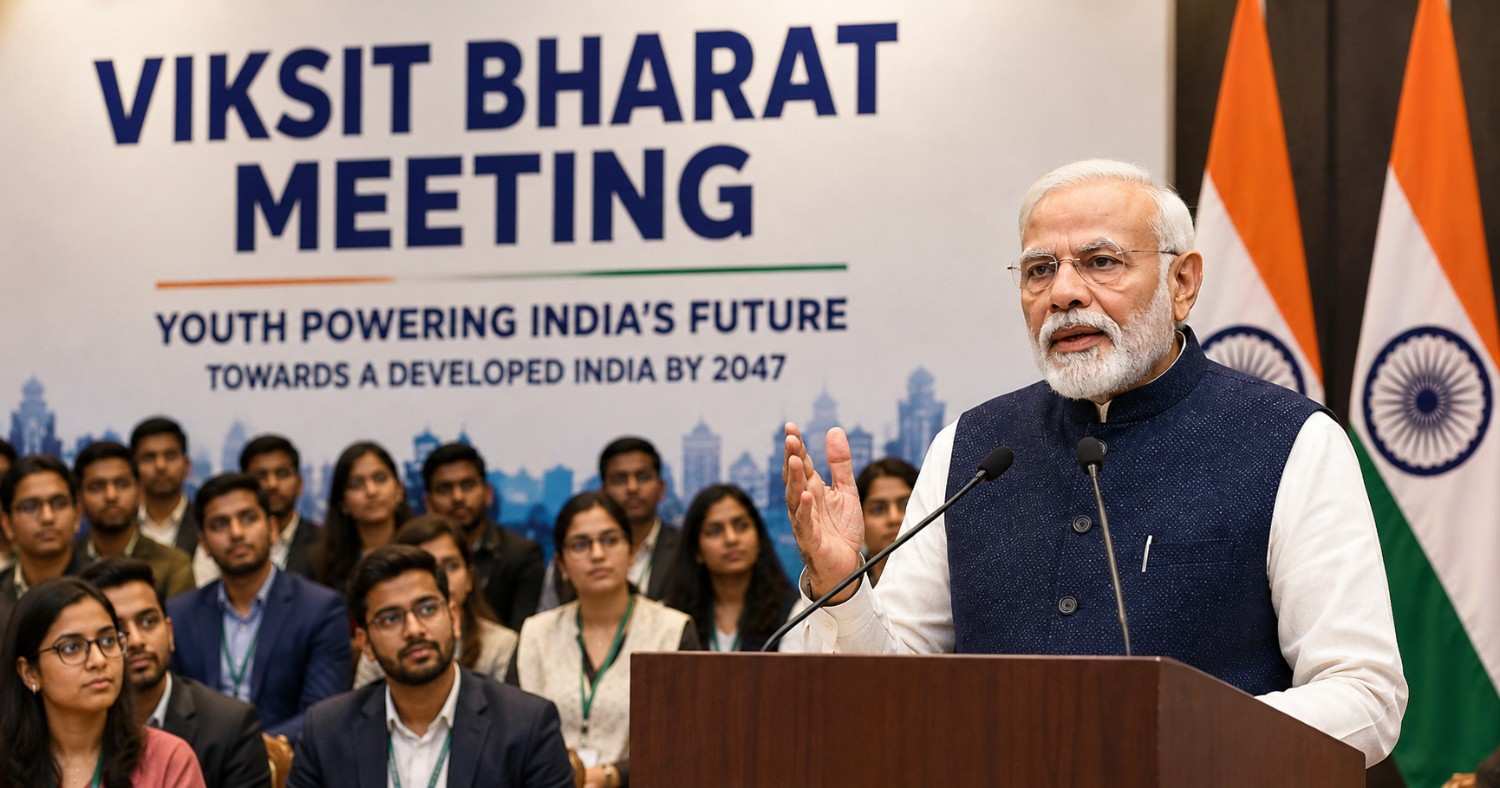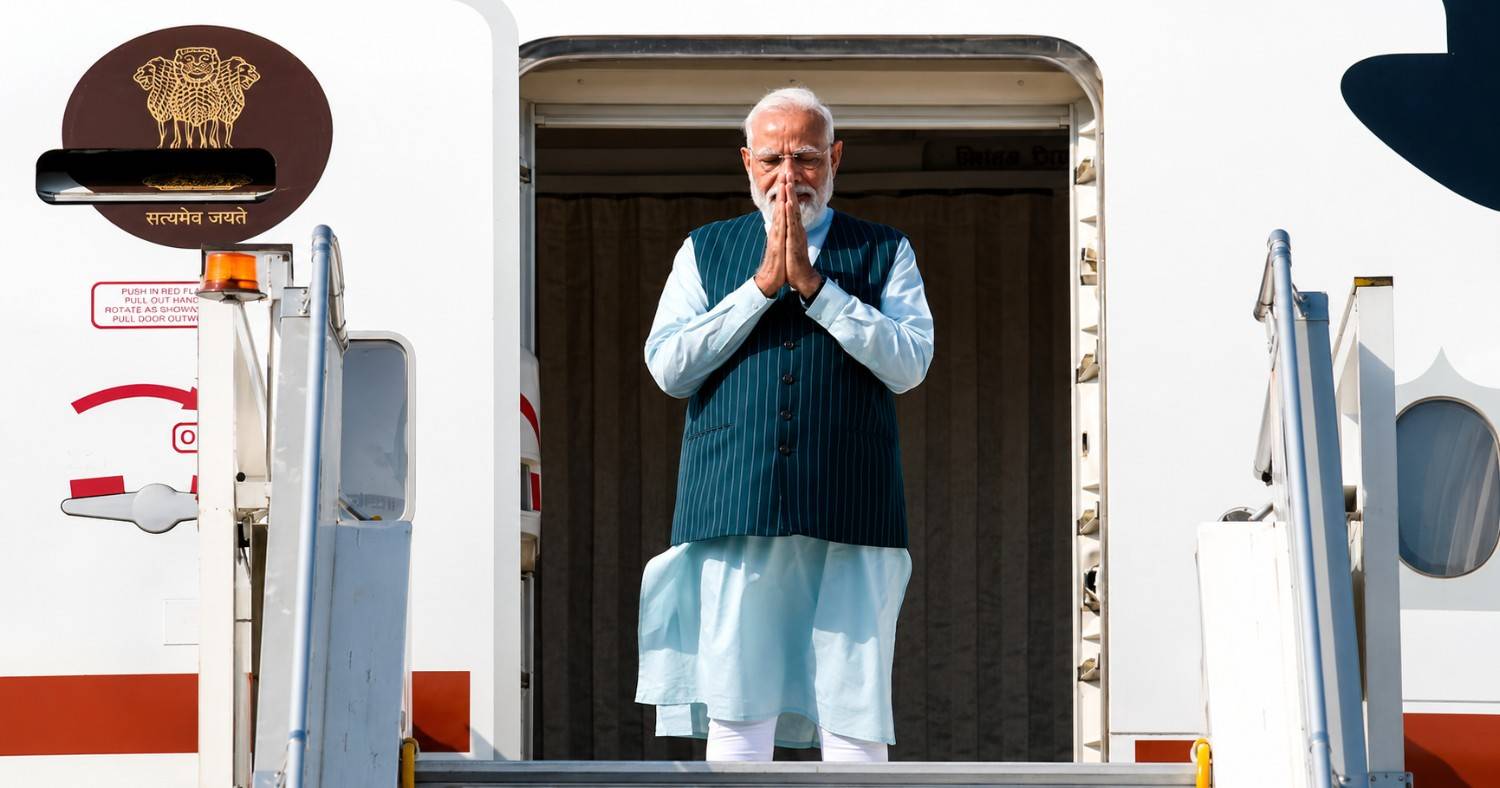


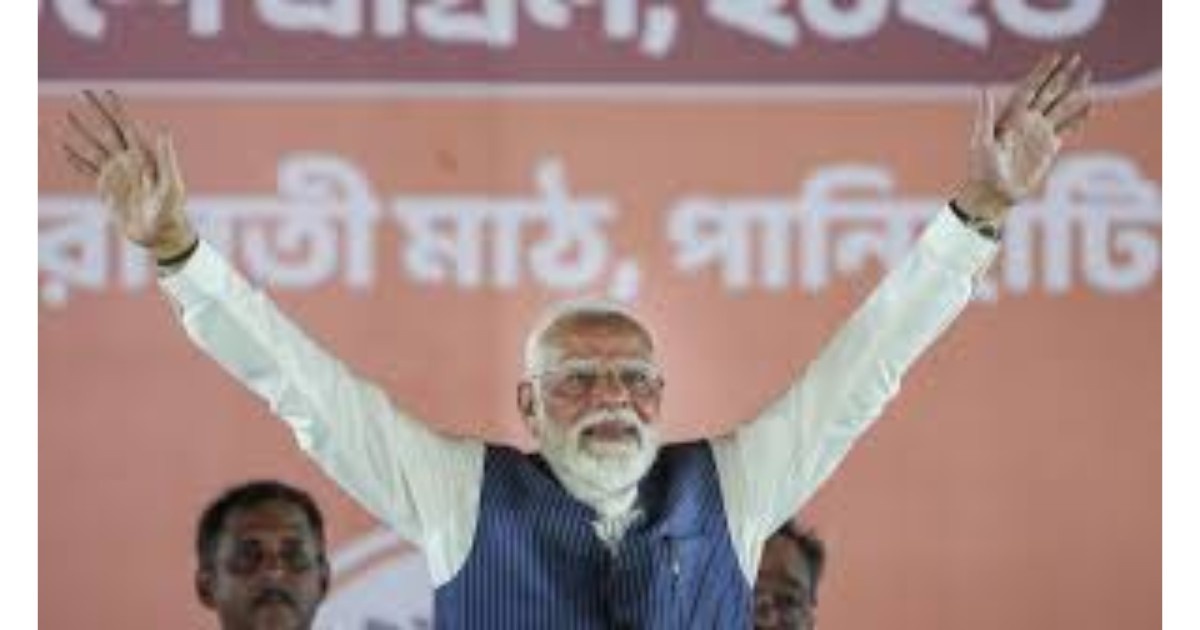
Kolkata/Delhi, April 24: Following the completion of the first phase of polling in the West Bengal Assembly elections, Prime Minister Narendra Modi addressed a public rally in Dum Dum, where he claimed that early voting trends indicate a growing demand for political change in the state. Speaking at the event, the senior Bharatiya Janata Party (BJP) leader criticised the ruling Trinamool Congress (TMC) government on multiple fronts, including governance, law and order, and economic development.
The rally comes at a crucial juncture in the multi-phase election process, with political parties seeking to consolidate voter support ahead of subsequent rounds of voting.
Key Announcements / Highlights
At the Dum Dum rally, the Prime Minister made several notable assertions and promises:
- He claimed that the first phase of polling reflects a strong “wave of change” in West Bengal.
- Allegations were made against the Trinamool Congress regarding weakening democratic processes in the state.
- He urged higher voter turnout in upcoming phases, framing the election as a decisive moment for Bengal’s future.
- Women’s safety and empowerment were highlighted as central priorities under a potential BJP government.
- Economic concerns, including industrial decline and unemployment, were raised.
- Local civic issues in Dum Dum, such as waterlogging and traffic congestion, were specifically addressed.
Official Statement (Rewritten)
Addressing the gathering, Prime Minister Modi said that the sentiment for political change in West Bengal had been building over time and was now visible in the voting patterns observed during the first phase. He suggested that voters had begun expressing their preference for an alternative leadership.
He also accused the current state government of undermining democratic institutions, stating that voters were now responding through the electoral process. He appealed to citizens to participate actively in the remaining phases of polling, emphasising the importance of voter turnout in shaping the state’s political direction.
Referring to West Bengal’s historical and cultural significance, he described the ongoing election as a pivotal moment, drawing parallels with transformative periods in the state’s past. He further criticised the ruling party’s governance model, alleging administrative inefficiencies and declining public trust.
Context / Background
West Bengal’s Assembly elections are conducted in multiple phases due to the state’s large electorate and complex logistical requirements. The political contest in the state has increasingly become a high-stakes battle between the ruling Trinamool Congress, led by Chief Minister Mamata Banerjee, and the Bharatiya Janata Party, which has expanded its presence in the region over recent years.
The BJP has been positioning itself as a strong challenger, focusing on issues such as governance, development, and alleged corruption. Meanwhile, the TMC has defended its record, highlighting welfare schemes and regional identity as key strengths.
Elections in West Bengal have historically been marked by intense political rivalry, and allegations of electoral violence and irregularities have surfaced in past polls. Against this backdrop, statements from national leaders often play a significant role in shaping public discourse.
Women-Centric Promises and Allegations
A significant portion of the Prime Minister’s speech focused on women’s issues. He accused the state government of failing to ensure adequate safety and justice for women, describing it as a critical area of concern.
He stated that, if elected to power, the BJP would prioritise reopening cases related to crimes against women and ensure accountability. Additionally, he outlined a broader framework of women-led development, which would include improved access to housing, healthcare, and economic opportunities.
The Prime Minister also referenced central government schemes aimed at supporting women, suggesting that their implementation in West Bengal could be expanded under a different administration.
Healthcare and Welfare Initiatives
Healthcare emerged as another focal point during the address. Prime Minister Modi pointed out that the Ayushman Bharat scheme, which provides health insurance coverage of up to ₹5 lakh per family annually, is not currently implemented in West Bengal.
Ayushman Bharat is a flagship central government initiative designed to reduce out-of-pocket healthcare expenses for economically vulnerable populations. The scheme has been adopted by several states, although some have opted out or implemented alternative models.
The Prime Minister stated that, if the BJP forms the government in West Bengal, the scheme would be introduced to extend healthcare benefits to eligible residents. This promise aligns with the party’s broader narrative of integrating state-level governance with central welfare initiatives under what it terms a “double-engine government.”
Economic Concerns and Industrial Decline
The Prime Minister also raised concerns about the state’s economic trajectory, particularly focusing on industrial activity and employment generation. He alleged that industries in West Bengal, including small and medium enterprises, have been adversely affected by what he described as systemic issues such as the “syndicate system.”
The term “syndicate system” is often used by opposition parties to refer to alleged informal networks that influence construction and business operations. Critics argue that such systems can lead to increased costs and inefficiencies, while the ruling party has denied these allegations.
Modi claimed that factory closures and limited investment opportunities have contributed to rising unemployment, forcing many young people to seek work outside the state. He positioned the BJP’s economic agenda as one focused on attracting investment, boosting manufacturing, and creating jobs locally.
Focus on Middle-Class Voters
Addressing the concerns of the middle class, the Prime Minister emphasised policies related to tax relief, digital infrastructure, and affordable housing. He suggested that a BJP-led government would prioritise these areas to improve living standards and economic stability.
The middle class represents a significant voter segment in urban and semi-urban constituencies like Dum Dum. By focusing on issues such as cost of living and access to services, political parties often aim to secure broader electoral support.
Local Issues in Dum Dum
In addition to state-level concerns, the Prime Minister highlighted several local challenges faced by residents of Dum Dum. These included:
- Persistent waterlogging during monsoon seasons
- Outdated drainage infrastructure
- Traffic congestion and urban planning issues
He argued that addressing these problems would require comprehensive planning and investment, which he said could be achieved under BJP governance. Urban infrastructure has been a recurring issue in many parts of Kolkata and its surrounding areas, making it a relevant topic in election campaigns.
Political Messaging and Electoral Strategy
The speech also reflected broader campaign messaging aimed at consolidating support across different voter groups. By combining critiques of the incumbent government with promises of development and welfare, the BJP is attempting to present itself as a viable alternative in a state where it has traditionally had limited political dominance.
The Prime Minister’s remarks about a “wave of change” are part of a common electoral strategy used by political parties to build momentum and influence voter perception. Such claims, however, can only be verified after the final election results are declared.
Public Impact
For voters, the issues raised during the rally touch on several areas of daily life, including safety, employment, healthcare, and urban infrastructure. The emphasis on women’s empowerment and healthcare access may resonate with specific demographic groups, while economic concerns are likely to influence a broader section of the electorate.
The promise to implement central schemes such as Ayushman Bharat could have tangible implications for families seeking affordable healthcare. Similarly, proposals to improve infrastructure and attract investment may appeal to urban voters and young job seekers.
At the same time, the allegations against the ruling government highlight the sharp political divide in the state. Voters will need to evaluate competing claims and consider both past performance and future promises when making their decisions.
Final Developments and What Lies Ahead
As West Bengal moves into the next phases of polling, political campaigning is expected to intensify further. Leaders from all major parties are likely to continue addressing rallies, presenting their agendas, and responding to opponents’ criticisms.
The outcome of the elections will determine not only the state’s leadership but also its policy direction in areas such as economic development, social welfare, and governance. The results, scheduled to be announced after the completion of all voting phases, will provide a clearer picture of whether the early trends highlighted by political leaders translate into electoral gains.
Inputs and images : Hindusthan Samachar
Edited By E. Devanshi varma
Also Read: Jadavpur Rally Highlights 5 Criticisms as Narendra Modi Targets TMC on Education and Jobs
Follow us on Google News: Click Here