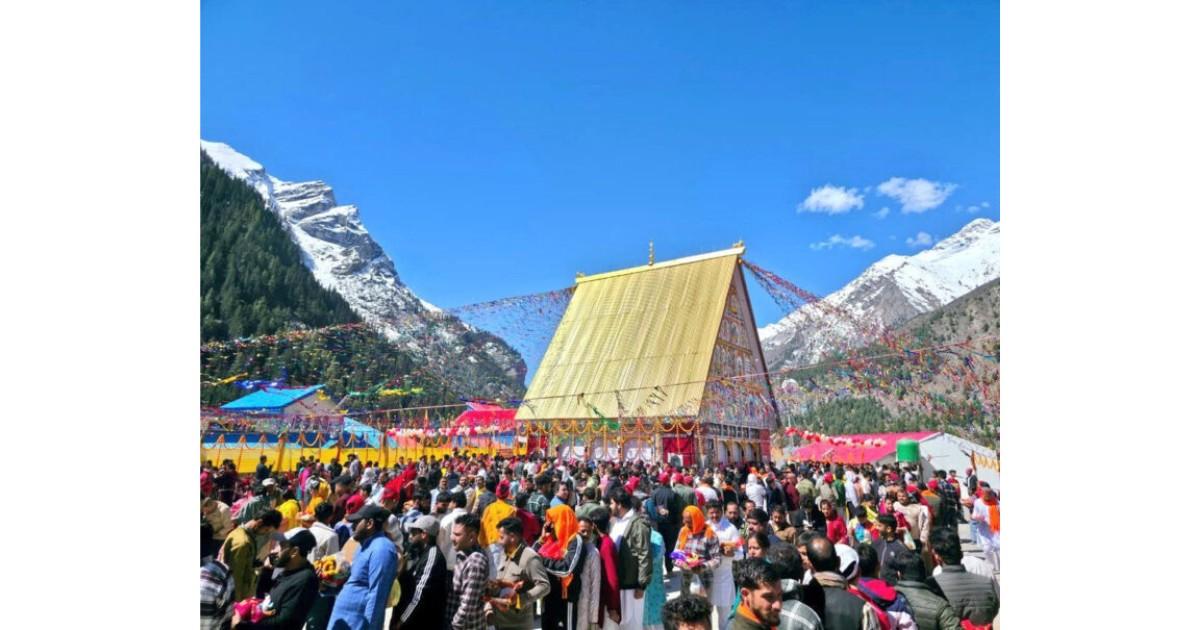


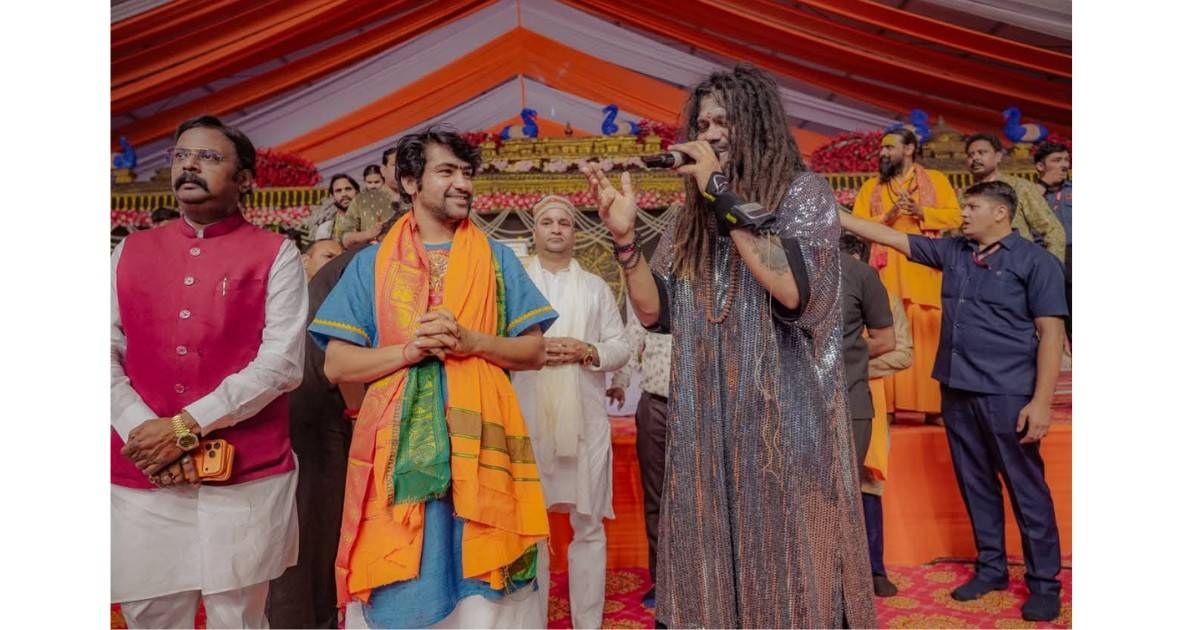
Prayagraj, April 24: The ongoing Rashtra Hanuman Katha in Prayagraj entered its third day with a large turnout of devotees, as spiritual leader Dhirendra Krishna Shastri delivered a discourse centered on the Sundar Kand and the teachings of Lord Hanuman. The event, organized in the Arail area by the Prayag Utthan Samiti, has drawn attendees from across Uttar Pradesh and neighboring states.
The religious programme, led by committee president Uday Pratap Singh, combines spiritual narration, devotional music, and interactive sessions, making it one of the prominent gatherings in the region this week.
Spiritual discourse focuses on devotion and life purpose
During his address, Dhirendra Krishna Shastri elaborated on themes from the Sundar Kand, a chapter of the Ramayana that highlights Lord Hanuman’s devotion and courage. He emphasized the importance of staying connected to one’s मूल (origin) and purpose in life.
According to Shastri, human dissatisfaction often stems from losing sight of spiritual roots. He urged devotees to focus on devotion, suggesting that a life aligned with faith can provide clarity and direction. He also encouraged followers to remain grounded in the present and entrust their difficulties to divine will.
The discourse included references to traditional couplets and teachings, which were explained in simpler terms for the audience. By connecting scriptural narratives with everyday challenges, the speaker attempted to make the message accessible to a wider audience.
‘Divine court’ draws devotees seeking guidance
A notable feature of the event was the आयोजन of a “divine court” (दरबार), conducted by Shastri before the main Katha session. According to event spokesperson Rajesh Kesarwani, the session allowed devotees to present their concerns and seek spiritual guidance.
Participants from multiple states—including Uttar Pradesh, Madhya Pradesh, Chhattisgarh, and Rajasthan—attended the session. Many came with personal and family-related issues, hoping for solutions rooted in faith and traditional practices.
Organizers stated that such sessions are intended to provide emotional reassurance and spiritual counsel, though they are not a substitute for professional advice in areas like health or law.
Cultural performances add to the gathering
The event also featured a musical performance by devotional singer Hansraj Raghuvanshi, whose bhajans were received enthusiastically by the audience. The inclusion of live music contributed to the overall atmosphere of the gathering, blending spirituality with cultural expression.
Attendees were seen participating actively, singing along and engaging in devotional practices, reflecting the event’s broad appeal among different age groups.
Messages on unity and social concerns
During his speech, Shastri also addressed contemporary social issues, including divisions within communities. He expressed concern over internal conflicts and called for unity among followers of the faith.
Referring to episodes from the Ramayana, he drew parallels between mythological narratives and present-day challenges, encouraging individuals to speak up against issues they perceive as unjust. While these remarks resonated with sections of the audience, they also reflect broader debates around religion and identity in public discourse.
Guests and dignitaries attend the event
The third day of the Katha saw the presence of several public figures and religious leaders. Among them were Chidanand Saraswati, Mahant Shyam Sundar Parashar, and other dignitaries who participated in rituals and addressed the gathering.
Political figures, including Rita Bahuguna Joshi and Prayagraj Mayor Ganesh Kesarwani, were also present at the venue. Their participation highlights the intersection of religious and public life often seen in large-scale events in the region.
Organizers honoured guests with traditional अंगवस्त्र (ceremonial shawls) and mementos associated with Lord Hanuman, acknowledging their presence and contributions.
Reflections from Mahabharata actor Nitish Bharadwaj
Actor Nitish Bharadwaj, known for portraying Lord Krishna in the television series Mahabharat, also addressed the gathering. He shared a perspective linking the teachings of the Ramayana with personal conduct.
Bharadwaj suggested that adopting the values depicted in the Ramayana—such as discipline, duty, and righteousness—can help individuals avoid conflicts often symbolized by the Mahabharata. His remarks added a cultural dimension to the event, bridging mythology, television, and contemporary thought.
Rituals and devotional conclusion of the day
The third day concluded with collective recitation of the Hanuman Chalisa and an aarti ceremony. Devotees participated in large numbers, offering prayers and expressing their श्रद्धा (faith).
The main host, Uday Pratap Singh, along with his family, performed the aarti, marking the formal close of the day’s कार्यक्रम. Volunteers and committee members remained actively involved in managing the event and assisting attendees.
Context: Growing popularity of large-scale religious events
Events like the Rashtra Hanuman Katha reflect a broader trend of large religious gatherings across India, where spiritual discourses are combined with cultural and social engagement. Such programmes often draw participants from multiple states, creating a shared space for devotion and community interaction.
In recent years, figures like Dhirendra Krishna Shastri have gained prominence through both offline events and digital platforms, expanding their reach among younger audiences as well.
While these gatherings are primarily धार्मिक (religious) in nature, they also serve as platforms for discussing social issues, community identity, and moral values, making them influential in shaping public discourse.
Public impact and participation
For many attendees, the event offers more than spiritual learning. It provides a sense of belonging, emotional support, and an opportunity to connect with others who share similar beliefs.
The आयोजन has also contributed to local economic activity, with increased footfall benefiting vendors, transport services, and small businesses in the area.
However, the scale and messaging of such events can also attract scrutiny, particularly when religious narratives intersect with social or political themes. Observers note the importance of maintaining a balance between faith-based expression and inclusive public dialogue.
Looking ahead
The Rashtra Hanuman Katha is expected to continue over the coming days, with organizers anticipating sustained participation. Further sessions will include additional discourses, cultural programmes, and devotional activities.
As the event progresses, it remains a focal point for devotees in Prayagraj and beyond, reflecting the enduring significance of religious storytelling and collective worship in contemporary India.
Inputs and images : Hindusthan Samachar
Edited By E. Devanshi varma
Also Read: Gauhati High Court Bail Row Sees 5 Developments as Himanta Biswa Sarma Stays Silent Amid Poll Code
Follow us on Google News: Click Here