

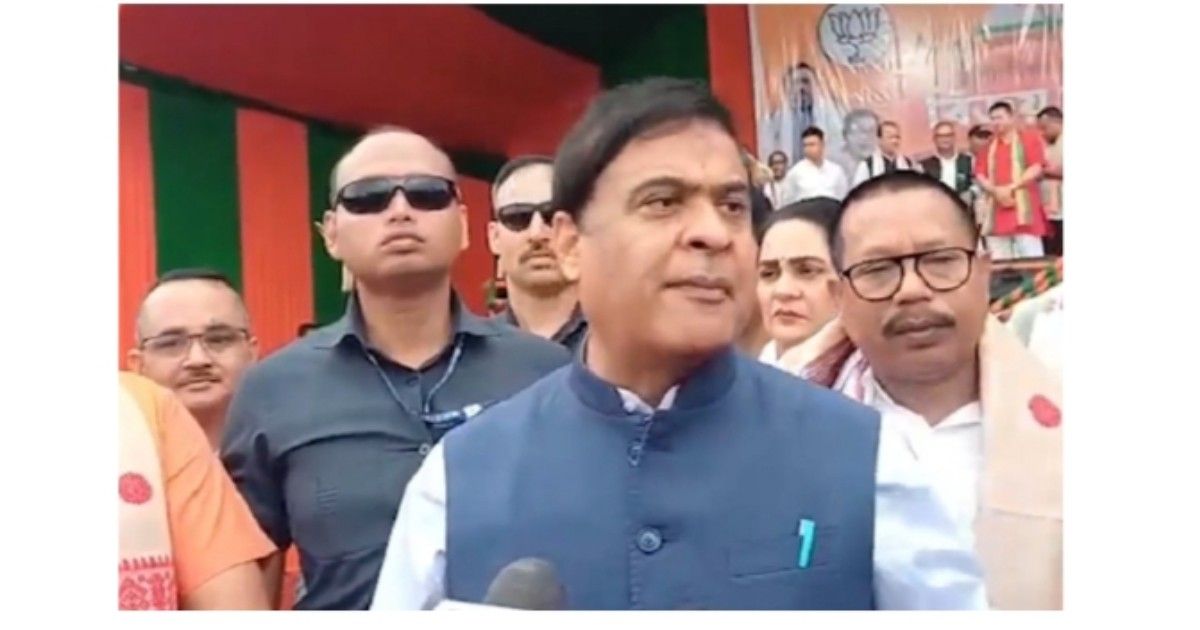
GUWAHATI, April 24 — Assam Chief Minister Himanta Biswa Sarma on Friday declined to comment on the rejection of anticipatory bail for Congress leader Pawan Khera by the Gauhati High Court, citing restrictions under the Model Code of Conduct (MCC) currently in force due to the ongoing Assembly elections.
The High Court’s decision came in connection with a criminal case filed against Khera over alleged remarks made during an election campaign. The development has added a new dimension to the political discourse in Assam, even as senior leaders tread cautiously amid election regulations.
Key Announcements / Highlights
- The Gauhati High Court rejected anticipatory bail sought by Pawan Khera.
- The court observed that the case involves offences beyond simple defamation.
- Custodial interrogation was deemed necessary by the bench.
- Chief Minister Himanta Biswa Sarma refrained from commenting due to MCC restrictions.
- Assam Minister Pijush Hazarika publicly welcomed the court’s decision and made allegations against Khera.
Court’s Observations on Bail Plea
The anticipatory bail plea was heard by a bench led by Justice Parthjyoti Saikia, who examined the nature of the allegations and the materials presented before the court. In its order, the court stated that the case appeared to involve more serious offences than mere defamation under the Bharatiya Nyaya Sanhita (BNS), India’s updated criminal code that replaced portions of the Indian Penal Code.
The court further noted that custodial interrogation of Khera would be necessary to determine the origin and authenticity of certain documents he had cited in support of his claims. This observation played a central role in the rejection of the bail plea.
Additionally, the bench pointed out that the Congress leader had not been able to substantiate his allegations with credible evidence. According to the court’s preliminary assessment, the documents referenced appeared to lack authenticity based on the investigation conducted so far.
Anticipatory bail, a legal provision that allows individuals to seek protection from arrest before being taken into custody, is typically granted in cases where courts find no immediate need for custodial questioning. In this instance, the court’s emphasis on further investigation indicated otherwise.
Chief Minister’s Response During Election Campaign
Speaking to reporters during an election campaign event, Chief Minister Himanta Biswa Sarma made it clear that he would not issue any statement on the matter at this stage. He cited the Model Code of Conduct as the primary reason for his restraint.
The MCC, enforced by the Election Commission of India after the announcement of election schedules, is designed to ensure a level playing field. It restricts political leaders and public officials from making statements that could influence voters or interfere with the electoral process.
Sarma indicated that any action related to the case would be handled by the Assam Police as per legal procedures. He also suggested that he may review the situation after May 4, when the election results are declared and the Model Code of Conduct is lifted, subject to his continuation in office.
His decision to remain silent reflects a cautious approach often adopted by political leaders during election periods, especially when legal matters intersect with political narratives.
Origin of the Case
The case against Pawan Khera originated from a complaint filed by Riniki Bhuyan Sharma, following remarks allegedly made by the Congress leader during a press conference in Guwahati.
According to the complaint, the statements targeted the Chief Minister and his family, triggering allegations of defamation and misinformation. The remarks quickly became a flashpoint in the political landscape of Assam, with both ruling and opposition parties offering sharply contrasting interpretations.
The Bharatiya Janata Party (BJP), which governs Assam, described the statements as defamatory and politically motivated. Party leaders argued that such remarks were intended to mislead the public during a sensitive election period.
On the other hand, the Congress party maintained that the case was an attempt to suppress opposition voices and stifle criticism of the government. The party framed the legal action as part of a broader pattern of political targeting.
Political Reactions Intensify
Following the High Court’s decision, Assam Minister Pijush Hazarika publicly reacted to the development, welcoming the rejection of bail. In a statement shared on social media, he made serious allegations against Khera, describing him as a “criminal and absconder.”
Hazarika also accused the Congress leader of forging documents, including land records and passports, to influence public perception during the elections. While these claims have not been independently verified in court proceedings, they have added to the intensity of the political debate.
The minister further suggested the possibility of a larger conspiracy, questioning whether other individuals might have been involved. He asserted that all those found responsible would face legal consequences.
Such statements, while common in politically charged environments, also underline the delicate balance between legal processes and political messaging, particularly during elections.
Legal and Political Context
The case unfolds at a time when Assam is in the midst of Assembly elections, making it particularly sensitive. The enforcement of the Model Code of Conduct places restrictions not only on campaign practices but also on how political leaders engage with ongoing controversies.
The Bharatiya Nyaya Sanhita, referenced in the court’s observations, is part of a broader overhaul of India’s criminal laws aimed at modernizing legal provisions. Its application in politically sensitive cases is likely to draw attention, especially when courts highlight offences beyond traditional defamation.
Legal experts note that cases involving alleged misinformation or document fabrication often require detailed investigation, including verification of evidence and examination of intent. This may explain the court’s emphasis on custodial interrogation in this instance.
At the same time, the political context cannot be ignored. Elections tend to amplify disputes, with both sides seeking to frame narratives that resonate with voters. Legal proceedings, therefore, often become intertwined with campaign strategies.
Public Impact and Why It Matters
For the public, the case raises broader questions about accountability, political discourse, and the role of legal institutions during elections.
First, it highlights the increasing scrutiny on statements made by political leaders, particularly in the age of rapid information dissemination. Allegations involving misinformation or fabricated documents can have significant implications, both legally and politically.
Second, the court’s decision underscores the importance of evidence in legal proceedings. The observation that claims must be backed by credible proof serves as a reminder of the standards required in judicial processes.
Third, the Chief Minister’s decision to refrain from commenting reflects the influence of election regulations on governance. The Model Code of Conduct, while temporary, plays a crucial role in maintaining neutrality and preventing misuse of official positions.
Finally, the case illustrates how legal disputes can shape political narratives. While the court focuses on evidence and law, political parties often interpret such developments through the lens of electoral strategy.
What Lies Ahead
With the High Court rejecting anticipatory bail, the immediate focus shifts to the next steps in the legal process. This could include further investigation by the Assam Police and potential proceedings related to custodial interrogation, as indicated by the court.
For Pawan Khera, legal options may still be available, including approaching a higher court for relief. Such moves are not uncommon in cases involving high-profile political figures.
Meanwhile, the political landscape in Assam remains dynamic, with elections underway and counting scheduled for May 4. The outcome of the polls will determine not only the composition of the state government but also the broader context in which this case continues to unfold.
As the situation develops, both legal and political stakeholders are likely to proceed cautiously, mindful of the regulatory environment and the scrutiny that accompanies high-profile cases during election periods.
Inputs and images : Hindusthan Samachar
Edited By E. Devanshi varma
Also Read: PM Modi Calls Dum Dum Response ‘Exceptional’, Highlights 3 Urban Focus Areas in West Bengal Push
Follow us on Google News: Click Here