

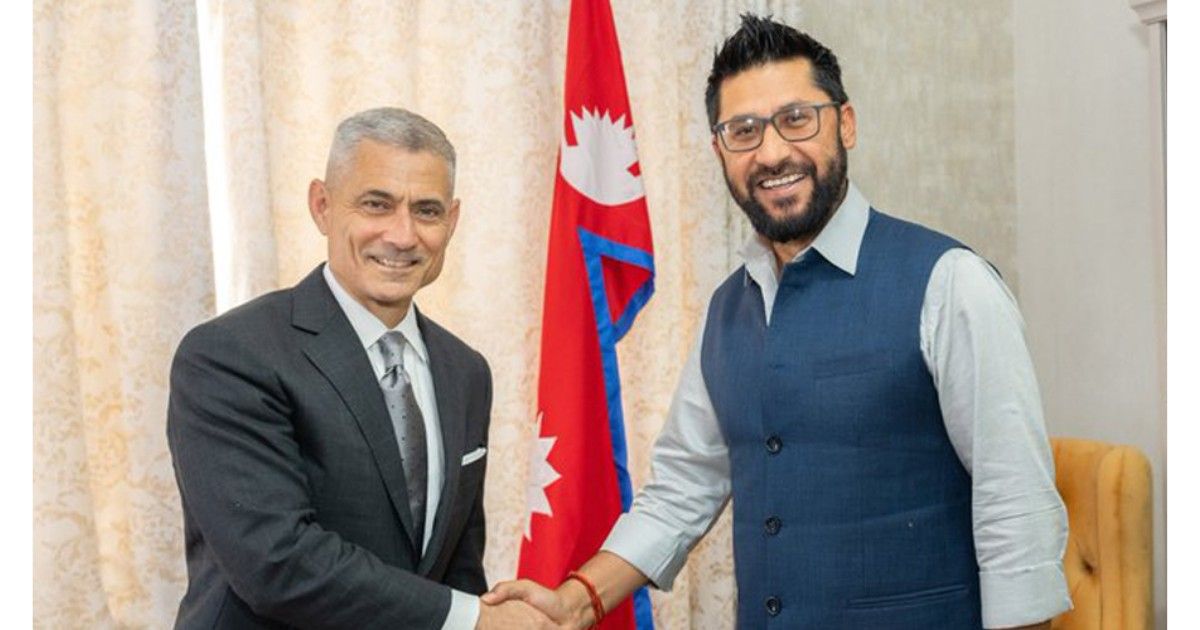
Kathmandu, April 21 — Samir Paul Kapoor, the United States Assistant Secretary of State for South and Central Asian Affairs, has begun his official visit to Nepal with a high-level political meeting in Kathmandu. Shortly after his arrival, Kapoor met Ravi Lamichhane, chairman of the Rastriya Swatantra Party (RSP), which is part of Nepal’s current ruling coalition.
The meeting signals Washington’s intent to engage closely with Nepal’s evolving political leadership following recent electoral developments.
Key Announcements and Highlights
Kapoor’s visit began with a focused diplomatic agenda, starting with a briefing at the US Embassy in Kathmandu, where he was updated on ongoing bilateral initiatives and political dynamics in Nepal.
Following the briefing, Kapoor proceeded to Lamichhane’s residence for discussions that centered on:
- The RSP’s governance priorities in Nepal’s current administration
- Opportunities for expanding Nepal-US cooperation
- Strengthening democratic institutions and economic engagement
According to the US Bureau of South and Central Asian Affairs, the interaction was part of broader efforts to deepen bilateral ties and understand Nepal’s policy direction under its present leadership.
Kapoor later shared that the meeting provided valuable insights into the RSP’s role within the government and its policy outlook.
Official Statement
In a statement shared through official channels, Kapoor described the interaction as constructive and informative. He noted that engaging directly with Nepal’s political leadership is essential to strengthening ties between the two countries.
Reframing his remarks, Kapoor emphasized that discussions with Lamichhane helped the US better understand the priorities of Nepal’s new government and identify areas where cooperation can be expanded. He highlighted shared interests in democratic governance, economic development, and regional stability.
While no formal agreements were announced during this initial meeting, the tone of the engagement suggested a willingness on both sides to explore deeper collaboration in the coming months.
Context and Background
The visit comes at a significant moment in Nepal’s political landscape. The Rastriya Swatantra Party has emerged as a prominent force following recent elections, positioning itself as a reform-oriented party with a focus on governance transparency and public accountability.
Nepal’s coalition politics have historically been fluid, with frequent changes in alliances and leadership. In this context, the rise of the RSP reflects a shift in voter sentiment, particularly among younger and urban populations seeking alternatives to traditional political parties.
For the United States, Nepal holds strategic importance in South Asia. The country’s geographic location—situated between India and China—makes it a key partner in regional stability and development initiatives. Over the years, US-Nepal relations have expanded across sectors such as:
- Development assistance
- Disaster response and resilience
- Democratic institution-building
- Trade and investment
Kapoor’s visit is part of ongoing diplomatic engagement aimed at reinforcing these ties while adapting to Nepal’s changing political environment.
Why This Visit Matters
Kapoor’s early meeting with Lamichhane is significant for several reasons. First, it reflects recognition of the RSP’s growing influence in Nepal’s governance. By prioritizing this interaction, the US appears keen to establish early communication channels with emerging political actors.
Second, the visit underscores the importance of bilateral dialogue at a time when Nepal is navigating internal political shifts. Engaging with key stakeholders allows the US to align its cooperation strategies with Nepal’s current policy direction.
Third, the discussions highlight a continued emphasis on democratic values. The United States has consistently supported democratic processes , particularly since the country’s transition from monarchy to a federal democratic republic in 2008.
Public Impact
For the people , such diplomatic engagements can have tangible outcomes over time. Enhanced Nepal-US cooperation often translates into:
- Increased development funding for infrastructure, education, and healthcare
- Support for governance reforms and institutional capacity-building
- Opportunities for trade and economic partnerships
- Collaboration on climate resilience and disaster management
While the immediate outcomes of Kapoor’s visit may not be visible, the groundwork laid through these discussions can influence future policies and projects that directly affect citizens.
Additionally, stronger bilateral ties can open avenues for educational exchanges, technical assistance, and private sector investments, contributing to long-term economic growth.
Broader Diplomatic Signals
Kapoor’s visit also reflects broader geopolitical considerations. As global powers maintain interest in South Asia, it continues to balance its foreign relations carefully. Engagements with countries like the United States are part of this broader diplomatic strategy.
The US has been actively strengthening partnerships across the Indo-Pacific region, and Nepal is increasingly seen as an important partner in promoting regional stability and sustainable development.
By engaging with Nepal’s ruling coalition and emerging leaders, Washington is positioning itself to remain a relevant and supportive partner in the country’s development journey.
What to Watch Next
Kapoor’s ongoing visit is expected to include additional meetings with government officials, civil society representatives, and possibly business leaders. These interactions will likely focus on:
- Expanding economic cooperation
- Supporting democratic governance
- Addressing regional and global challenges
Observers will be watching closely for any announcements related to new initiatives or agreements that may emerge from these discussions.
The visit presents an opportunity to articulate its priorities on the global stage and attract international support for its development goals.
As diplomatic engagements continue, the outcomes of Kapoor’s visit could shape the next phase of Nepal-US relations, particularly in areas of governance, economic collaboration, and regional cooperation.
Inputs and images : Hindusthan Samachar
Edited By E. Devanshi varma
Also Read: Nepal Enforces 3-Tier Approval Rule for Ministerial Announcements
Follow us on Google News: Click Here