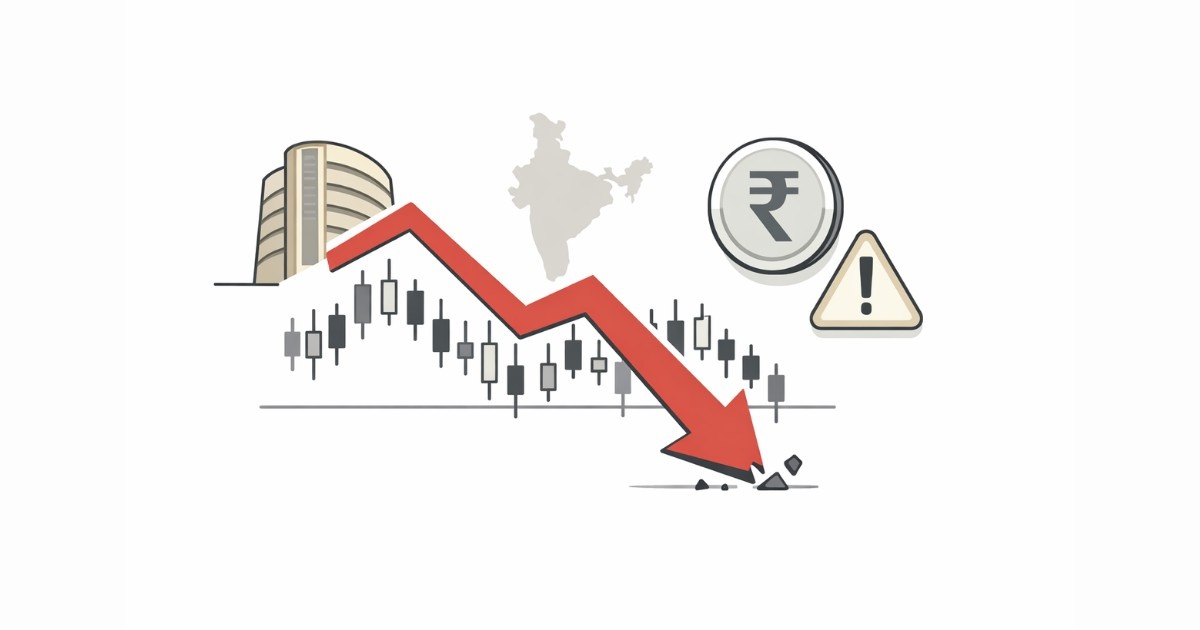


Indian stock market crash today sees Sensex and Nifty fall sharply amid global uncertainty and profit booking across major sectors.
Iran–Israel–US conflict escalation intensifies after airstrikes and missile retaliation across the Middle East, raising global concerns over security and oil routes.
Middle East tensions have sharply increased amid a major Iran–Israel–US conflict escalation, with military strikes, missile retaliation and regional security alerts reported across several countries. The situation intensified after coordinated attacks by Israel and the United States on targets inside Iran, followed by Iranian retaliatory strikes across the region.
The escalating confrontation has raised concerns among global leaders and analysts about the risk of a wider regional war, disruptions to energy supply routes and potential humanitarian consequences.
Recent reports indicate that the conflict has expanded beyond isolated military operations into a broader regional confrontation involving missile strikes, drone attacks and maritime security threats.
Background of the Iran–Israel–US Conflict Escalation
The current Iran–Israel–US conflict escalation is rooted in longstanding tensions involving Iran’s nuclear program, regional security dynamics and military rivalries.
Relations between Iran and Israel have remained hostile for decades, with both countries accusing each other of threatening regional stability. The United States, a close ally of Israel, has also had a complicated relationship with Iran involving sanctions, diplomatic negotiations and periodic military tensions.
The latest escalation began when Israel launched coordinated strikes targeting Iranian military facilities and infrastructure. According to multiple reports, these operations were carried out in coordination with U.S. forces and were part of a broader campaign aimed at limiting Iran’s military capabilities.
Explosions were reported in several Iranian cities, including Tehran, as the strikes targeted sites believed to be connected to defense infrastructure.
Operation Lion’s Roar and Initial Strikes
One of the key developments in the Iran–Israel–US conflict escalation was a coordinated military campaign known as Operation Lion’s Roar.
The operation reportedly involved missile and air strikes targeting military and strategic locations across Iran. Officials from Israel stated that the operation was intended to address what they described as emerging security threats.
Iranian authorities reported damage to infrastructure and government facilities in multiple cities following the attacks.
The strikes prompted heightened security measures across Israel as authorities prepared for possible retaliation.
Iran’s Missile and Drone Retaliation
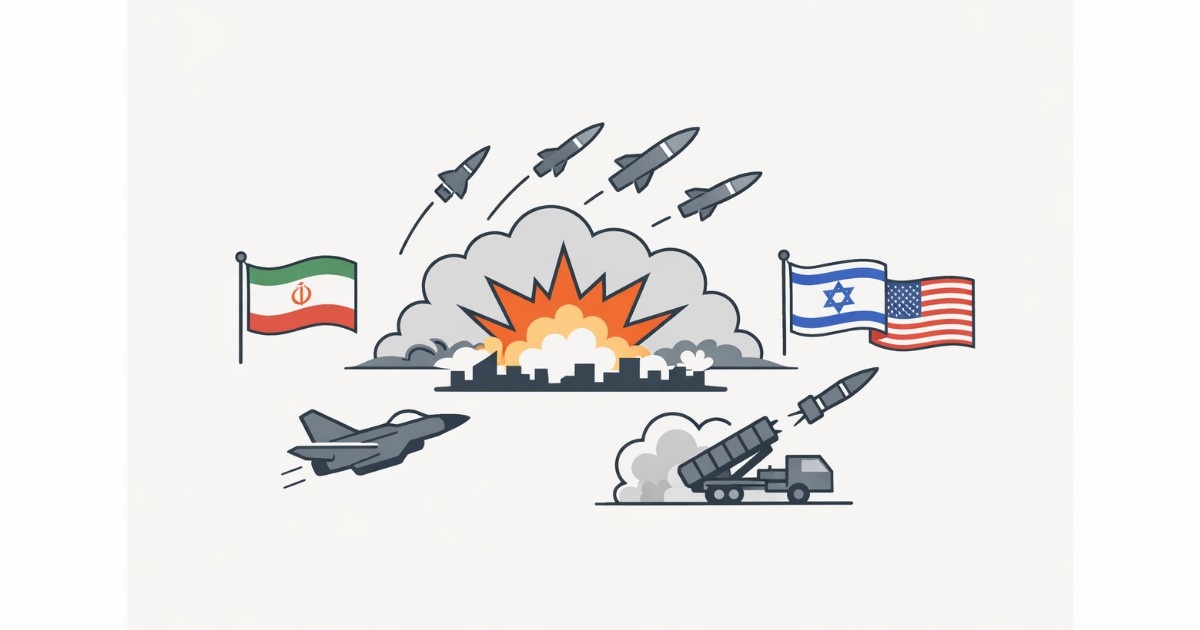
In response to the initial attacks, Iran launched missile and drone operations targeting Israeli cities and locations linked to U.S. military presence in the region.
The retaliatory actions marked a major phase in the Iran–Israel–US conflict escalation, as Iran expanded its response beyond Israel to include U.S.-aligned military installations in several Gulf countries.
Reports indicate that missile barrages and drone launches targeted bases in countries hosting American forces, while Israeli air defense systems were activated to intercept incoming projectiles.
The escalation also prompted civil defense alerts in Israeli cities and heightened military readiness across the region.
Civilian Impact and Casualty Reports
The Iran–Israel–US conflict escalation has had significant humanitarian consequences.
Iranian authorities reported more than 1,200 deaths and thousands of injuries following the initial phase of the conflict, with damage reported to hospitals and medical infrastructure.
Several medical centers and emergency facilities were reportedly damaged during the attacks, affecting healthcare services in some areas.
At the same time, missile strikes targeting Israeli territory triggered air raid sirens and emergency responses across multiple cities.
While casualty figures from different sources vary, officials on all sides have acknowledged the growing human cost of the conflict.
Regional Expansion of the Conflict
The Iran–Israel–US conflict escalation has increasingly spread beyond the immediate borders of the three countries.
Iran has reportedly targeted U.S. military interests and facilities in the Gulf region as part of its retaliation strategy. Missile and drone activity has been reported near military installations in countries hosting American forces.
In addition, the conflict has drawn in regional armed groups allied with Iran, including organizations operating in Lebanon and other neighboring areas.
This expansion has increased fears that the confrontation could evolve into a broader regional war involving multiple actors.
Strait of Hormuz and Global Energy Concerns
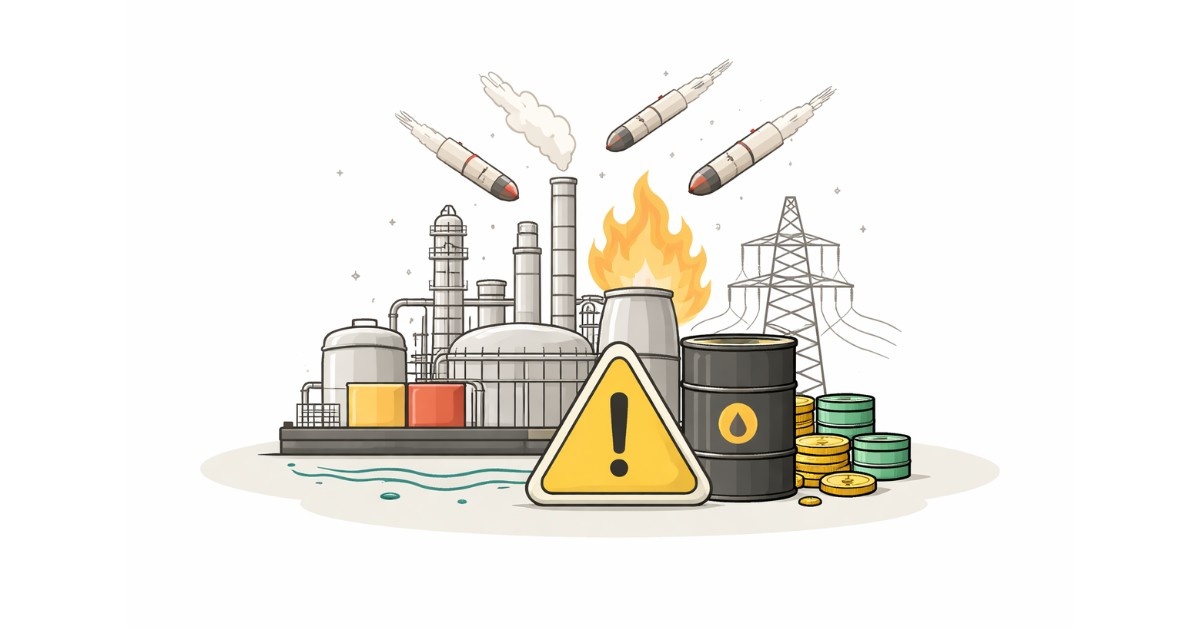
One of the major global concerns linked to the Iran–Israel–US conflict escalation is the potential impact on international energy supplies.
The Strait of Hormuz is one of the world’s most important maritime chokepoints, with roughly one-fifth of global oil shipments passing through the narrow waterway.
As tensions have intensified, shipping insurance costs and security warnings for vessels operating in the area have increased significantly.
Analysts warn that any disruption to oil shipments through the Strait of Hormuz could affect global energy markets and lead to rising fuel prices worldwide.
International Reactions and Diplomatic Calls
The Iran–Israel–US conflict escalation has triggered diplomatic responses from governments and international organizations.
Several countries have called for restraint and urged all parties to avoid further escalation.
Diplomatic efforts are underway in multiple international forums aimed at encouraging dialogue and reducing tensions.
Global leaders have also emphasized the importance of protecting civilian populations and maintaining the stability of international trade routes.
However, with military operations continuing, achieving an immediate de-escalation remains challenging.
Military Technology and Strategic Developments
Another important aspect of the Iran–Israel–US conflict escalation is the role of advanced military technology.
Missile defense systems, drones and precision-guided munitions have played a significant role in the ongoing exchanges.
Israel’s air defense systems have been deployed to intercept incoming missiles, while Iran has relied on ballistic missiles and drones for retaliatory operations.
The increasing use of unmanned aerial systems and long-range missiles highlights the evolving nature of modern warfare in the region.
Military analysts say that technological capabilities could influence how the conflict develops in the coming weeks.
Economic and Market Implications
The Iran–Israel–US conflict escalation has also affected global financial markets and energy prices.
Investors closely monitor geopolitical developments in the Middle East because of the region’s importance in global energy production.
Periods of military escalation often lead to volatility in oil prices and financial markets.
Businesses involved in shipping, aviation and energy trading have been particularly sensitive to developments in the region.
Analysts note that prolonged instability could have broader economic implications beyond the Middle East.
What Could Happen Next
The future of the Iran–Israel–US conflict escalation remains uncertain.
Military exchanges could continue if tensions remain unresolved, while diplomatic negotiations may also play a role in preventing further escalation.
Some experts believe that international mediation could help create conditions for a ceasefire or temporary de-escalation.
However, the involvement of multiple regional actors and the complexity of the conflict make predicting outcomes difficult.
Observers say that the coming weeks will be critical in determining whether the situation stabilizes or expands further.
Conclusion
The ongoing Iran–Israel–US conflict escalation represents one of the most serious geopolitical crises in the Middle East in recent years.
With coordinated airstrikes, missile retaliation and regional security threats unfolding simultaneously, the conflict has already affected civilian populations, international trade routes and global energy markets.
While diplomatic efforts continue, the risk of further escalation remains a major concern for governments and international organizations worldwide.
How the situation evolves will depend on both military developments and the success of diplomatic initiatives aimed at preventing a wider regional war.
Also Read: 4 Urgent Measures: Global Oil Supply Emergency Plans Gain Attention Amid Market Uncertainty
Follow us on Google News: Click Here