

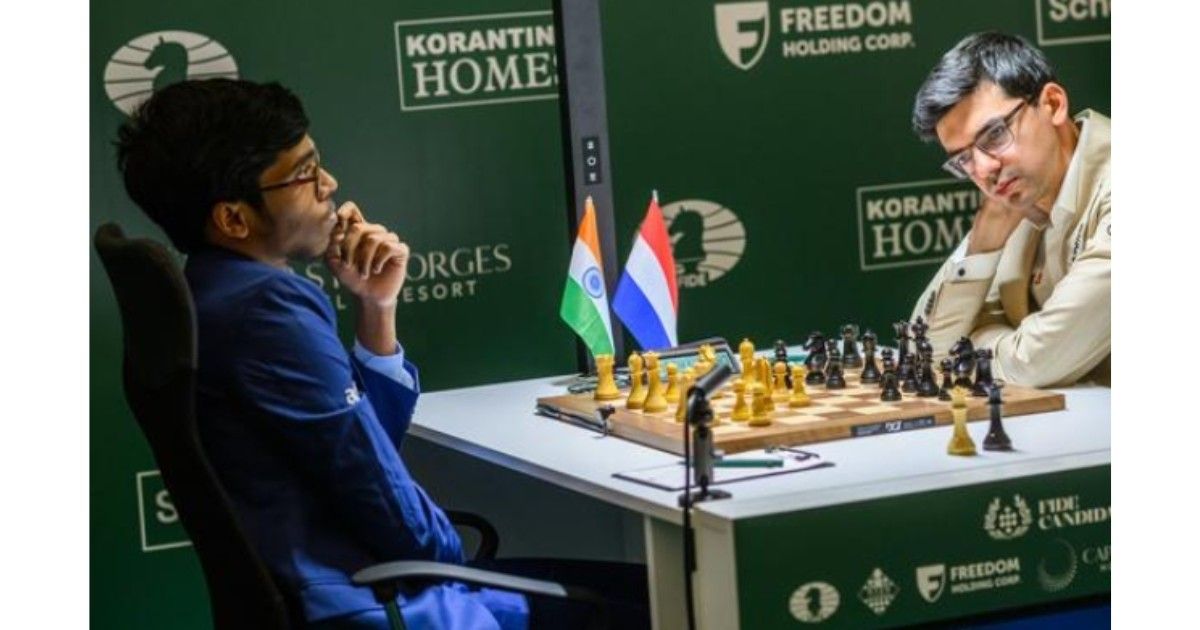
The opening round of the FIDE Candidates 2026 in Cyprus delivered early drama and significant results, with India’s R Praggnanandhaa registering a notable victory over Dutch top seed Anish Giri. Meanwhile, in the women’s section, Divya Deshmukh and R Vaishali began their campaigns with hard-fought draws, keeping their prospects intact in the race to challenge for the World Championship.
The Candidates tournament, one of the most prestigious events in chess, determines the challenger for the world title. With only the winner advancing, every game carries significant weight, and early momentum can shape the course of the competition.
Key Highlights from Round 1
- Praggnanandhaa defeats top seed Anish Giri in a strategic masterclass
- Fabiano Caruana wins a marathon game against Hikaru Nakamura
- Javokhir Sindarov secures victory over Andrey Esipenko
- Divya Deshmukh and Vaishali hold draws in the women’s section
- All other games in both sections end in closely contested draws
Praggnanandhaa Makes Early Statement
The standout performance of the opening round came from Praggnanandhaa, who demonstrated composure and positional understanding to overcome Giri. Playing with the white pieces, the Indian grandmaster approached the game with a long-term strategy rather than immediate tactical aggression.
Over the course of more than 40 moves, Praggnanandhaa steadily built pressure. His control over the board became evident in the middlegame, where he created structural weaknesses in Giri’s position. By the endgame, he had established a clear advantage, including an extra pawn and better piece coordination.
Giri, known for his defensive resilience, struggled to find counterplay. As the position deteriorated, resignation became inevitable. The victory not only gives Praggnanandhaa a full point but also positions him as a serious contender early in the tournament.
This result is particularly significant given his status as one of the younger participants. While not the pre-tournament favourite, Praggnanandhaa has consistently demonstrated the ability to challenge elite players, and this win reinforces his growing stature in classical chess.
Caruana Triumphs in Marathon Clash
Another major highlight was the intense battle between Fabiano Caruana and Hikaru Nakamura. The all-American clash turned into the longest game of the round, lasting over six hours.
Both players navigated a complex middlegame before transitioning into a deeply technical endgame. Caruana eventually gained a slight edge, which he converted with precision. The victory gives him an important early lead while handing Nakamura a setback in a tournament where recovery opportunities are limited.
The match also underscored the level of preparation and endurance required in the Candidates format, where games often stretch for hours and demand sustained concentration.
Other Results in the Open Section
Elsewhere, Javokhir Sindarov continued to underline his emergence as a rising force by defeating Andrey Esipenko. The Uzbek grandmaster capitalized on inaccuracies to secure a convincing win.
The game between Matthias Blübaum and Wei Yi ended in a draw after a theoretically rich contest. Both players demonstrated deep opening preparation, but neither could gain a decisive advantage.
With two decisive results and one draw, the open section standings are already beginning to take shape, though the long format leaves ample room for shifts.
Women’s Candidates: Solid Start for Indian Players
In the women’s section, the focus was on resilience rather than breakthroughs. Divya Deshmukh faced experienced Ukrainian grandmaster Anna Muzychuk and adopted an aggressive approach early in the game.
However, Muzychuk’s experience proved crucial. She neutralized the initiative by simplifying the position at the right moments. The game gradually transitioned into an equal endgame, resulting in a draw.
R Vaishali’s game against Bibisara Assaubayeva followed a different trajectory. Vaishali encountered difficulties in the middlegame and found herself under pressure, particularly with limited time on the clock.
Despite the challenges, she demonstrated composure under time pressure. Accurate moves in the closing stages allowed her to stabilize the position and force a draw, avoiding what could have been an early defeat.
Other Matches in the Women’s Section
The remaining games in the women’s tournament also ended in draws, reflecting the evenly matched field.
China’s Zhu Jiner and Tan Zhongyi played a dynamic game filled with tactical opportunities, but neither managed to secure a decisive breakthrough.
In another key matchup, Aleksandra Goryachkina drew with Kateryna Lagno. Both players are considered strong contenders, and the draw keeps them well-positioned for the rounds ahead.
Why This Tournament Matters
The FIDE Candidates tournament is a critical step in the World Championship cycle. The winner earns the right to challenge the reigning world champion, making it one of the most competitive events in professional chess.
The 2026 edition features a double round-robin format, where each player faces every other participant twice. With 14 rounds in total, consistency is key. A single loss can be costly, while early wins—like Praggnanandhaa’s—can provide a crucial advantage.
For India, the presence of multiple players in both sections highlights the country’s growing influence in global chess. Performances in this tournament are closely watched, as they signal the next generation of contenders at the highest level.
Public and Sporting Impact
Praggnanandhaa’s victory is likely to generate significant interest among chess fans in India and beyond. His rise has already inspired a new wave of young players, and a strong performance in the Candidates could further elevate the sport’s popularity.
Similarly, steady starts by Divya Deshmukh and Vaishali reinforce India’s depth in women’s chess. Their ability to hold positions under pressure reflects the increasing competitiveness of Indian players on the global stage.
At a broader level, the tournament contributes to the global chess ecosystem by showcasing high-quality games, strategic innovation, and the mental endurance required at the elite level.
What Lies Ahead
As the tournament moves into the second round on March 30, attention will remain on whether Praggnanandhaa can maintain his momentum. Early leaders often face increased scrutiny, and sustaining performance over 14 rounds is a significant challenge.
Caruana, too, will look to build on his opening victory, while Nakamura will aim to recover quickly. In the women’s section, players will seek to convert draws into wins to gain an edge in what is shaping up to be a tightly contested field.
With many rounds still to be played, the standings remain fluid. However, the opening day has already set a competitive tone, indicating that the 2026 Candidates could be one of the most closely fought editions in recent years.
Round 1 of the FIDE Candidates 2026 has delivered both decisive results and hard-fought draws, reflecting the high level of competition. Praggnanandhaa’s victory over Giri stands out as the defining moment so far, while steady performances from Indian players in the women’s section keep their campaigns on track.
As the tournament progresses, the focus will shift to consistency, preparation, and resilience—qualities that ultimately determine who earns the coveted opportunity to compete for the World Championship.
Inputs and images : Hindusthan Samachar
Edited By E. Devanshi varma
Also Read: Kerala Police Launch Manhunt Across 3 States for Palakkad Councillor in Sexual Assault Case
Follow us on Google News: Click Here